
In November 1823 the Gloucester Journal claimed that “upwards of 4500 workmen are in daily employment upon houses and building now erecting thereâ€, and in November 1825 the Cheltenham Journal described the whole situation in Cheltenham as a “brick and mortar maniaâ€. In 1826 one writer stated that 1477 houses had been built since 1821 – an average of almost 300 per year.
Whereas before the 1820’s, building development had centred on the construction of single houses or at most, a terrace, these years saw the establishment of extensive building estates, the largest of which, Pittville (est.1824) was intended to comprise 600 houses. Other important new estates were the Suffolk estate (1823), the Lansdown estate (1824) The Park (1833), and Bayshill (1837) while many new houses were built along the ‘walks and rides’ of Montpellier and Imperial Spas including the great mansions of the Promenade.
Overspeculation was clearly rife during these decades. At Pittville, fewer than 20 houses had been completed by 1830 and even by 1860 they barely exceeded 200. The estates developer, a lawyer and banker named Joseph Pitt, died heavily in debt. Even so, what was achieved created a fine townscape of brick, stucco and ironwork, much of which still survives to make Cheltenham one of the most complete Regency towns in England.
Also during the 1820’s and 1830’s, Cheltenham developed into a major shopping centre. New shops were opened in the High Street, houses in the Promenade were converted into shops and a purpose built area of shops was built at Montpellier. Many of these were chemists and druggists or sold such luxury goods as china, glass, prints, and expensive clothing.
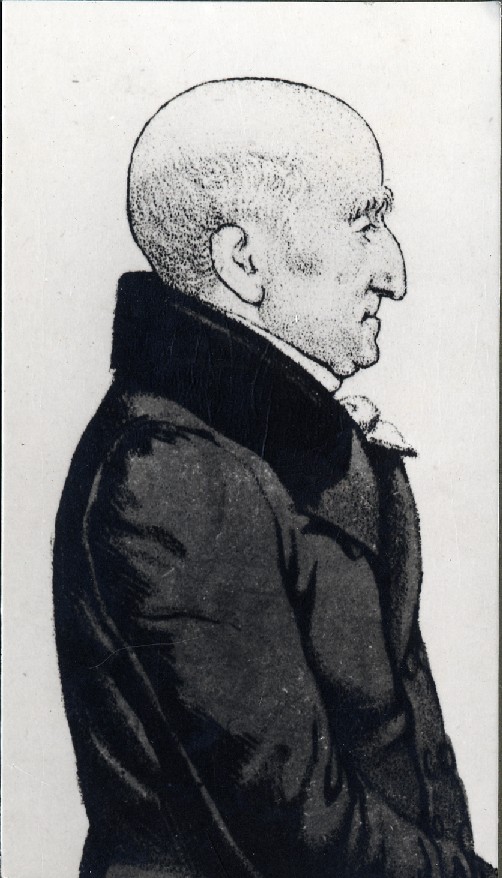
joseph-pitt-watercolour-by-richard-deighton_4623512539_o
Joseph Pitt by Richard Dighton.

lansdown-place-crescent-m-d-eichbaum-1840_4623535081_o-625×495
Lansdown Place & Crescent by M D Eichbaum, 1840.

pittville-walks-and-rides-engraving-1838_4621350157_o-625×405
Pittville walks and rides, 1838. Engraving.

plan-of-pittville-estate-1826_4624117586_o
Plan of Pittville Estate, 1826.

proposed-houses-at-pittville-1827_4621350229_o
Proposed houses at Pittville, 1827.

the-promenade-cheltenham-lithograph-c1860_4621956880_o-625×506
The Promenade, Cheltenham, about 1860. Lithograph.
Share this article
Follow us
A quick overview of the topics covered in this article.