
The Arts and Crafts Movement in Britain was linked to several movements current at the same time from the 1880s to the First World War, including socialism, the female suffrage movement, back to the land and vegetarianism. Many of these involved radically different ways of living and thinking about how people should live.
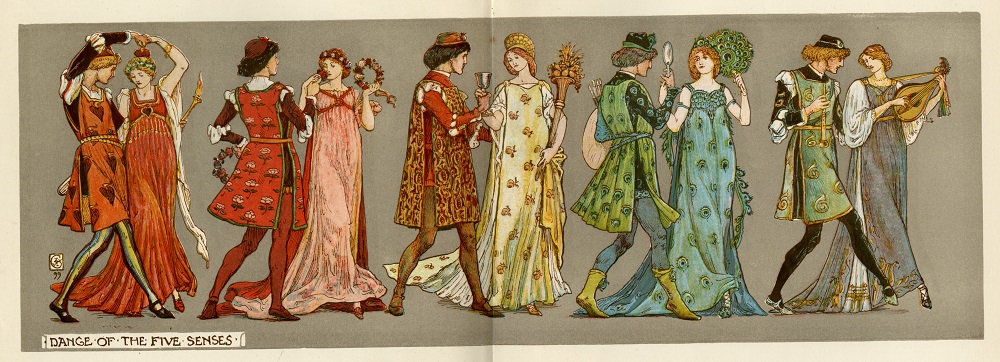
By the 1880s Walter Crane (1845–1915) was already well-known as a book illustrator and painter. He had revolutionised children’s book illustration, believing that young children would learn as much from the pictures as from the text. He was influenced by the art of Edward Burne-Jones and by medieval and classical art. An active member of the burgeoning Arts and Crafts Movement, he was a founder member of the Art Workers’ Guild and the Arts and Crafts Exhibition Society. He also designed wallpaper, ceramics and textiles.
Becoming a Socialist
Crane became active in politics in the 1860s, campaigning for the 1867 Reform Act, and speaking out in support of the radical Paris Commune, who attempted to overthrow the French government in 1871. Crane was influenced by the work and writings of William Morris, who also became a socialist in the 1880s. Both men deplored modern methods of production and what they saw as the dehumanising effect it had on the workforce.
In 1884 he joined the Social Democratic Federation, the first British socialist organisation, and started to illustrate their publications. Later that year, unhappy with the leadership of that group, he joined the breakaway Socialist League headed by, among others, William Morris and Karl Marx’s daughter, Eleanor. He later joined the Fabian Society, a reformist rather than revolutionary group, and was linked with Morris’s later Hammersmith Socialist Society: he produced art for all.
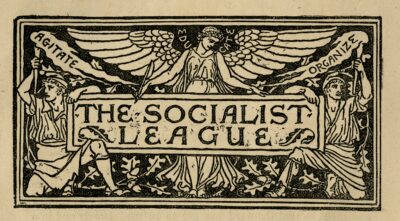
1991_1016_996_O58_001-detail
Crane's logo for the Socialist League, with the angel of Justice and two workers, and with oak leaves for strength. You can also see the League's motto: Agitate, Educate, Organise.
Art: a helpmate to propaganda
Crane created the majority of the art for the socialists in the 1880s and 90s. He worked for different organisations, just wanting to get the message about his beliefs out to the world. H H Hyndman, who ran the Democratic Federation said of him, ‘Nobody, not even William Morris, did more to make Art a direct helpmate to the Socialist propaganda. Nobody has had a greater influence on the minds of doubters who feared that Socialism must be remote from and even destructive of the sense of beauty.’
Crane was involved in many of the actions of the time, including the 1887 Bloody Sunday protests, and was horrified by the actions of the police: ‘I never saw anything more like real warfare in my life – only the attack was all on one side.’ When travelling to America in 1891, he spoke out against the hanging of four protesters after a bomb incident in Chicago in 1886. The American establishment was horrified, dinners in his honour were cancelled, financial support withdrawn. Crane stuck to his conviction that the men executed were innocent.
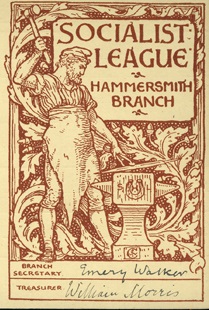
1991_1016_028_001
Socialist League membership card by Crane. It shows the 'Hammer Smith', based on William Morris himself, with Morris-style leaves.
Walter Crane at The Wilson
Crane continued illustrating, producing designs for banners, as well as incorporating socialist themes into his paintings throughout the 1890s and 1900s. Crane’s work had a lasting impression on the art of the labour movement and the women’s suffrage campaign. Much political art produced between the 1880s and the First World War shows his influence, both in Britain and abroad.
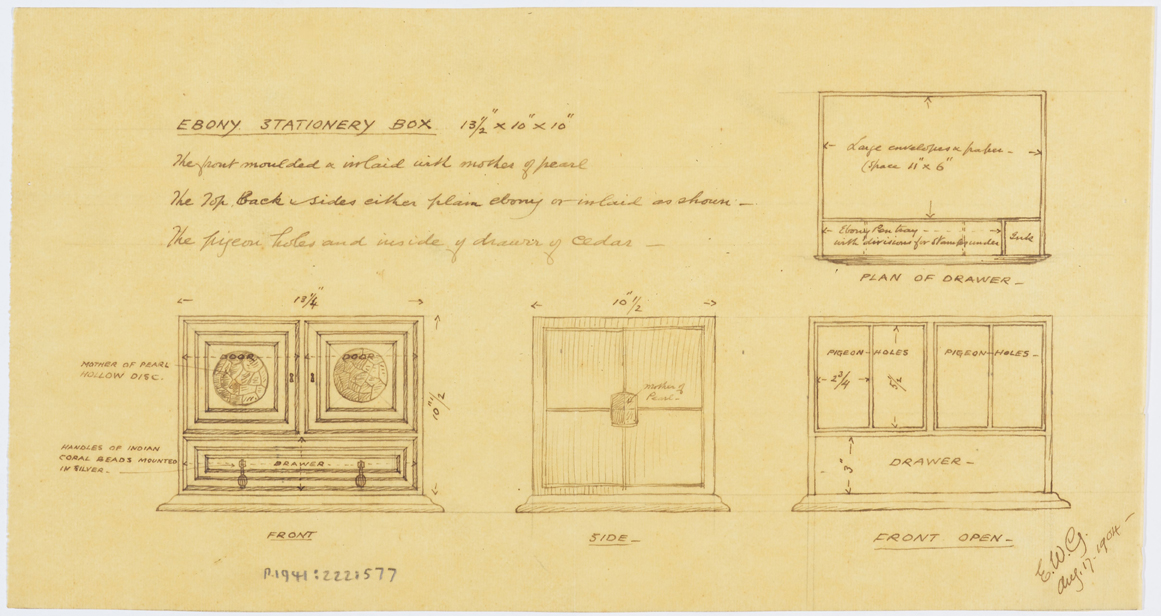
Wilson holds a number of his graphic designs and illustrations as part of the Emery Walker Library. Walker was a friend of Morris’s and Crane’s, and a fellow member of the Art Workers’ Guild and the Arts and Crafts Exhibition Society. He too was a committed socialist, secretary to the Hammersmith branch of the Socialist League and the later Socialist Society. His library was acquired by the art gallery and museum in 1991.

1991_1016_996_Q41_002-detail
Crane's illustrations weren't always heroic. This one, from a lecture by Morris, shows the obstacles Labour faced in a cartoon style.
Share this article
Follow us
A quick overview of the topics covered in this article.