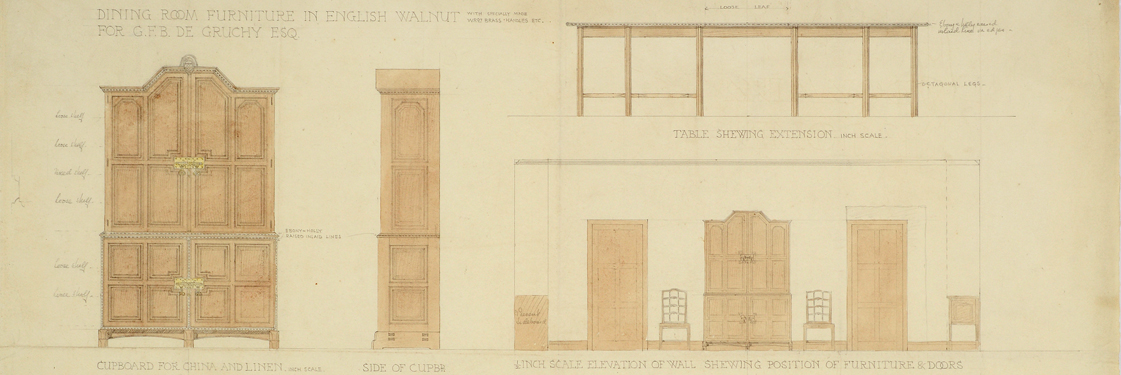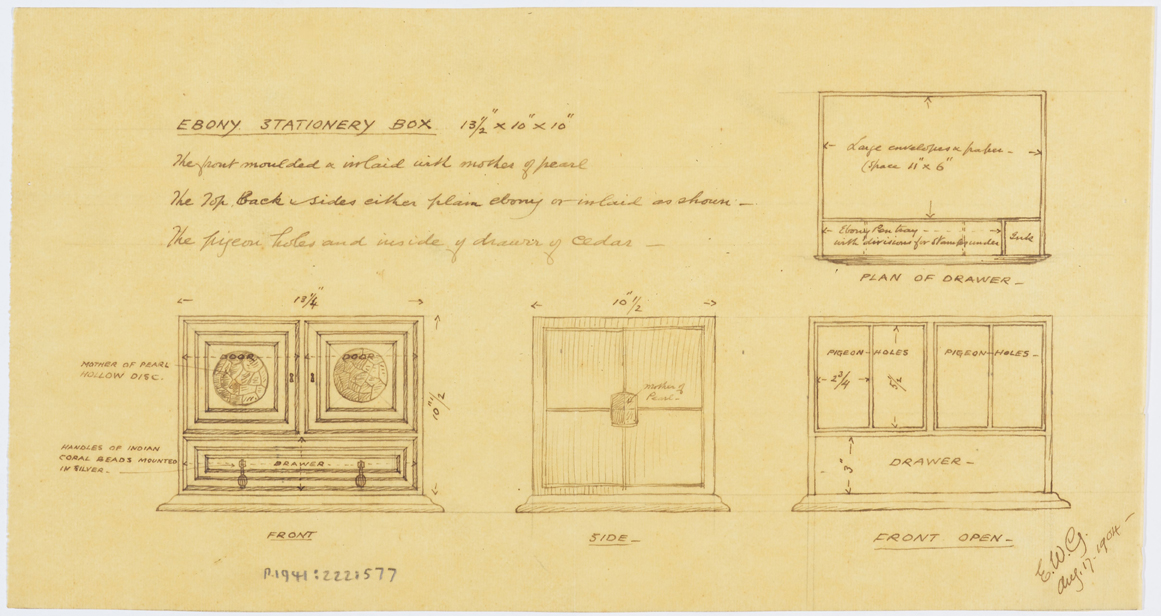

Gimson saw himself first and foremost as an architect. Trained by a generation who believed that an architect should be able to design everything for a building, he was inspired by architecture to design furniture, metalwork and more. He began to achieve recognition and more numerous architectural commissions shortly before the First World War. Some grand schemes he produced give an idea of where his work might have gone. He often worked with other architects such as Robert Weir Schutz, Detmar Blow and FL Griggs. He was also a member of the Society for the Protection of Ancient Buildings, and advised on restoration for the Society in the Cotswolds area.
The Wilson holds about 500 architectural designs and plans by Ernest Gimson. Explore a selection of them here.
Learning the trade
Ernest Gimson started training to be an architect as a teenager. While he trained he also travelled. Throughout his twenties he journeyed around England, France and Italy, sketching what he saw. In 1884 William Morris visited the Leicester Secular Society to talk on ‘Art and Socialism’, staying the night in Gimson’s house. They stayed up talking till two in the morning. Morris, impressed, wrote Gimson letters of introduction to London architects he respected. In 1886 Gimson left Leicester to be an improver – like an intern – at the office of architect John Dando Sedding. The office was right next door to Morris’s shop, Morris & Co. He stayed at Sedding’s practice until 1888, but retained the friendships he made there for the rest of his life.
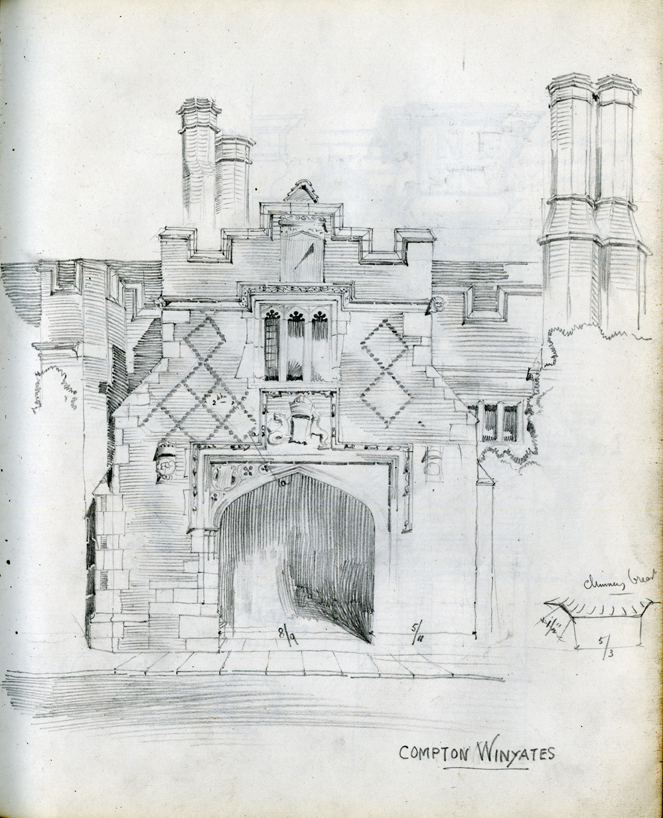
1945_17-Compton-Winyates
A sketch by Gimson, 1890, of Compton Wynyates, a Tudor manor house in Warwickshire.
Building for his family – the Leicester houses
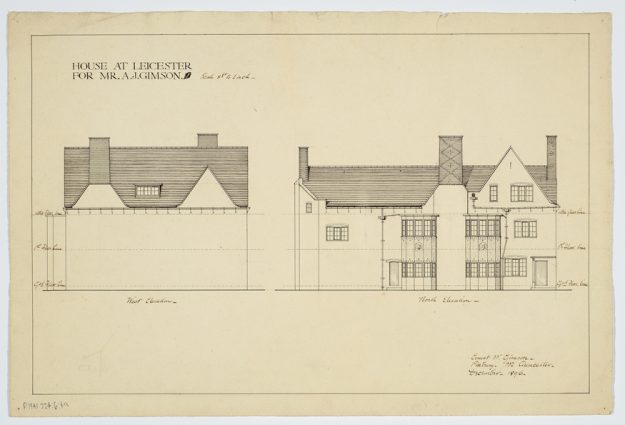
Gimson’s first houses were for his family. He built a number of houses in and around Leicester, including smart town houses and summer cottages in the Charnwood Forest. The houses he built were often quite small, based on rural cottages and farm buildings. He drew on local building materials and methods, wanting his buildings to look like part of the landscape in which they stood.
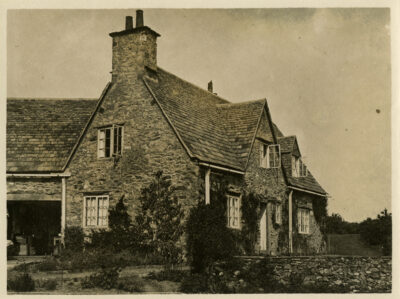
1941_226_225_007
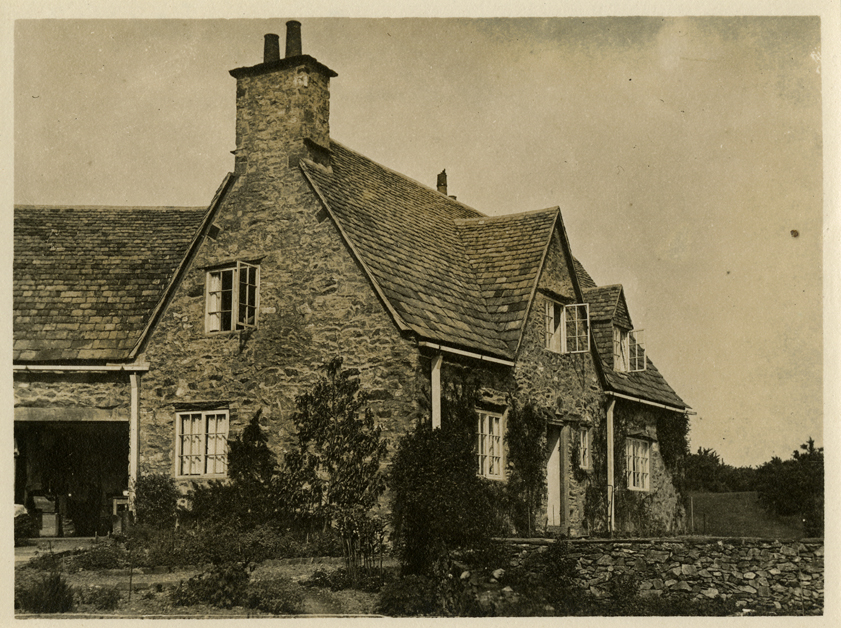
Rockyfield, in the Charnwood Forest, was the last of the houses Gimson built for his family. It was built for his sister Margaret in 1908.
Cottages for himself and others
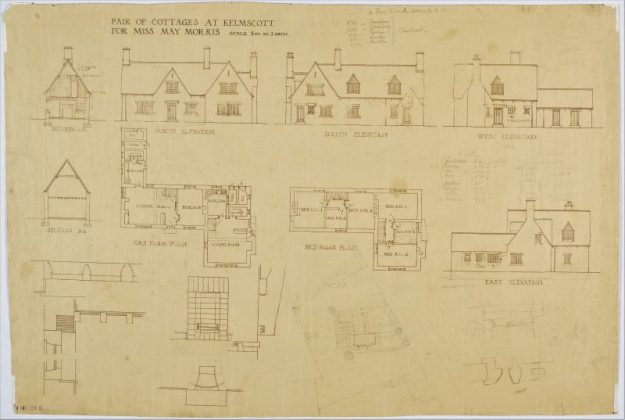
Besides the houses for his family in the Charnwood Forest near Leicester, he built cottages in Devon and in Gloucestershire – and a cottage for himself in Sapperton in 1902. May Morris, William Morris’s daughter, commissioned him to build cottages and a village hall in Kelmscott in her father’s memory.
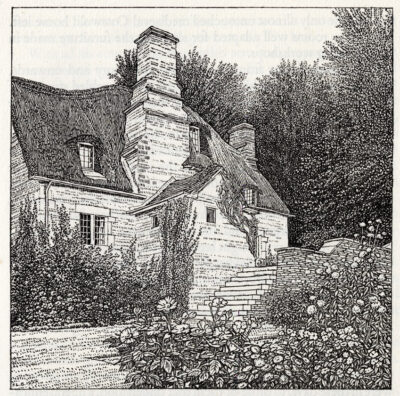
1991_1016_996_Y41_007-detail
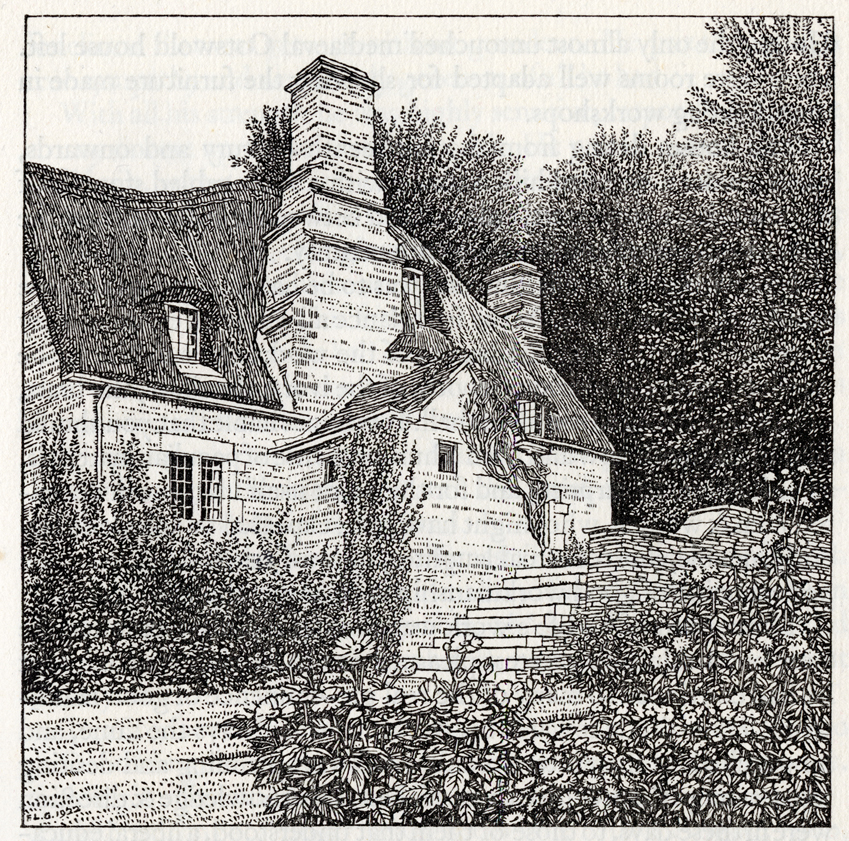
The Leasowes, the house Gimson built for himself and his wife, Emily, in Sapperton, from an etching by his friend F L Griggs.
Churches: conservation and interiors
As well as whole buildings, Gimson designed plasterwork and woodwork, and he conducted conservation and extensions for existing buildings. He designed fittings and furniture for churches across the country. As well as new work for churches old and new, this work was often with the Society for the Protection of Ancient Buildings. His woodwork for these churches echoed the existing styles used in church woodwork of the Middle Ages and 16th and 17th centuries.
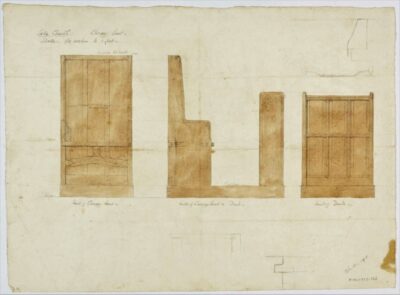
1941_222_123
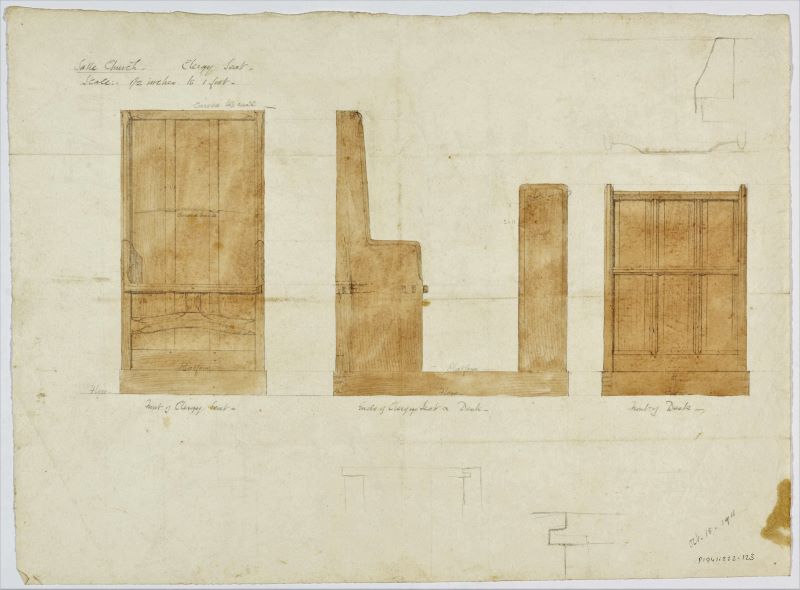
Design for clergy seats for Salle church in Norfolk, 1911.
Designing for competitions
Gimson designed many more buildings than were built, including a scheme to build the city of Canberra in Australia in 1911. He also submitted designs for the new Port Authority of London building competition in the same year. Many of the designs held at The Wilson were never realised. Towards the end of his life he seems to have more recognition as an architect, and wished to do more architectural work.
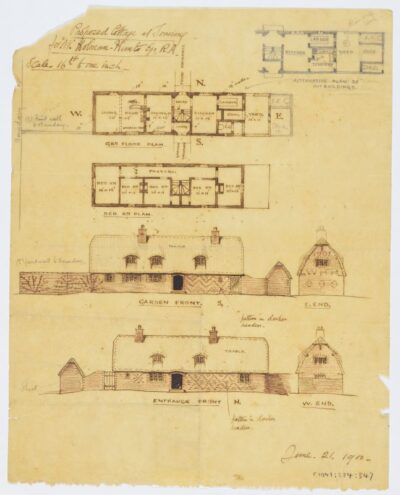
1941_224_347-1
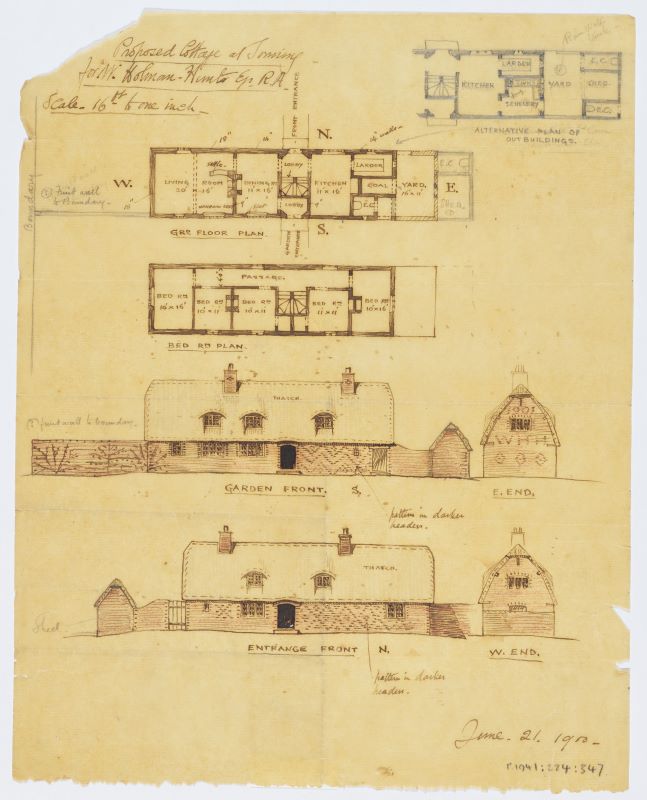
House designed for the Pre-Raphaelite artist William Holman Hunt in 1900. The house was never built.
Gimson’s last work
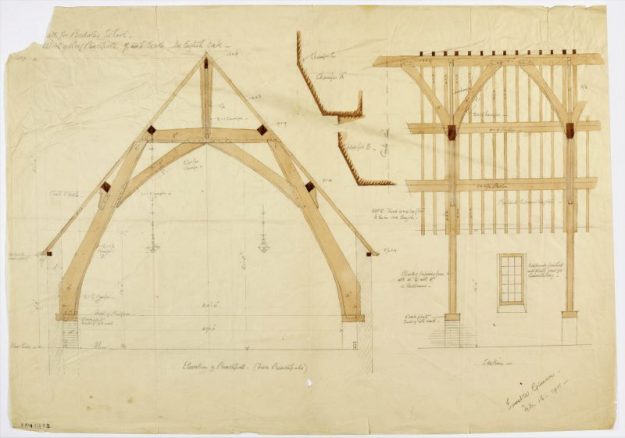
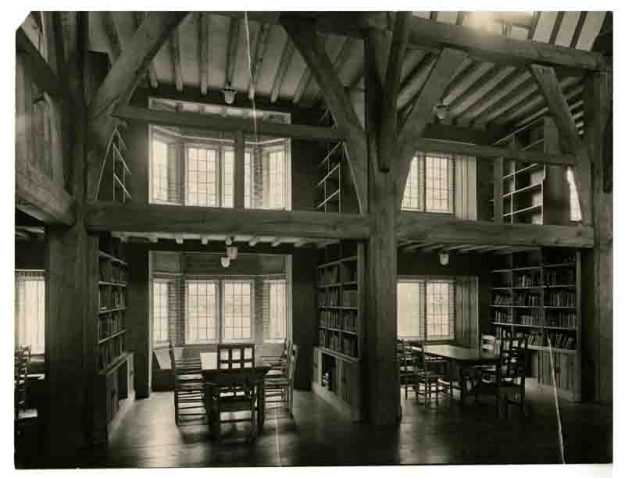
His last project was for Bedales School in Hampshire. In 1910 he had an assembly hall built as part of proposed quadrangle. The quad was never completed, but the library was completed as a war memorial by Gimson’s old friend Sidney Barnsley and old pupil Geoffrey Lupton. It is his only Grade I listed building. His assistant Norman Jewson also completed his last design, for the war memorial cross at Fairford, Gloucestershire.
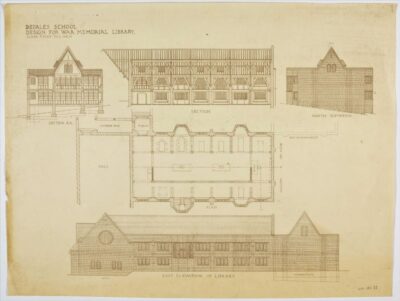
1972_186_33
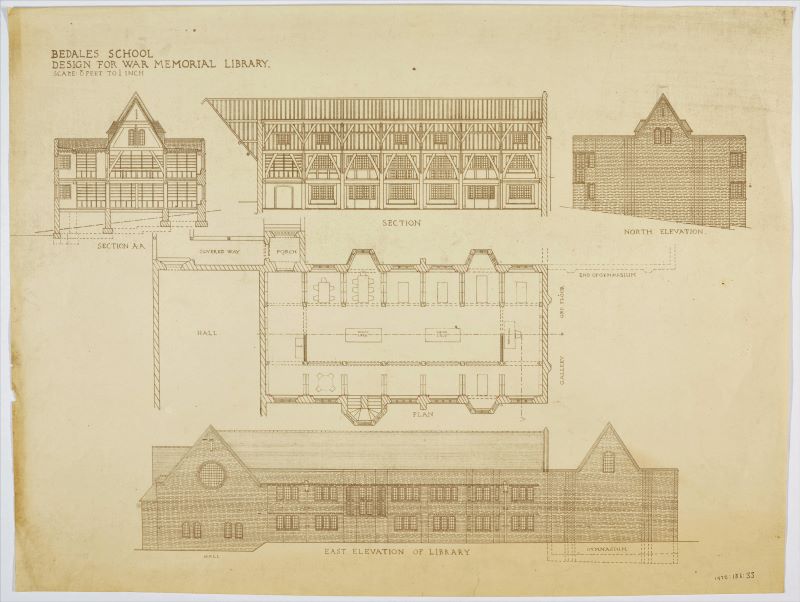
Design for the Memorial Library at Bedales School.
1945_17-Compton-Winyates
A sketch by Gimson, 1890, of Compton Wynyates, a Tudor manor house in Warwickshire.
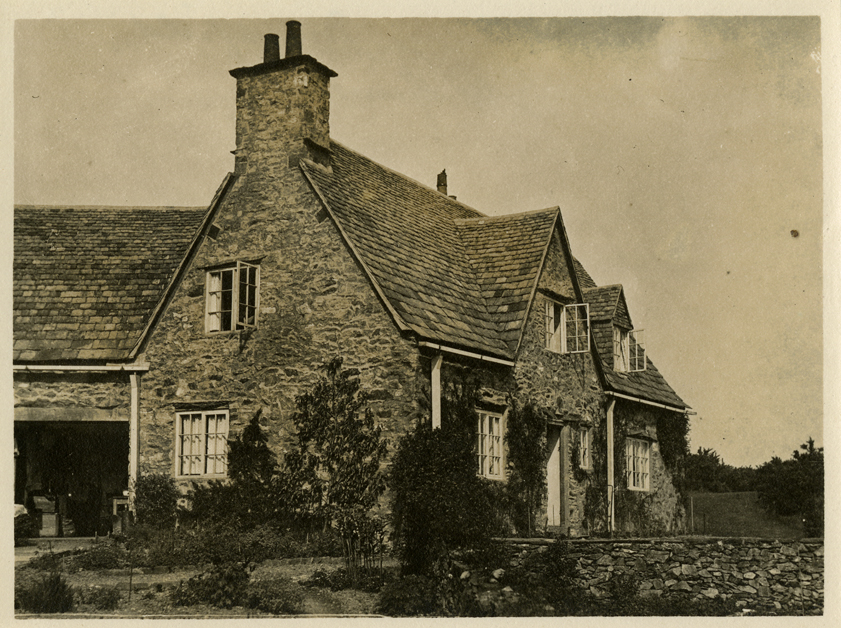
1941_226_225_007
Rockyfield, in the Charnwood Forest, was the last of the houses Gimson built for his family. It was built for his sister Margaret in 1908.
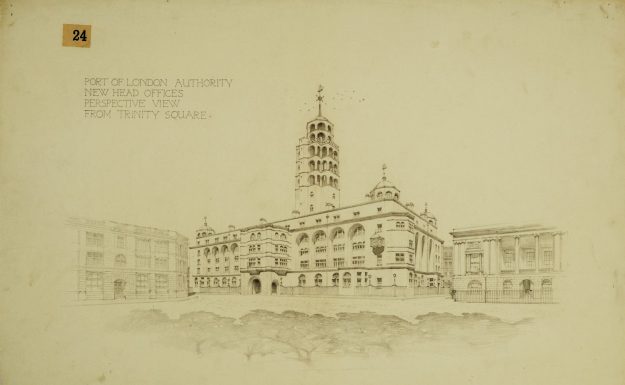
Port-of-London-625×385
In 1911 he entered a competition to design the new Port of London Authority building. He didn't win the competition, but the design survives.
1991_1016_996_Y41_007-detail
The Leasowes, the house Gimson built for himself and his wife, Emily, in Sapperton, from an etching by his friend F L Griggs.
Daneway-house-interior-48-2292-625×443
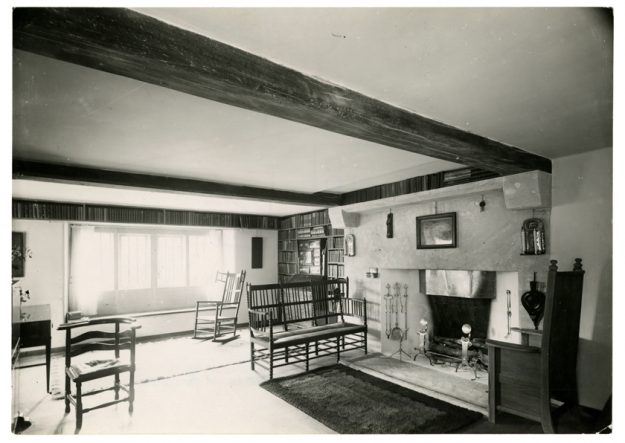
Gimson prefered to live very simply, as this photograph of his living room at the Leasowes shows.
Coxen-625×462
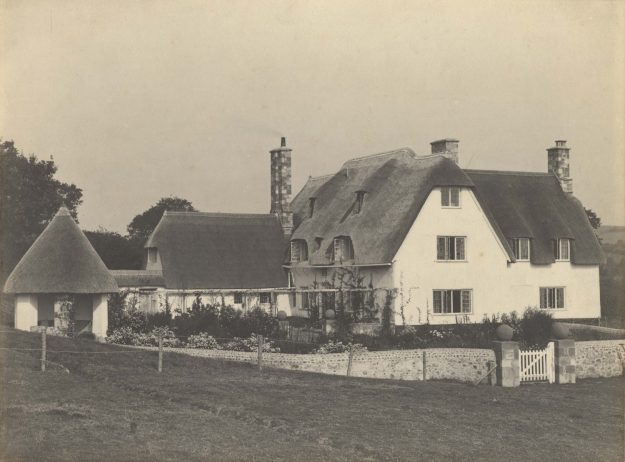
He built several cottages. This house, Coxen, is near Budleigh Salterton, Devon, and is of the local building material, cob. The workmen had to learn how to use the traditional building material made of straw, soil and water. It was built in 1912.

1991_1016_996_Y41_004-detail-625×667
His most famous house in the Leicester area is Stoneywell, in the Charnwood Forest, built for his brother Sydney. This etching is by F L Griggs, and is in the 1924 memorial volume to Gimson by Griggs, and other friends.
1972_186_33
Design for the Memorial Library at Bedales School.
1941_224_347-1
House designed for the Pre-Raphaelite artist William Holman Hunt in 1900. The house was never built.
1941_222_123
Design for clergy seats for Salle church in Norfolk, 1911.
1941_224_15-625×420
He also designed workers' cottages for May Morris, William Morris's daughter, in Kelmscott, Oxfordshire.
1941_224_19_2-625×438
In 1910 he designed the hall for Bedales, a progressive school. It was built by Geoffrey Lupton, who had been a student there.
1941_224_71-1-625×456
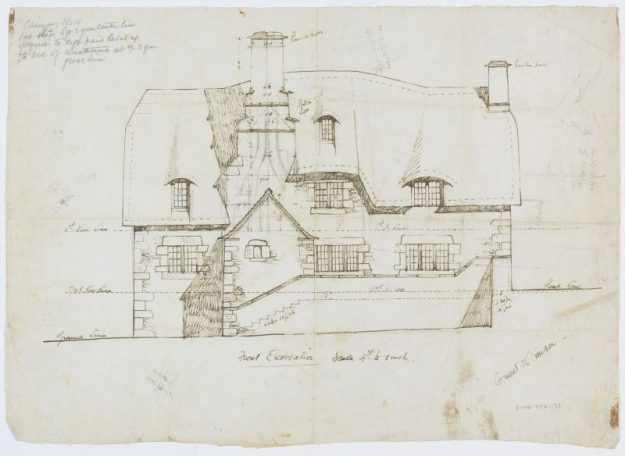
In 1901 Gimson designed a house for himself, the Leasowes in Sapperton, where he would live for the rest of his life.
1941_226_42-625×478
His last architectural work was also for Bedales - the Memorial Library, designed as a war memorial for the school in 1918. Gimson did not live to complete the building work. His old friend Sidney Barnsley oversaw the work in his stead.
1941_226_225_007
1941_226_227-625×476
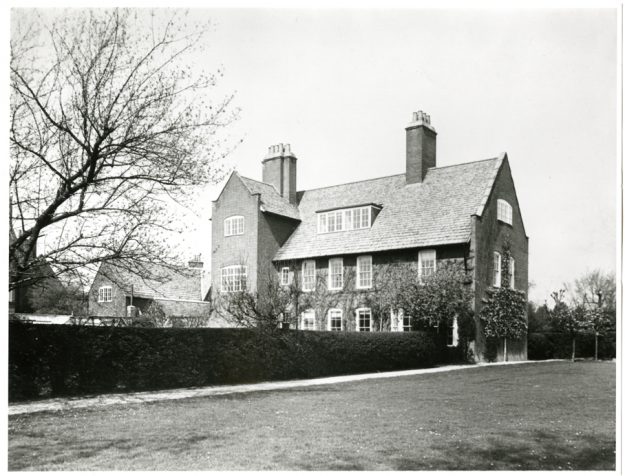
Inglewood in Leicester, the first house Gimson built, 1892.
1941_224_6_2-625×425
The White House in Leicester, designed for Gimson's brother Arthur, 1896. The garden front has concrete decoration with a tree and the date 1897.
Share this article
Follow us
A quick overview of the topics covered in this article.