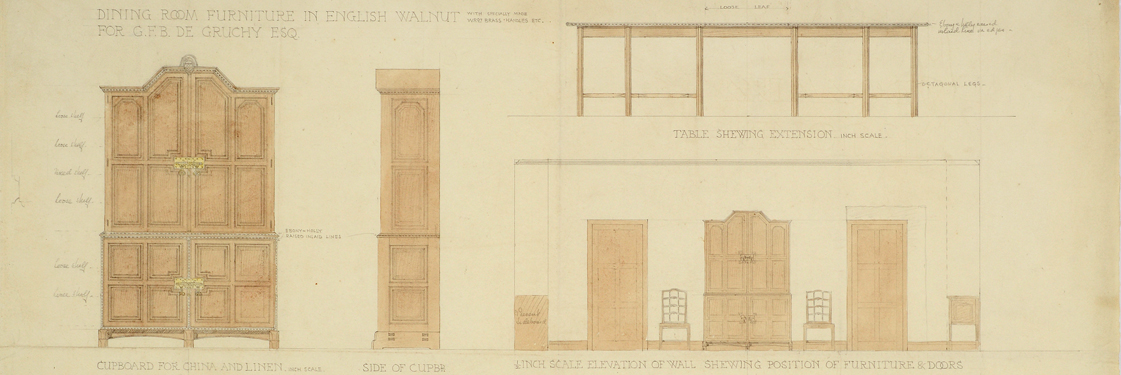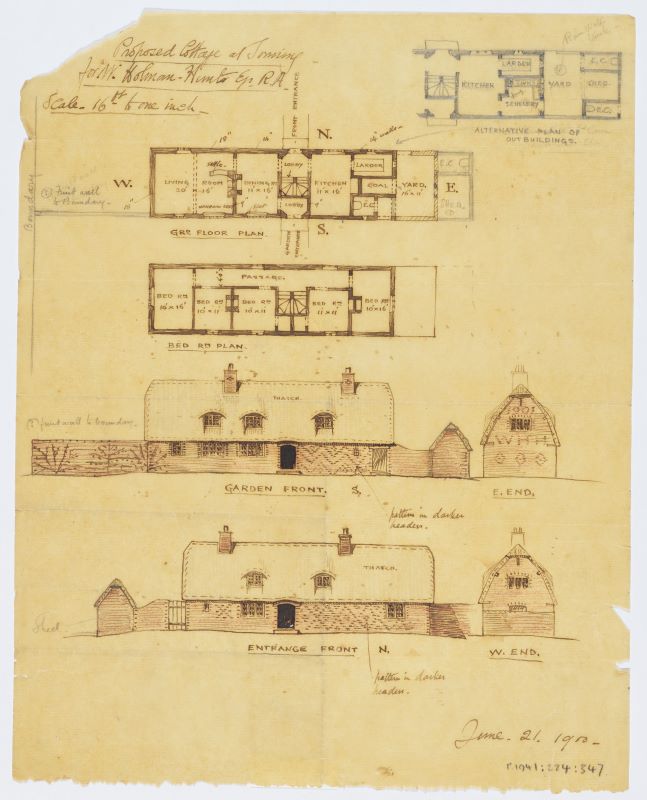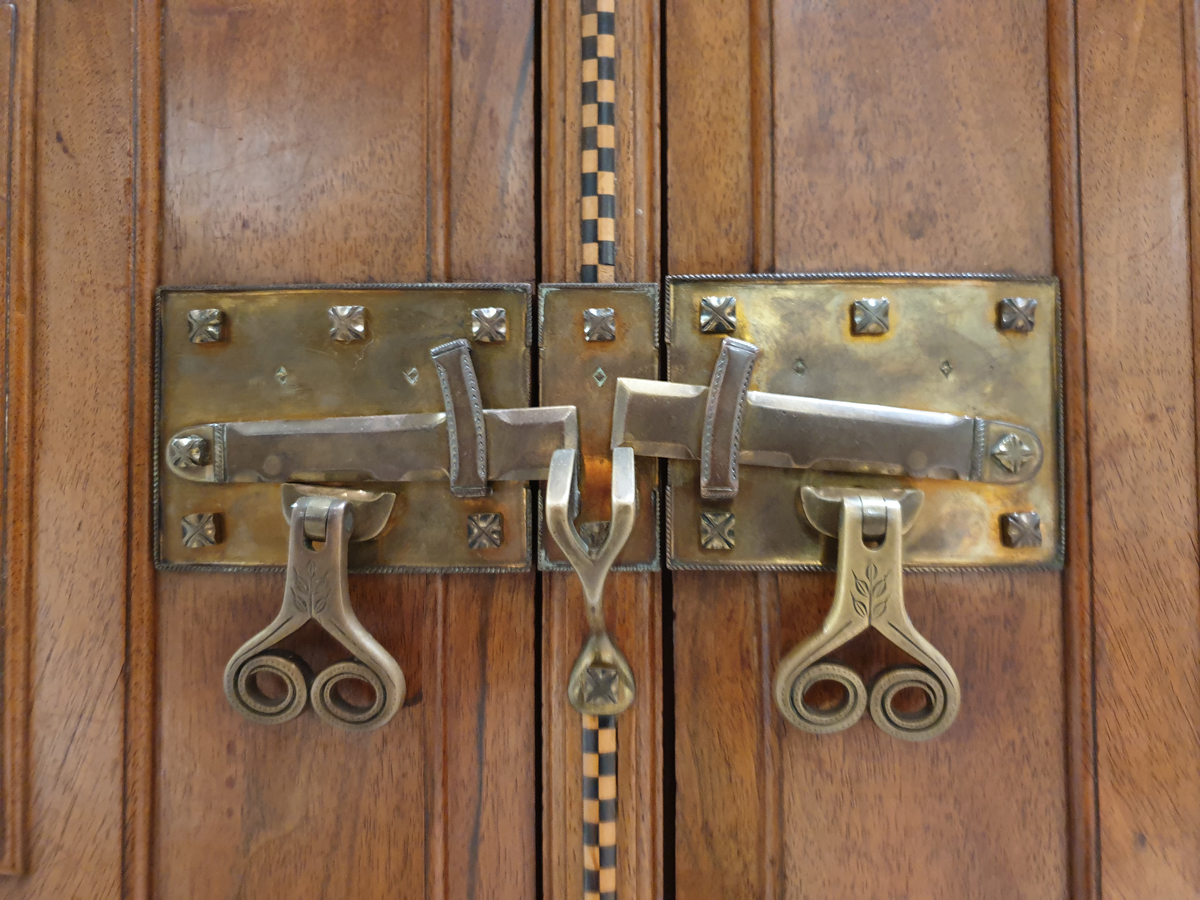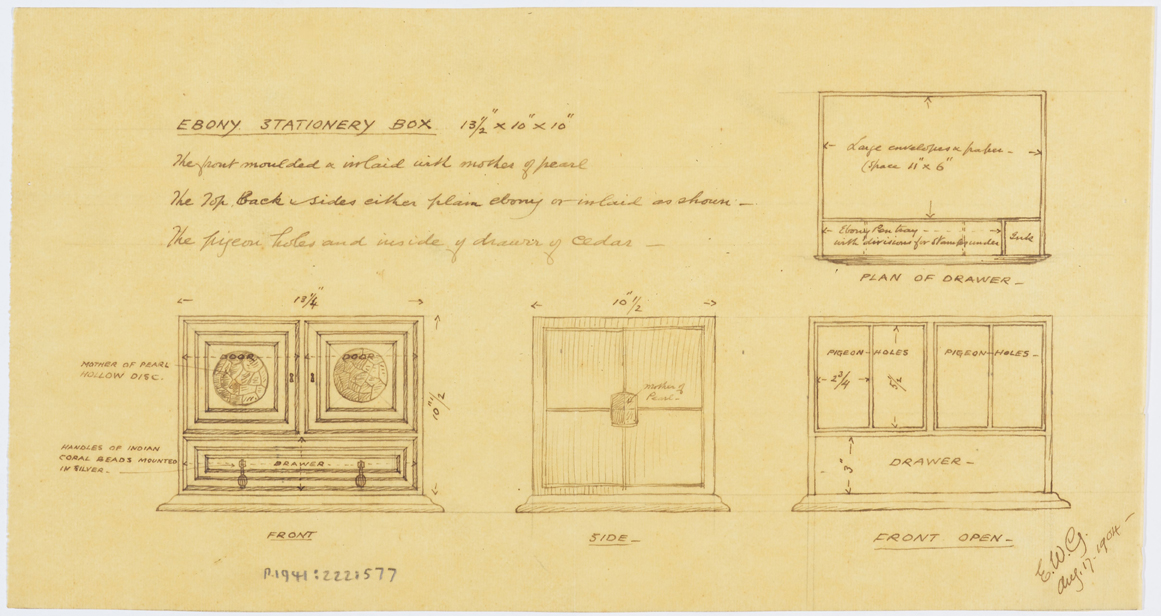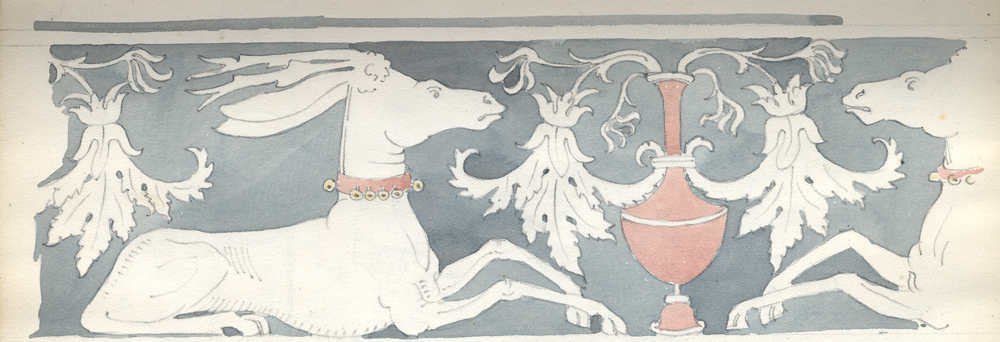

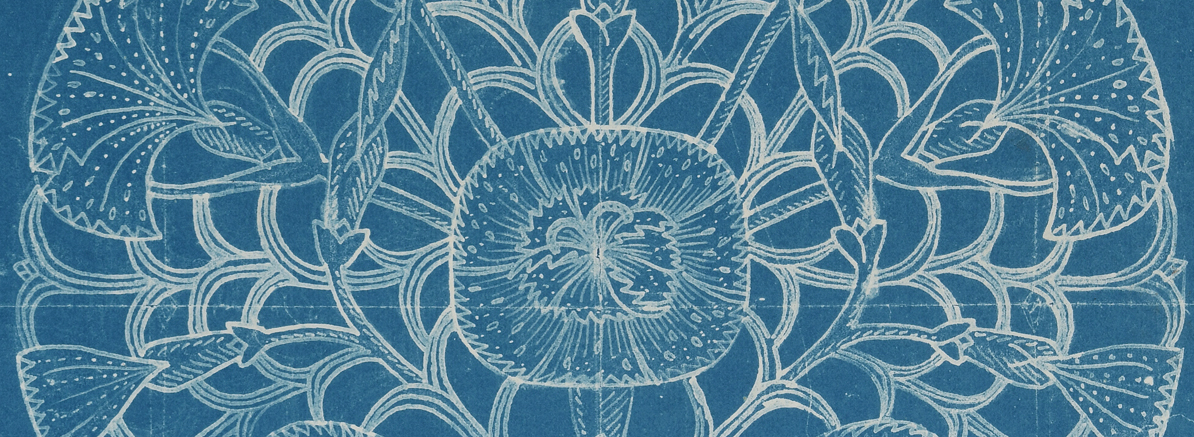
Gimson’s sketchbooks show he was fascinated by metalwork. From medieval door hinges to elaborate 17th-century fire dogs and rubbings of memorial brasses, metalwork makes up a large proportion of his sketches. However, it was the last craft Gimson embraced. Unhappy with the quality of commercial metalwork he needed for his architecture and furniture, he started a smithy in Sapperton in 1903 with young local blacksmith Alfred Bucknell.
The Wilson holds over 400 metalwork designs by Gimson. Explore a selection below.
Starting the blacksmith’s shop
Gimson’s architect friend Alfred Powell, who had recently moved to the area, introduced him to Bucknell, the son of the blacksmith in the nearby village of Tunley. Gimson started to design the hinges, handles, gates and other fittings he needed for his architectural work and furniture, but soon was creating more elaborate pieces. He and Bucknell worked closely together to learn and develop the techniques needed for the work they wanted to make.
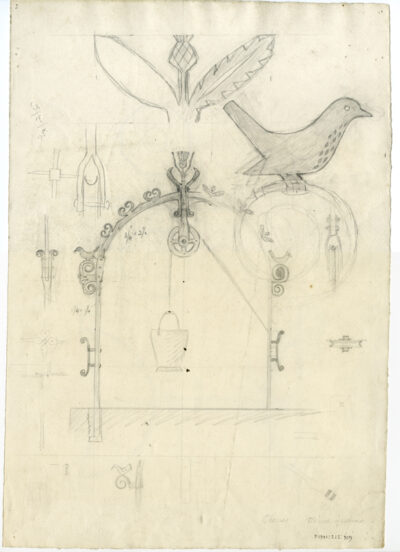
One of Gimson’s earliest metalwork commissions was for the Old Place at Mochrum, near Wigtown in Scotland. This design is for the well.
The work of the smithy
As well as traditional blacksmithing, Gimson designed complex pierced and chased work, based on 17th-century metalwork he admired. This process involves cutting (‘piercing’) the metal by hand and then using a chisel to ‘chase’ it with patterns. The metal is then stamped with decoration and hammered on the underside to create depth. The smiths made not only small work like fire irons and fittings, but also gates and other architectural work. Usually about four men were working at the smithy.
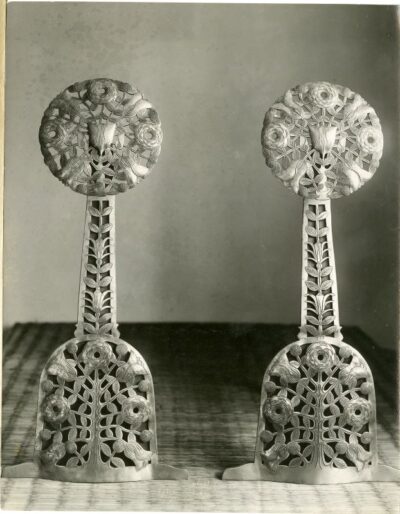
Fire dogs designed about 1909 and based on 17th century versions Gimson had seen as a young man.
Alfred and Norman Bucknell
Like Peter Waals, Bucknell continued producing work to Gimson’s designs after Gimson’s death. In 1913 he moved back to Water Lane, where his father had worked when Ernest Barnsley built the new Sapperton village hall on the site of the smithy. Bucknells’s son, Norman, joined him in 1930 after a period of furniture-making and continued to make metalwork until the 1990s.
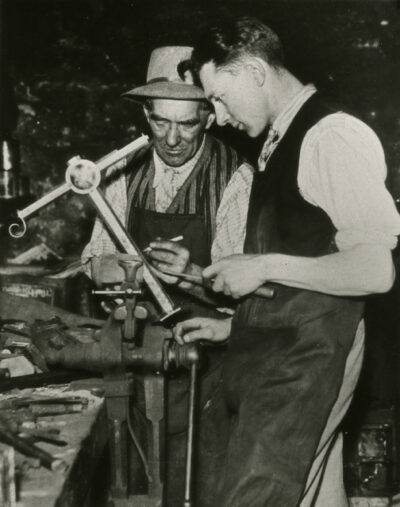
Norman Bucknell with his father Alfred in the 1930s making an altar cross, probably to a design by Gimson.
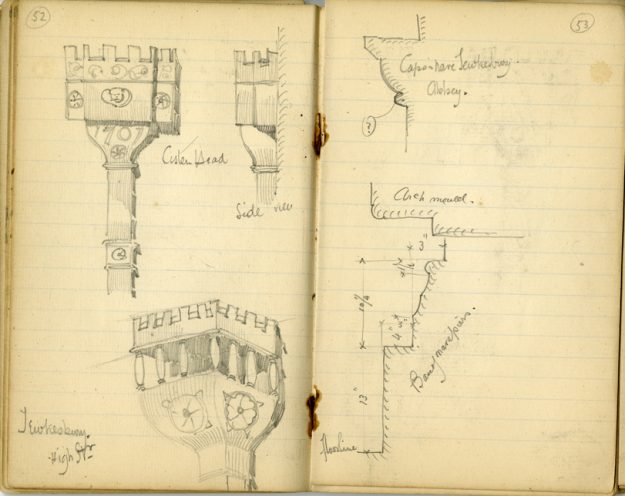
Gimson always took note of metalwork in his travels around Britain. These rain hoppers are from Tewkesbury, which he visited in 1887.
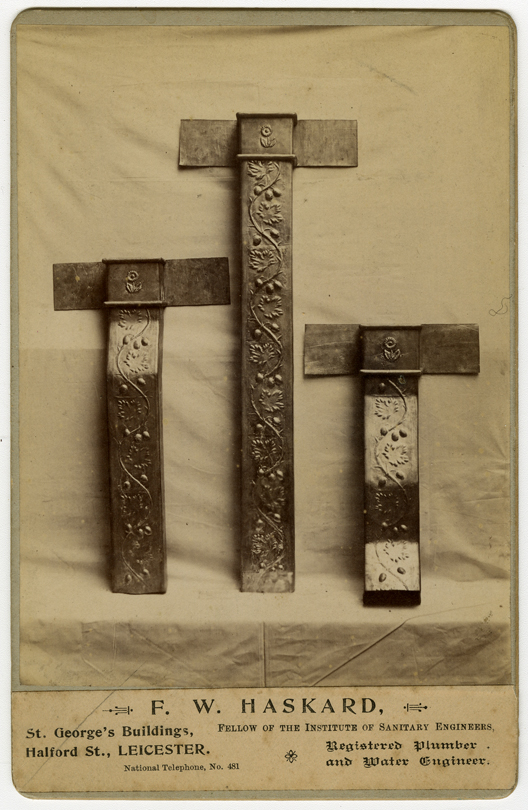
He designed new hoppers and leadwork for the White House, the house he built for his brother Arthur in Leicester, 1896. They were made by F W Haskard of Leicester..
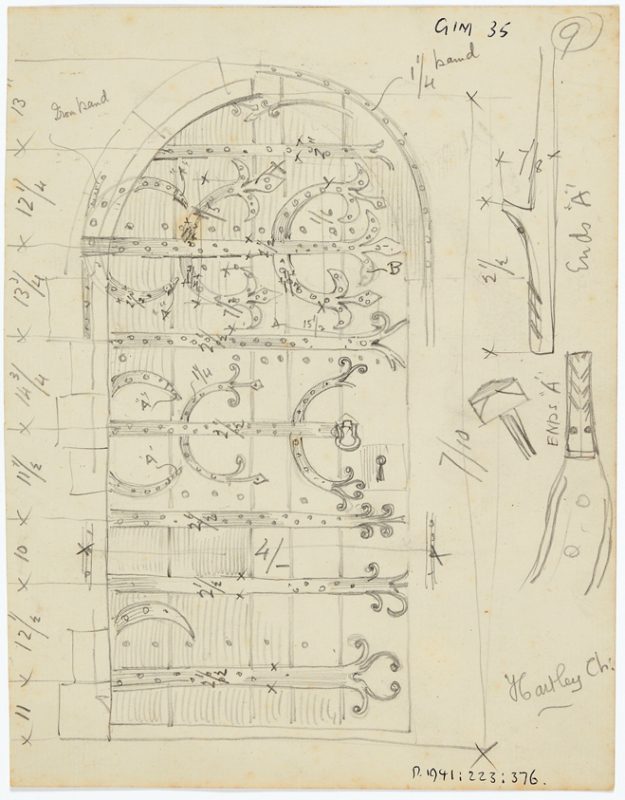
One way to find medieval metalwork was to look at doors. Gimson took inspiration from the swirling decorative hinges on church doors, like this 12th century example from Hartley, Kent.

This is a design for a decorative door hinge. It was given to the workshop - many of the drawings have singe marks and holes. This early design, about 1904-5, is for the Old Place at Mochrum in Scotland.
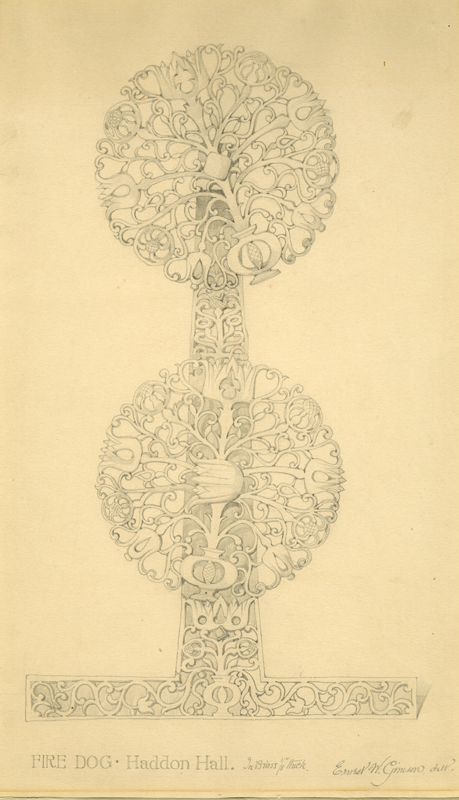
Gimson also visited stately homes on his travels. In 1888, while visiting Haddon Hall, Derbyshire, he sketched this fire dog.
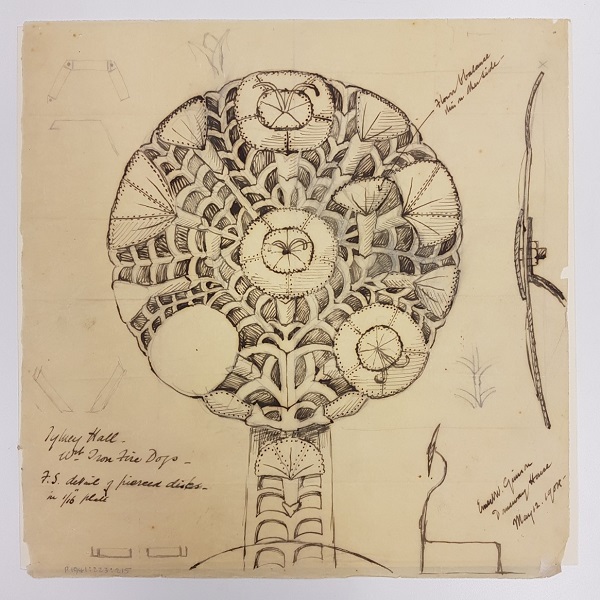
In May 1904 he designed these fire dogs, clearly inspired by the Haddon Hall ones.
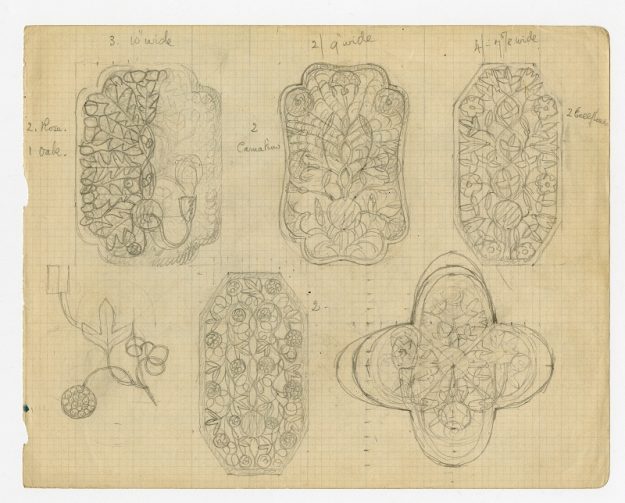
This sketchbook from 1914 shows Gimson sketching ideas for all sorts of objects, including the popular candlesconces.
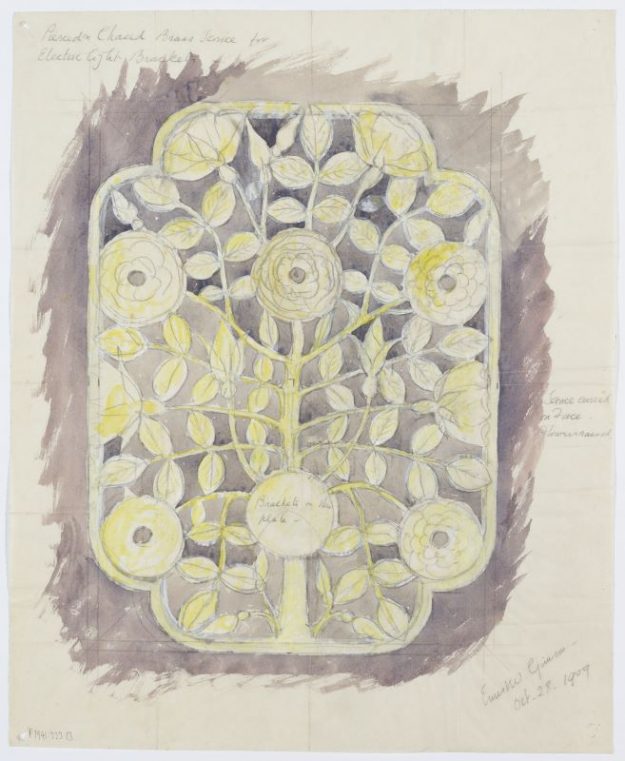
Gimson didn't just design candlesconces - this similar design from 1909 is for an electric light fitting.
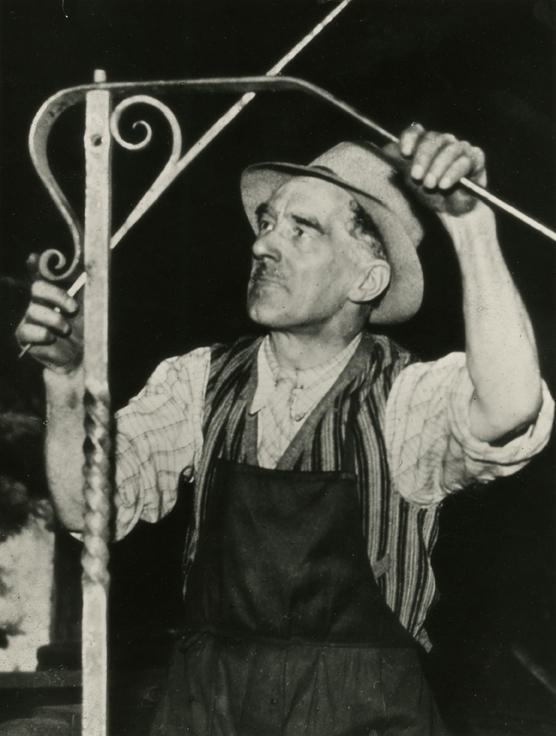
Gimson's main smith was Alfred Bucknell, the son of the smith at Water lane, near Sapperton. He continued making metalwork throughout his life. His son Norman took over his buisness.
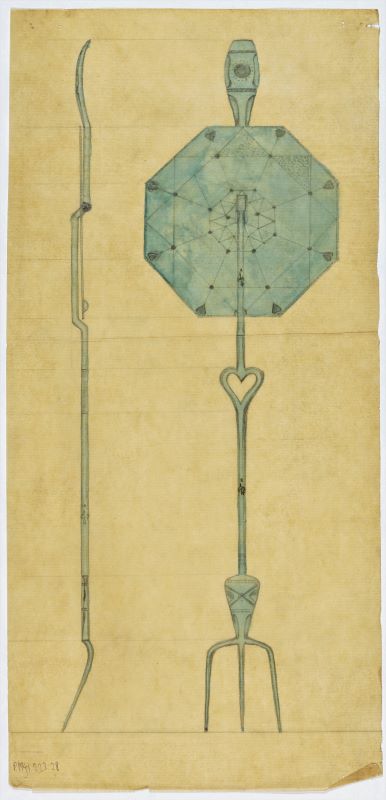
Gimson's smiths also made fire irons. They were often complex and challenging to make, but obviously gave the smiths satisfaction. Norman Bucknell was still making this design for a toasting fork in the 1980s.
Share this article
Follow us
A quick overview of the topics covered in this article.