
Gimson is best known as a furniture designer. He started designing furniture seriously in the 1890s as part of Kenton and Co. In 1901 he went into partnership with Ernest Barnsley to found a woodworking business in Sapperton, Gloucestershire. They hired professional cabinetmakers Peter Waals and Harry Davoll and recruited men from the local area to work with them. Gimson took over the business in 1905 after a breakdown in his friendship with Barnsley. He grew it into a successful business, which continued till his death.
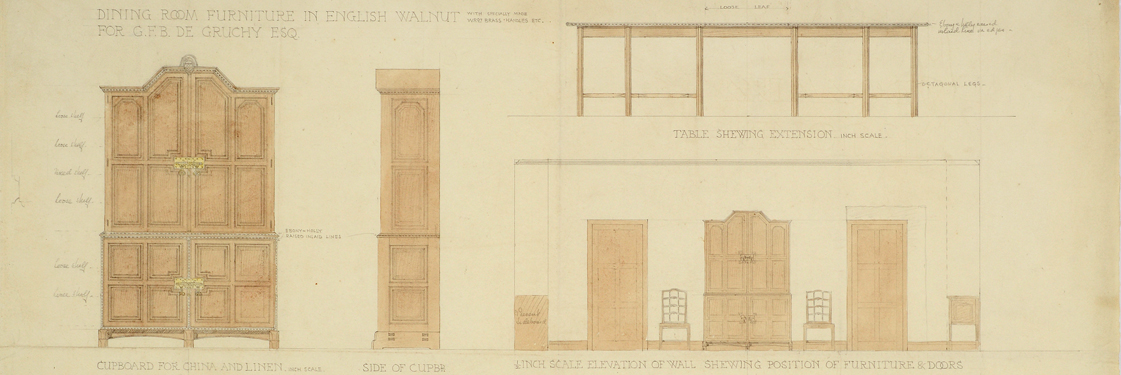
Gimson worked hard to create new work. About 800 furniture designs survive. These range from worked-up designs to show clients to detailed scale drawings for the team in the workshop. You can explore the different kinds of designs and types of furniture below.
The Daneway workshop and showroom
The workshop was based in farm buildings at Daneway House, just outside Sapperton. The 14th-century house was used as a showroom for clients. Gimson’s style relied on both good-quality materials and good workmanship. No machinery was allowed in the workshop. All the work was done with hand tools. The techniques used to create each piece were crucial. Joints and dowels, for example, became part of the design.

Daneway-house-interior-no-number-fireplace-and-furniture
The showroom at Daneway House, with Gimson's furniture, ladderback chairs and metalwork.
Gimson’s inspirations
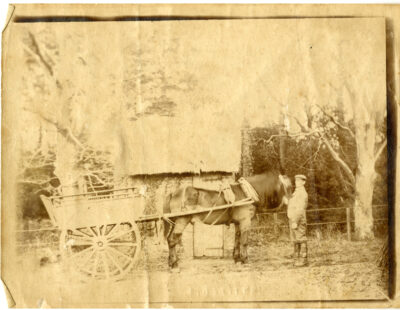
As well as studying old furniture, Gimson observed the rural world around him. Wagon sides become sideboard backs and hay rakes become table supports. Chamfering, used by wheelwrights to make wooden wheels lighter, softens hard edges. His work isn’t all cottage simplicity. He created elaborately inlayed and veneered pieces. For himself, Gimson preferred the cottage style, furnishing his own house as simply as possible. He allegedly only installed running water to please his wife.
1941_226_001
Photograph in Gimson's collection showing a horse and wagon.
A popular style and continuing tradition
Like William Morris, Gimson hoped to create furniture ordinary people could afford, but the cost of paying his workers and insisting on high-quality materials meant he depended on well-off clients. The work was popular. Although in the 1890s not everyone liked ‘the butter-tub-and-carpenters’ bench style’, by the 1910s Gimson’s and the Barnsleys’ style had become influential on the next generation of more modernist furniture-makers. Peter Waals took over the workshop after Gimson’s death. A continuing craft tradition developed.

Waals-workshop-sm
Peter Waals workshop in Chalford.
2006.5-625×490
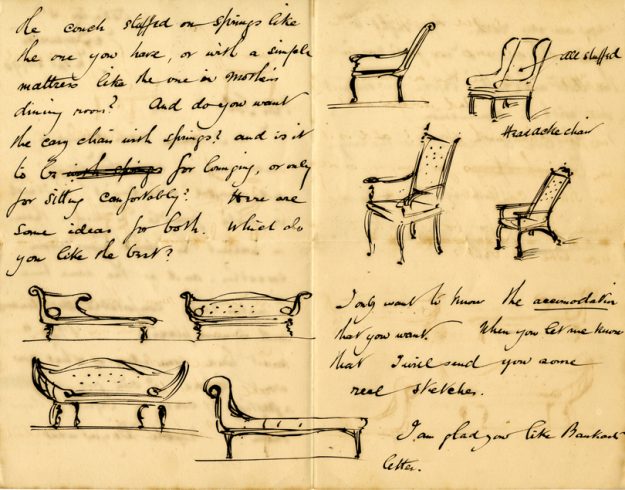
Gimson first started thinking about furniture design in the early 1890s. This letter to his brother Sydney is full of suggestions for Sydney's new home.
1941_226_232_62-sm-625×551
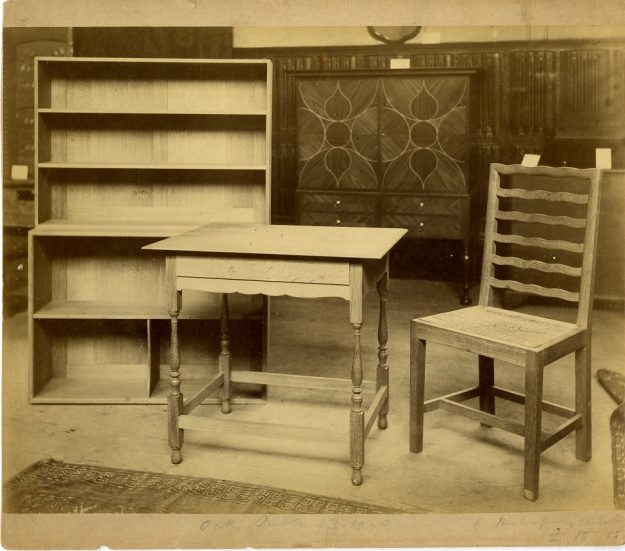
In 1891 Gimson founded Kenton & Co. with some architect friends. Each man designed his own pieces. They had a show in London, from which this photograph dates. Gimson designed the chair.
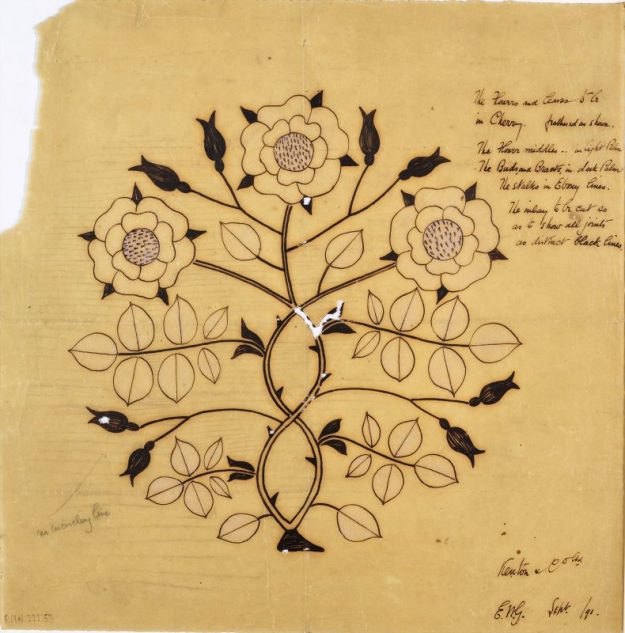
1941_222_53-625×633
The Wilson holds Gimson's first known furniture design - this design for the inlay of a cabinet that was made in 1891 for Kenton & Co.
Waals-workshop-sm
Peter Waals workshop in Chalford.

1941_226_001
Photograph in Gimson's collection showing a horse and wagon.

Daneway-house-interior-no-number-fireplace-and-furniture
The showroom at Daneway House, with Gimson's furniture, ladderback chairs and metalwork.
1941_222_280-625×412
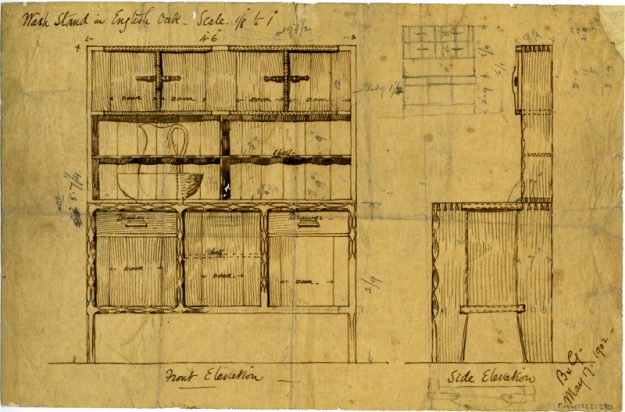
After moving to Gloucestershire, Gimson concentrated on making ladderback chairs. In 1901 he and Ernest Barnsley founded a furniture workshop. They started designing together. Not many designs survive, this is one.
Photograph-of-workmen001-625×445
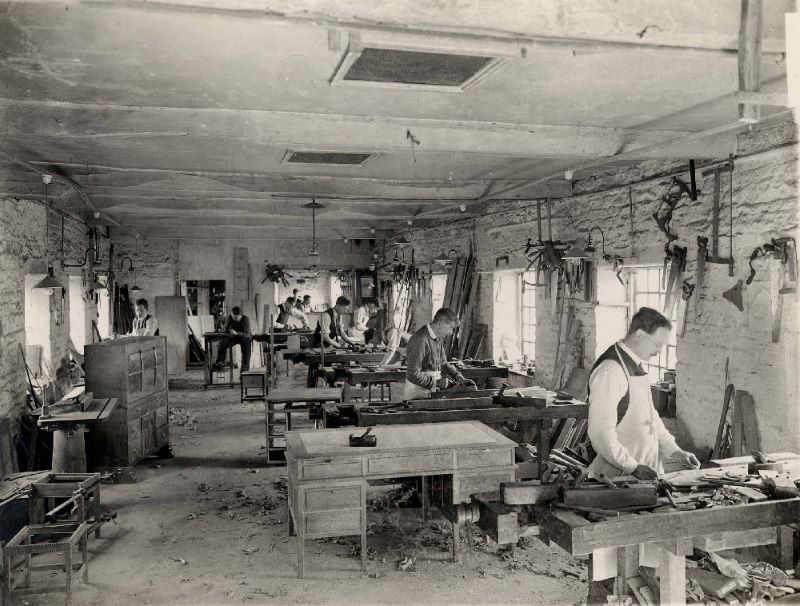
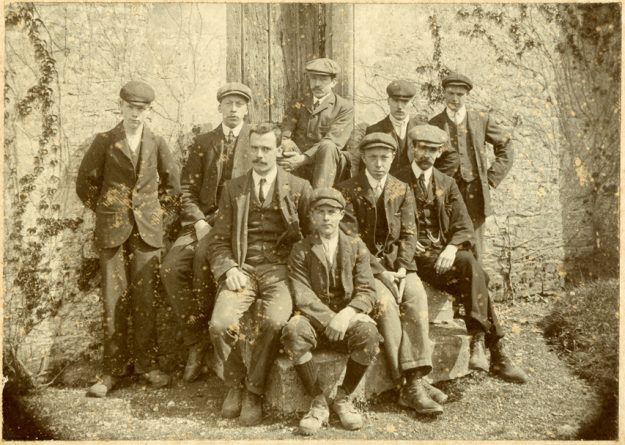
The partnership didn't last long, and Gimson took over the workshop. He employed a team of workers, with foremen Peter Waals and Harry Davoll and a range of workers from experienced cabinet makers to apprentices.
1941_222_310-625×644
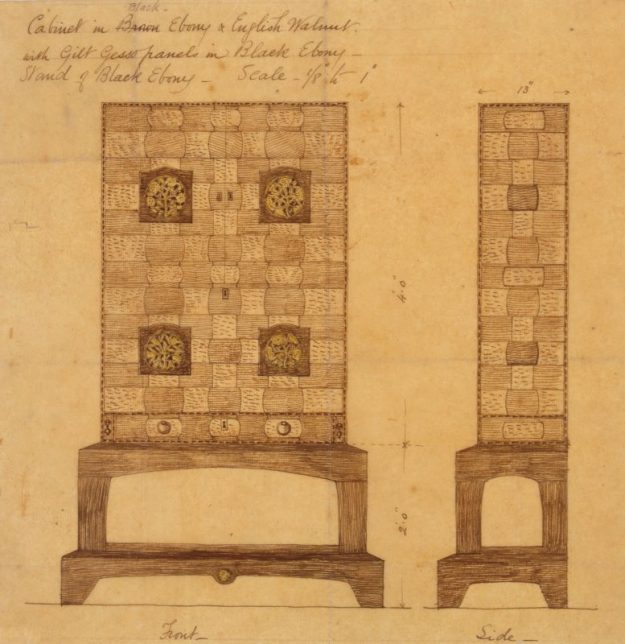
Gimson designed a range of different types of furniture. Some pieces were very elaborate, like this cabinet in black ebony and English walnut, with gilded gesso roundels.
1941_222_16-625×510
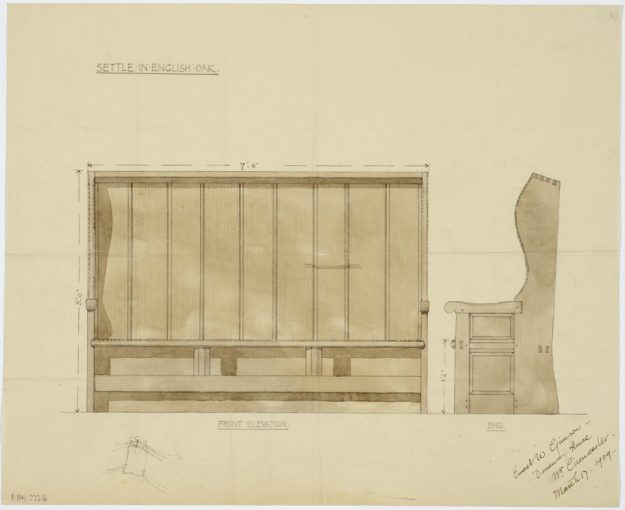
Others had the cottage simplicity that Gimson liked in his own home, like this settle of 1909.
1941_222_4-625×749
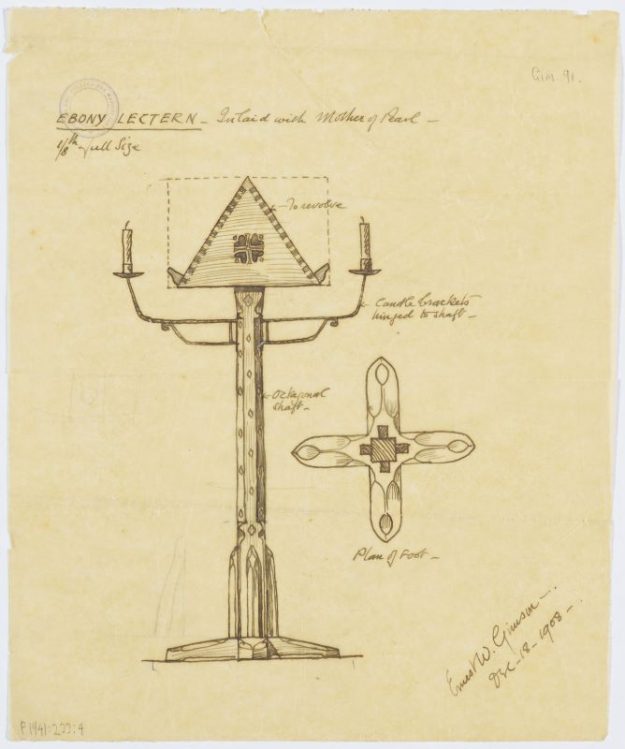
He also designed woodwork and furniture for churches, like this ebony lectern inlaid with mother-of-pearl, from 1908.
1941_222_580
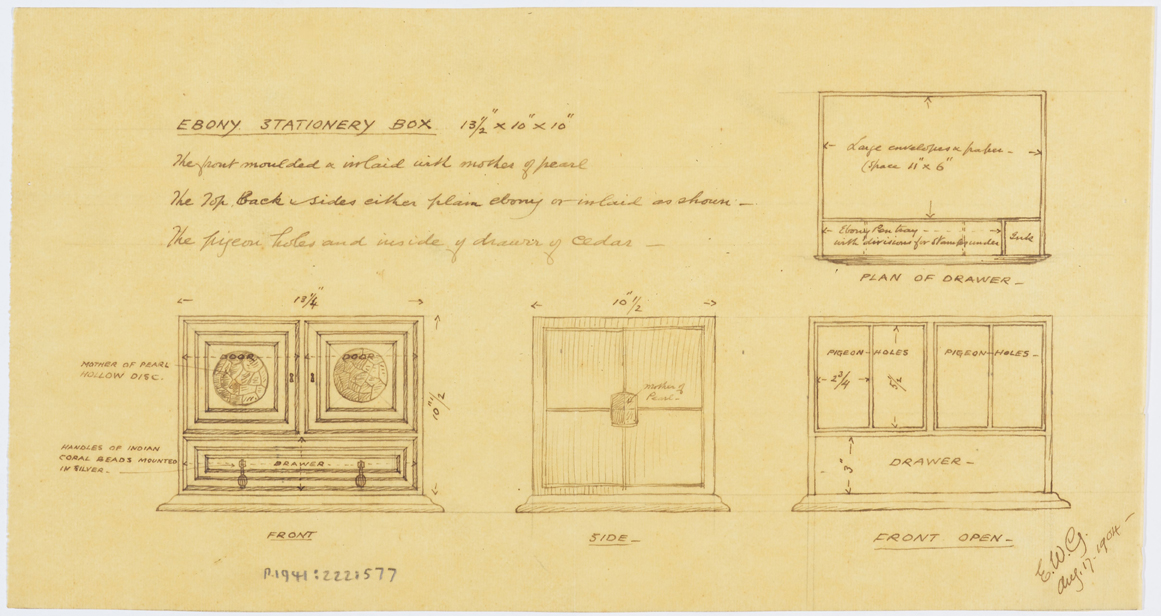
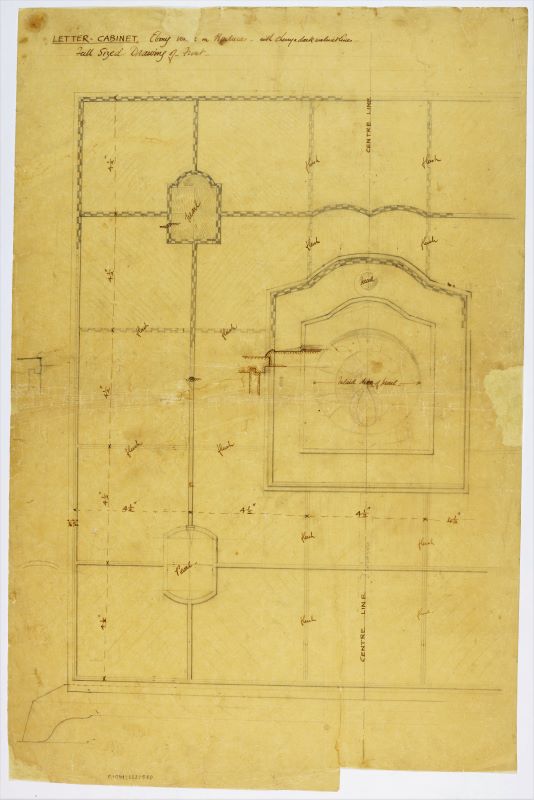
Sometimes the designs were just for use by the team in the workshop. On this design for a letter cabinet you can see measurements and specifications for materials..

1941_226_242_1-side-2
The Wilson is also fortunate to hold the many photographs Gimson had taken of his work. The photograph was a record for his files as well as something he could show to clients to help give them ideas.
Share this article
Follow us
A quick overview of the topics covered in this article.