
Despite the Napoleonic wars and the post war depression, Cheltenham continued to prosper. By 1800, over 2000 visitors came to the spa each year and many wealthy individuals and families settled in the town. They in turn attracted working people from the surrounding area, who found employment in domestic and other services, in retails and in the building industry. The town’s economic life continued to diversify and by 1820, stone quarrying, brick-making, the manufacture of ornamental ironwork, coach building, cabinet making and the production of medicinal salts were all figured in the town’s economy. In 1811 a horse-drawn tramway to the docks at Gloucester was opened and by 1825 the main roads to the town had been turnpiked.
During these decades much of the High Street was rebuilt or refronted in brick or stucco, and a number of imposing new blocks of houses were constructed for the accommodation of residents and visitors, including the Royal Crescent begun in 1805-6 on one side of the path leading from the town to the Well Walk, and a succession of Terraces along the upper High Street. Several new spa wells were established from 1801 onwards – notably Montpellier and Imperial Spa – and villas and terraces were gradually built along their tree-lined ‘walks and rides’.

cheltenham-high-street-1804-john-nattes_4618503036_o-625×333
Cheltenham High Street 1804, John Nattes
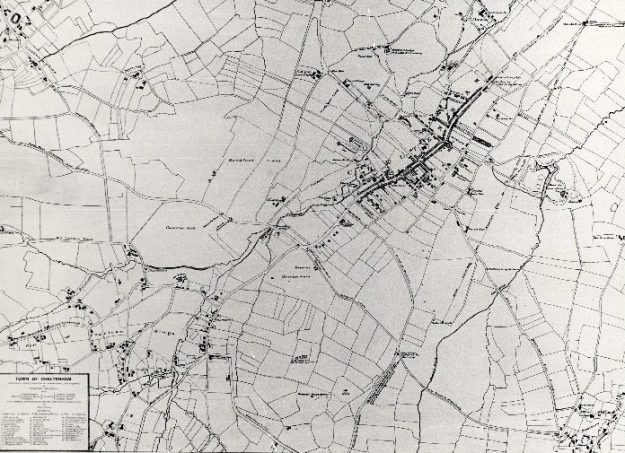
cheltenham-map-1810_4618424905_o-625×453
Cheltenham Map, 1810
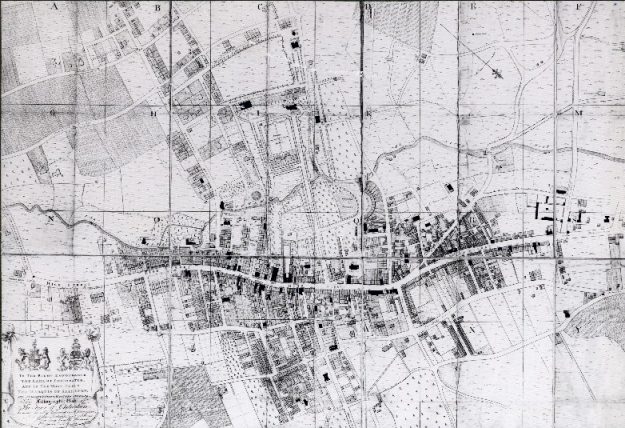
cheltenham-map-1820s_4618503328_o-625×428
Cheltenham Map, 1820s

royal-crescent-1813-thomas-hulley_4618428313_o-625×436
Royal Crescent 1813 by Thomas Hulley

the-assembly-rooms-1813-thomas-hulley_4618503142_o-625×514
The Assembly rooms 1813 by Thomas Hulley

the-cheltenham-salts-manufactory-1826_4617888989_o
The Cheltenham Salts Manufactory, 1826
Share this article
Follow us
A quick overview of the topics covered in this article.