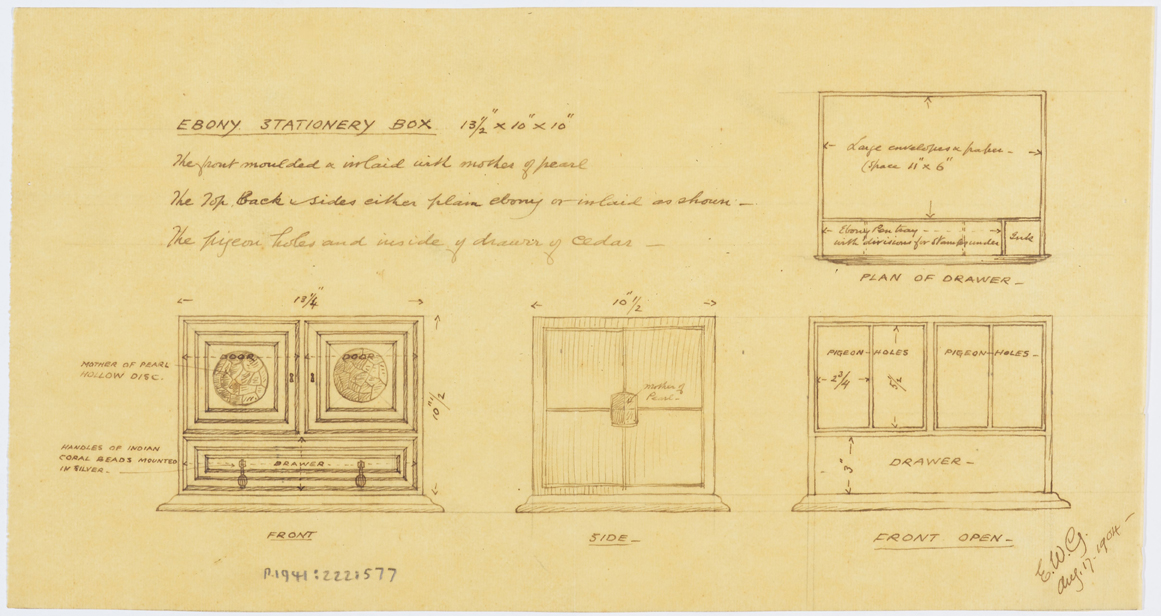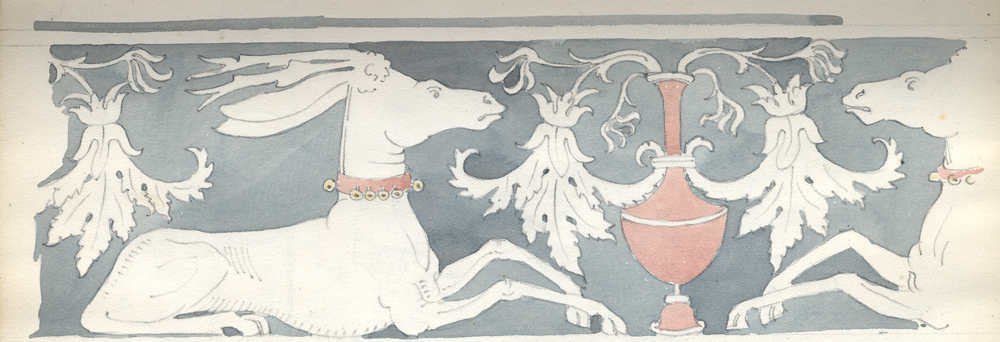

They formed the nucleus of the Guild and School of Handicraft founded by Asbee in 1888. The enterprise was inspired by the medieval idea of a closely-knit group of craftsmen working for the greater good. The Guild undertook a wide range of work with the building and domestic arts. By 1901, the reputation of Ashbee and the Guild was well-established with a shop in Brook Street in London`s West End as well as workshops in Essex House in the East End.
When the lease to Essex House ran out in 1902, Ashbee decided to bring his long-held dream of moving `back to the land` to fruition. Over that summer the Guild moved to Chipping Campden taking advantage of readily-available space for workshops and accomodation as well as the medieval beauty of the small town in its specularly attractive rural setting. A number of new Guildsmen joined the enterprise including Alec Miller and Fred Partridge. Ashbee and his wife, Janet put a huge amount of energy into communal activities such as theatricals, physical sports and the Campden School of Arts & Crafts.
The Guild`s business went into decline after the highpoint of 1901 and in 1908 the Limited Company of the Guild of Handicraft was forced to close because of lack of capital. A number of Guildsmen carried on working in Chipping Campden including Alec Miller and George Hart. Ashbee himself published `Modern English Silverwork`in 1909, a remarkable record of his achievement as a designer of silver and jewellery. From 1917-22 he worked in Egypt and Jerusalem before retiring to Janet Ashbee`s family home in Kent.
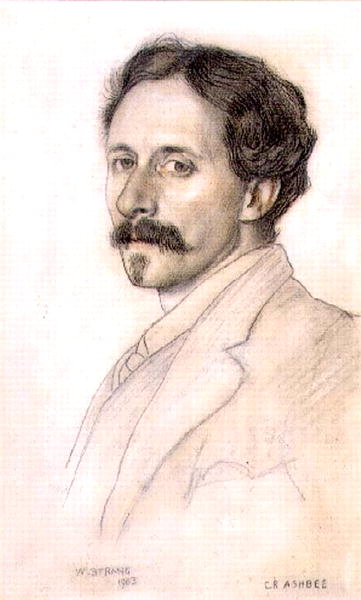
AWG87427
AWG87427 Portrait of Charles Robert Ashbee (1863-1942) 1903 (charcoal and chalk) by Strang, William (1859-1921); © The Art Workers' Guild Trustees Limited, London, UK; Scottish, out of copyright
Share this article
Follow us
A quick overview of the topics covered in this article.