
In terms of its size and population, Cheltenham remained small until well into the 18th century. In 1650, the number of its families was estimated at 350, while another estimate in 1712 put its total population at just 1500 and the number of its houses at 321. The town comprised little more than the present High Street and a number of adjoining lanes and it was in fact sometimes known as Cheltenham Street.
Cheltenham’s transformation from a market town to a Spa began in c.1716, when medicinal waters were discovered in a field to the south of the town. 20 years later in 1738 – 42, the owner of the field, Henry Skillicorne, deepened the spring to form a well, installed a pump and built a brick canopy above it with a small assembly room to one side. He also planted an avenue of trees known as the Well Walk to connect it to the town.
Despite poor communications and a lack of lodgings, the embryonic spa gradually attracted visitors from an increasingly wide area and during the 1780’s Cheltenham acquired several important new facilities – in 1780, a ‘Master of the Ceremonies’ was appointed and a Circulating Library was opened; in 1781 the first guide book to the town was published; in 1782 a theatre was opened and in 1784 an Assembly Rooms. The decade culminated in July and August 1788 with the visit of King George III , who spent 5 weeks in Cheltenham “to take the watersâ€, following which the town’s role as a resort of national reputation was assured.

the-royal-party-at-the-spa-well-watercolour-by-peter-la-cave-1788_4622000220_o
The Royal Party at the Spa Well, by Peter la Cave, 1788. Watercolour.
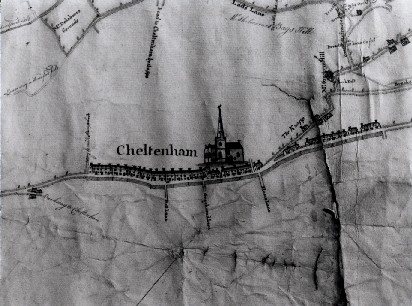
cheltenham-map-1776_4621300683_o
Cheltenham map, 1776

chelt-from-the-south-watercolour-by-thomas-robbins-c1748_4621300813_o
Chelt from the south, by Thomas Robbins, about 1748. Watercolour.
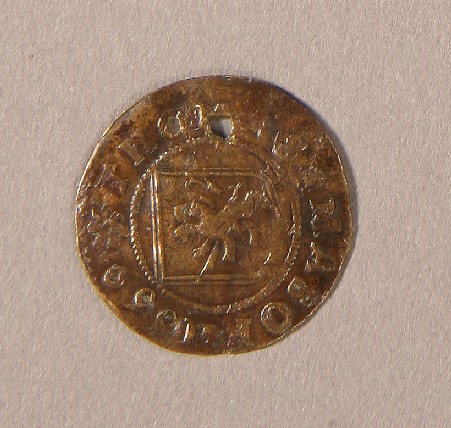
halfpenny-trade-token_4621300609_o
Halfpenny trade token

interior-of-the-assembly-rooms-engraving-late-18th-century_4621907878_o
Interior of the Assembly Rooms, late 18th century. Engraving.
Share this article
Follow us
A quick overview of the topics covered in this article.