
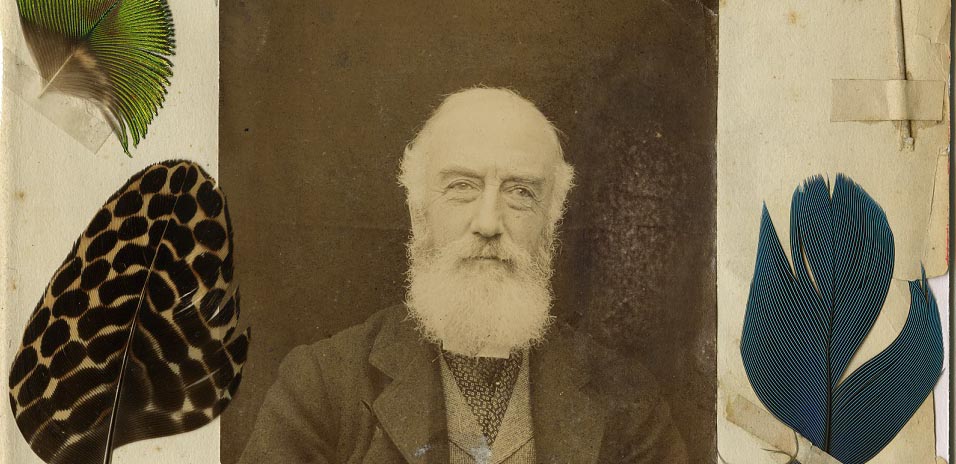
When Dr. Edward Thomas Wilson, father of Dr. Edward Adrian Wilson (the Antarctic explorer), died in 1918 his obituary read:
No man has done so much as he to stimulate and promote the intellectual life of the town of Cheltenham…

As a medical practitioner during the Victorian and Edwardian periods he contributed greatly to the health and well-being of the town, including the pioneering of modern medical practices, such as clean drinking water and district nursing. Of all his achievements for the town, however, the one which gave him greatest satisfaction was the creation of the Delancey Hospital as an isolation and fever hospital. At the time there were very few fever hospitals and where these existed, according to Wilson, they were only fit for cattle, not human beings. The contribution which this hospital made to the health of the town cannot be underestimated; the smallpox block alone, for example, which was opened in 1874, succeeded in protecting the town from that disease for over forty years.

photographs in 1892
Wilson’s contribution to Cheltenham covered a huge number of interests spanning both the Arts and Sciences, and he struck a ‘Renaissance Man’-type figure in local circles, establishing and leading various clubs and societies. These included founding the local photographic society which is the seventh oldest in the country. It also included campaigning for numerous good causes. In particular to establish a free library, a museum and also an art school for the town. Many of his achievements, in public health, photography (as a pioneer of photomicrography) and the natural sciences, were recognised far beyond the confines of Cheltenham, both at national and international levels.

by Alfred Usher Soord, dated 1913
In October 1891 he spoke in support of a museum for Cheltenham but the time was not right to garner sufficient support. He tried again in November 1906 which helped to start the process that eventually led to the opening of the town’s museum on 20 June 1907. Wilson’s aim was for a distinctively local and centrally situated museum which had a strong educational purpose.
Our museum [he said] should be no curiosity shop, in which dusty specimens of moth-eaten, ill-stuffed birds and animals, mummy cases, and ancient pickles shock more senses than one. He was also adamant that the museum should have a diligent, energetic and knowledgeable curator who could make the dry bones live…and tell their story. Almost predicting the museum’s recent redevelopment, Wilson also stressed: If it once stagnates it deteriorates; it must have in it an inherent power of expansion and development…
Appropriately, it was Wilson who in 1907 proclaimed the museum open in front of a goodly company, representative of the scientific, literary, artistic, and municipal life of the town. In acknowledgement of his achievement, Cheltenham’s famous M.P., mayor and museum donor, Baron de Ferrieres, commented on the day, that Wilson should be considered to be the originator of the Museum, for while many of those in authority had not been very keen for it, his persistency had kept them up to the mark.
Share this article
Follow us
A quick overview of the topics covered in this article.