
Early Illustrations
Wilson was born in Cheltenham in 1872 and from an early age he liked to draw. His father noted that ‘he never tires of drawing, soldiers, funny little figures full of action and all his own, for he disdains the idea of copying anything’. His mother bought him his first and only formal drawing lessons when he was still a young child. Remarkably his only other training was through art classes at Cheltenham College. He yearned for further training for many years
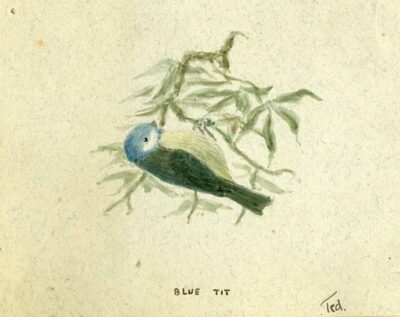
A-Blue-tit-painted-when-Wilson-was-young-undated
A Blue Tit, one of Wilson’s earliest paintings
At Cheltenham College
The College taught excellent drawing skills as many students would become army officers and surgeons, both professions requiring accurate recording skills. His father’s passion for nature also fuelled Wilson’s own interest in the natural world. In his view there was no substitute for observing birds and animals in their natural environment. He used to spend many hours on the hills around Cheltenham, particularly at The Crippetts in Leckhampton, just listening and looking. He said he felt so close to nature he could hear a bird’s heartbeat!
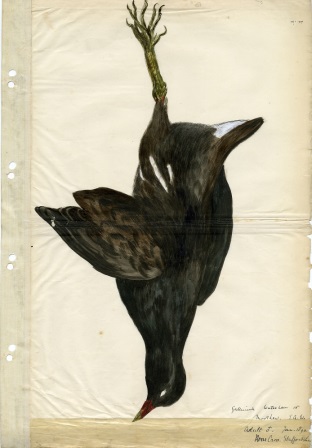
Moorhen
A painting of a deceased Moorhen in Staffordshire, 1890
Live drawing
Wilson wanted to depict animals and birds from life which was not the fashion at the time. Some of his work is drawn from dead specimens but as his skills developed he concentrated on portraying living creatures and plants. The Nature Notebooks show this change in style very clearly. The skills he taught himself in Britain and later in Norway were to stand him in good stead when he was confronted with depicting the Antarctic
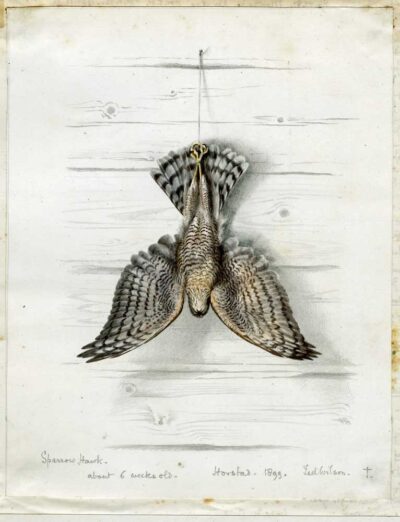
Nature-Notebook_Sparrow-Hawk-p134a
A study of a deceased Sparrow Hawk, 1899
Range of specimens
Most of this early work is in pencil and ink but as he developed his techniques he used watercolours more. The Nature Notebooks show the extraordinary range of creatures and plants Wilson was prepared to depict; in fact ‘ no living specimen was beyond his pencil and paintbrush’ (ETWilson, his father). Wilson was a scientist, not just an artist, and almost all his illustrations are annotated with the place they were found, the date, and scientific name. The notebooks actually contain many pages of written observations as well as illustrations
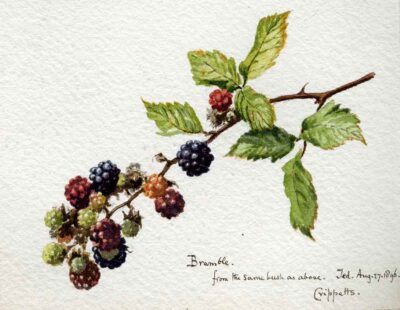
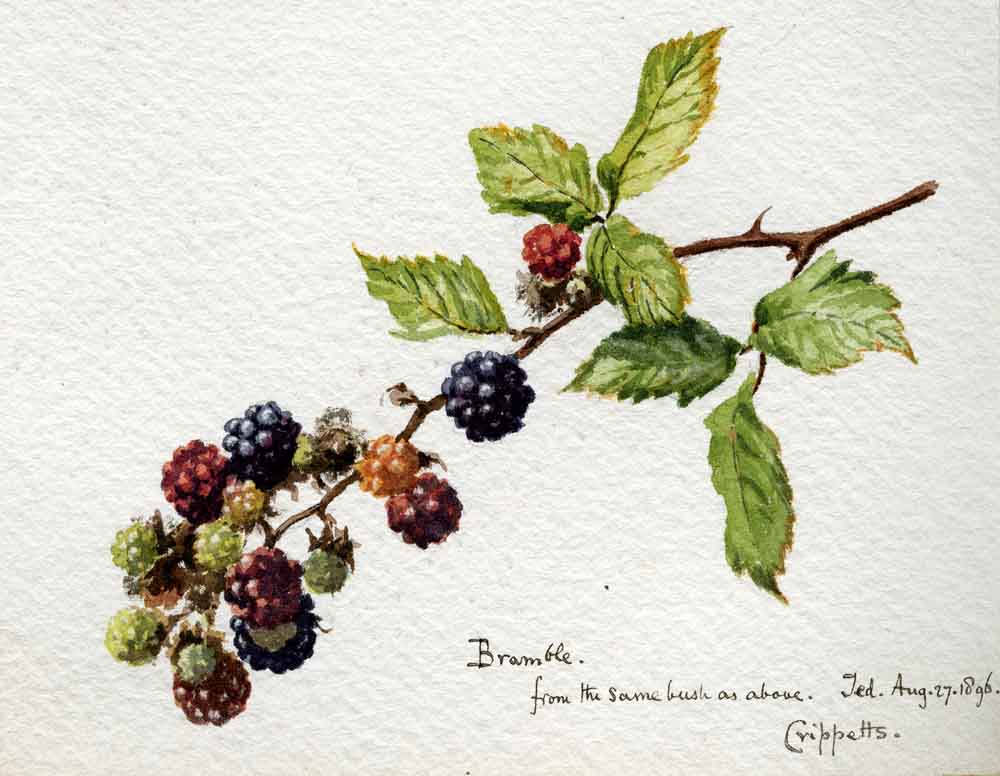
Bramble-August-27-1896-nature-notebooks
A painting of blackberries from the Crippets, just outside of Cheltenham
Cambridge, London, Norway and Switzerland
When Wilson moved away from Cheltenham to pursue his studies in natural sciences and medicine he continued his drawings. He always had a pencil and paper in his pocket, and many of the later drawings in the Nature Notebooks are on the backs of envelopes or scraps of notepaper; quick sketches of a robin in flight, or a black grouse running away from him – movements he wanted to capture before he forgot them. The pictures in Norway and Switzerland show animals and plants he was less familiar with: reindeer, fish, lichens, flowers such as spring gentian and soldenella. They were painted during his time convalescing from TB
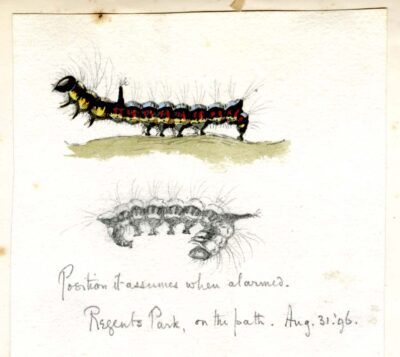
Page-136-Regents-park-Catepillar
Observations of a caterpillar from Regents Park, London, 1896
Colour notation system
Wilson’s colour sense was extraordinary, and seen at its finest in the images he painted in the Antarctic. But he honed his skills on his home territory and in Europe. The Nature Notebooks show us some of his sketches with colour notes, an invaluable insight into how he achieved such an extraordinarily accurate recording of the complex colours in the Antarctic
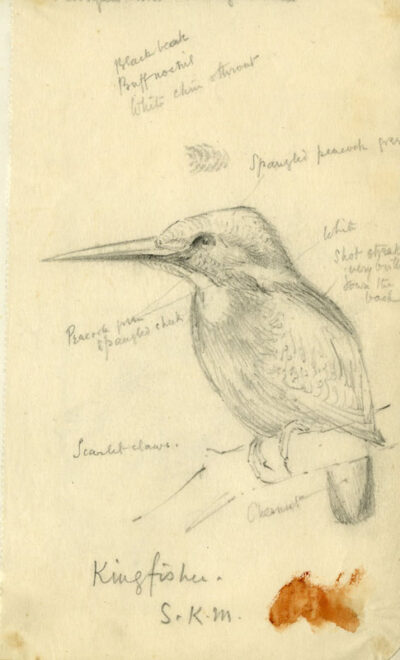
kingfisher-fc-300dpi
An annotated sketch of a kingfisher showing Wilson’s colour notation system
Share this article
Follow us
A quick overview of the topics covered in this article.