
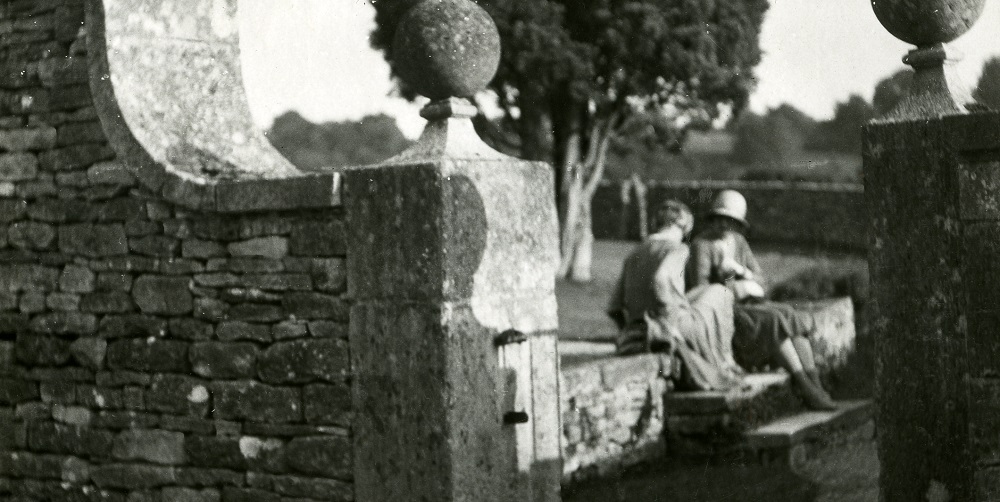
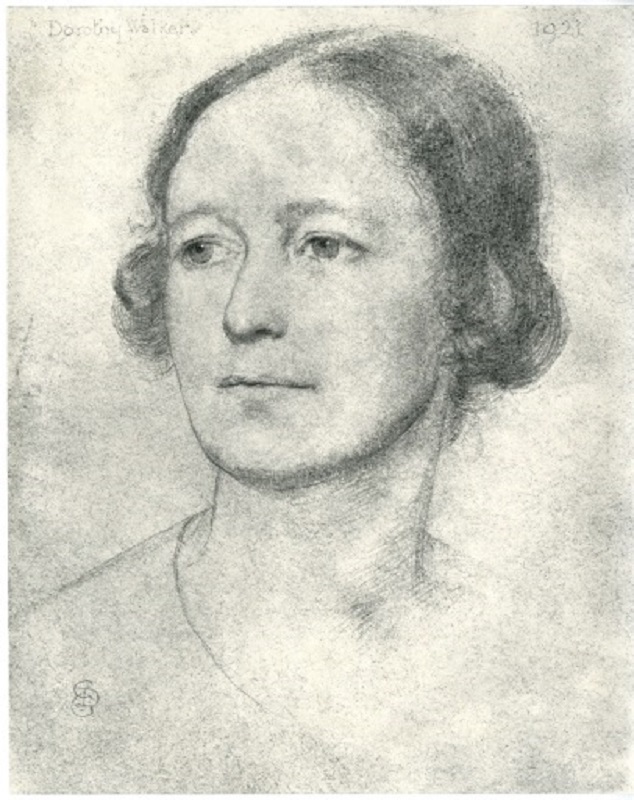
Dorothy Walker (1878–1963) was the only child of printer and typographer Emery Walker and his wife Mary Grace. She lived all her life in Hammersmith Terrace, taking on her parents’ house, number 7, on her father’s death in 1933. She was a great traveller, and maintained a wide network of friends. From 1948 she shared the house with companion Elizabeth de Haas, who went on to organise the preservation of Emery Walker’s library at the Wilson. The museum holds Dorothy’s diaries and letters as part of the Library.

Dorothy and her father were first spotted by William Morris and his daughters as they made their Sunday walk past his house, Kelmscott House, on Hammersmith Mall. May Morris remembers a little girl dressed in white muslin holding her father’s hand. Walker developed a close friendship with Morris from the mid-1880s, and quickly became a key member of not only the burgeoning Arts and Crafts Movement but also the Socialist League. Dorothy grew up with people like the Morris family, architect Philip Webb, playwright George Bernard Shaw and many more visiting her house. She was sent to the Girls’ High School in Bedford Park in nearby Chiswick, and then to France to develop her language skills.

In 1898 she went to the Slade School of Fine Art. She studied alongside Gwen and Augustus John, William Orpen and Percy Wyndham Lewis. She also studied modelling at the Central School of Art, and trained at her father’s photo reproduction business. Her studies were interwoven with holidays to visit Ernest Gimson and Sidney and Ernest Barnsley in Gloucestershire, as well as to Kelmscott Manor. After her studies, Dorothy travelled, spending time in America, Russia, and travelling in Europe. Her mother being unwell, they spent some months in 1912 in Morocco for her health. Dorothy fell in love with the country, learning Arabic and absorbing the local culture – and it was there she met Arthur Bullard, an American journalist who became the love of her life.

during the war. Dorothy spent a lot of time
travelling between her mother’s cottage
and work in London.
In 1915 Dorothy travelled to France to help with the family of a friend who had lost a leg at the front. She was also able to meet Bullard in Paris. Coming home meant looking after her sick mother, and finding war work – and knitting many socks for friends in the trenches. By now in her late 30s, Dorothy was weary of living at home. She found work at the Ministry of Munitions and moved in with her friend ‘Pixie’, the writer and illustrator Pamela Colman-Smith. Bullard’s work, probably as a spy, meant he was rarely in England, but they did meet up. However, just months before the end of the war she received a devastating letter: Bullard had met and fallen in love with someone else, and was now married. Her diary for 1918 ends with the words, ‘Oh how will next year end. Always lonely. I think I have been lonely all my life but those brief years when Arthur loved me. What a tragedy it all is!’

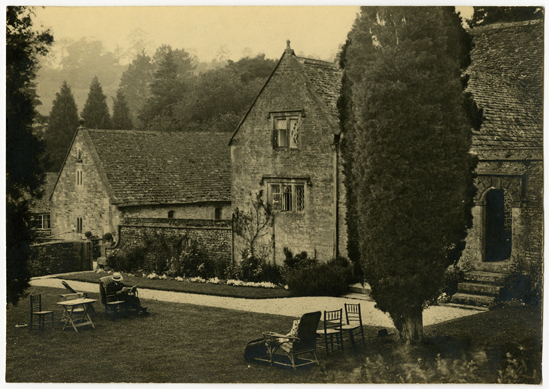
Dorothy’s mother died in 1920, and Dorothy became her father’s companion until his death in 1933. They took the lease on Daneway House, near Sapperton, in 1922, and there were many happy times there entertaining guests like TE Lawrence, the Sitwells and neighbours like musician Violet Gordon Woodhouse. 7, Hammersmith Terrace was damaged during the Blitz, so Dorothy stayed with Woodhouse in Nether Lypiatt, near Stroud. By 1948 she was back in London, and Elizabeth de Haas moved in, signalling happier times – and travel once more. In her 70s and 80s she visited her beloved Morocco again, and other places in North Africa. She died in 1963, leaving the house and its contents – a legacy to her father’s work and his friends – to de Haas.
3-Daneway-House-in-th-1920s-Number-TBC
Daneway House in the 1920s.
Dorothy-in-Walker-1921-Number-TBC
A portrait of Dorothy in 1921.
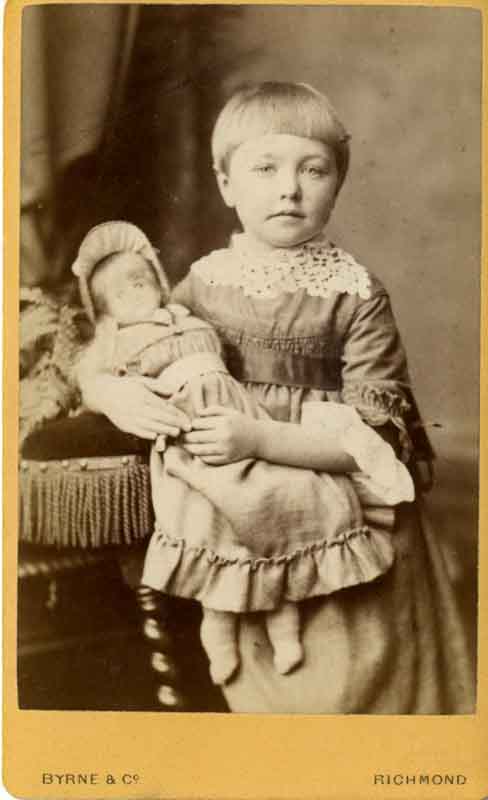
Dorothy-Walker-as-young-girl-Number-TBC
Dorothy as a young girl.
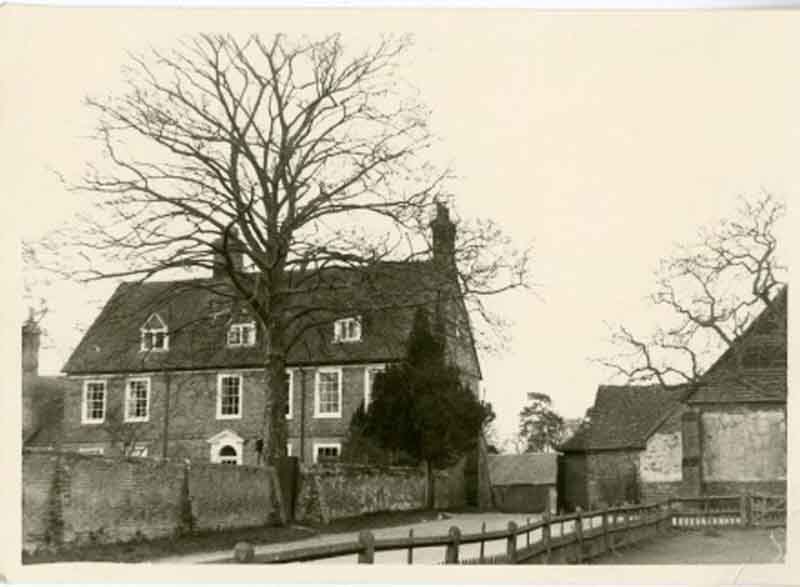
The-Grange-Yatterdon-Number-tbc
Yattenden, where Dorothy’s mother stayed during the war. Dorothy spent a lot of time travelling between her mother’s cottage and work in London.
Share this article
Follow us
A quick overview of the topics covered in this article.