
Gimson discovered chairmaking in the early 1890s. He went to Bosbury, near Ledbury in Herefordshire, and spent a number of weeks learning how to make chairs on a pole lathe from traditional chairmaker Philip Clissett. He produced chairs throughout the 1890s as a small business. By the early 1900s the furniture and metalworking workshops took up most of his time. He couldn’t meet the demand for chairs, so he set up a new workshop with a young local man, Edward Gardiner, at its head. The workshop Gardiner went on to set up has a legacy that lasts until the present day – you can still buy chairs to Gimson’s designs.
The Wilson holds Gimson’s designs for chairs. He designed a limited number of patterns from which Edward Gardiner worked.
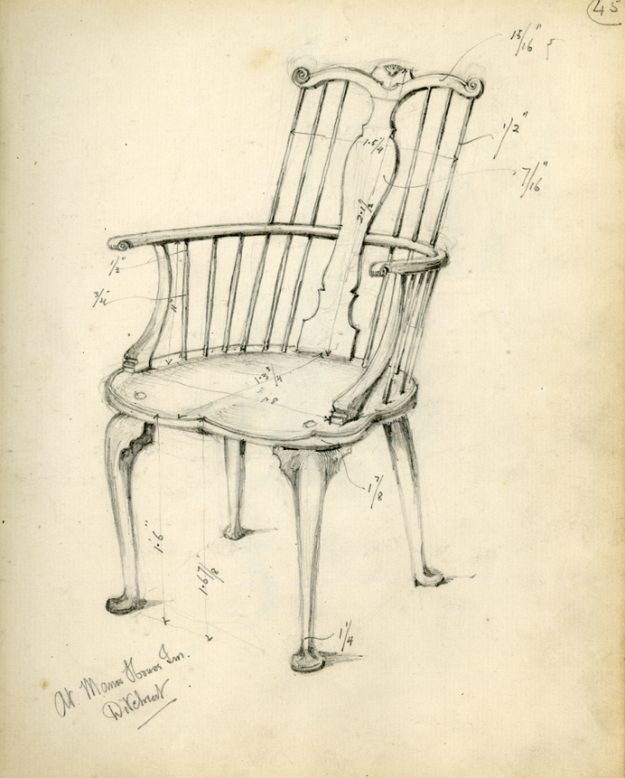
Gimson Chair Sketch
This Windsor style chair was sketched by Gimson in 1886 at the Manor House Inn in Ditcheat, near Shepton Mallet, Somerset.
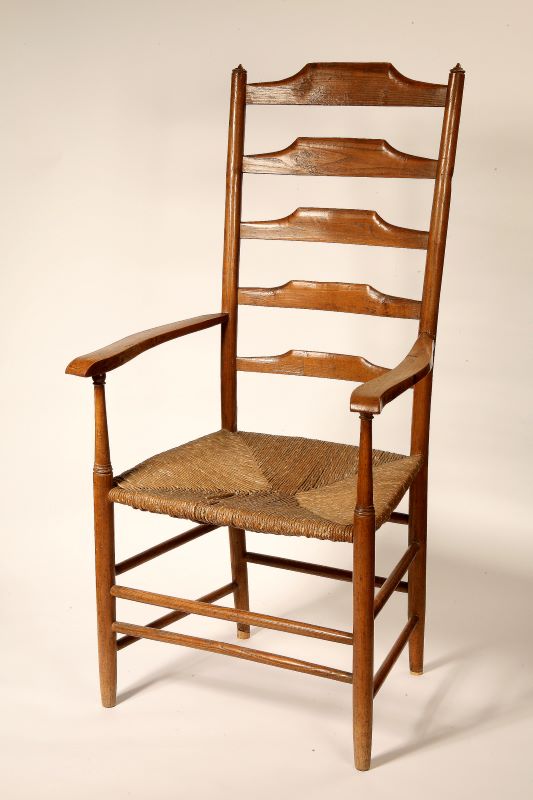
Gimson Traditional ladderback
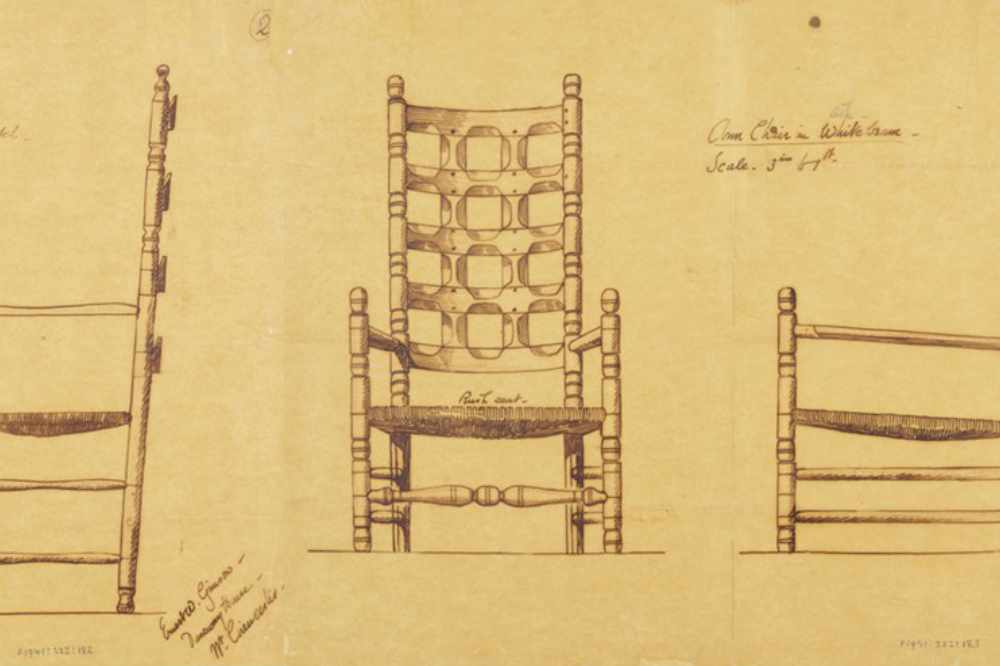
Gimson trained as a chairmaker with Philip Clissett of Bosbury, Herefordshire. His chairs, like this one, are traditional ladderback, rush-seated chairs.
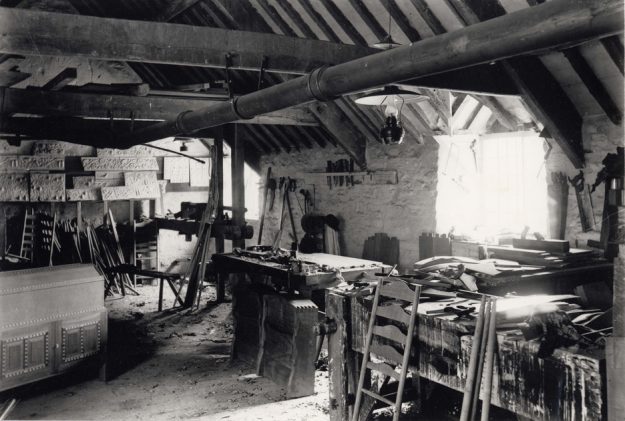
Pinbury workshop interior
This photo shows the workshop shared by Ernest Gimson, Sidney and Ernest Barnsley when they lived at Pinbury Park in the 1890s. You can see Gimson's chairs in the foreground, and at the back under his plasterwork.
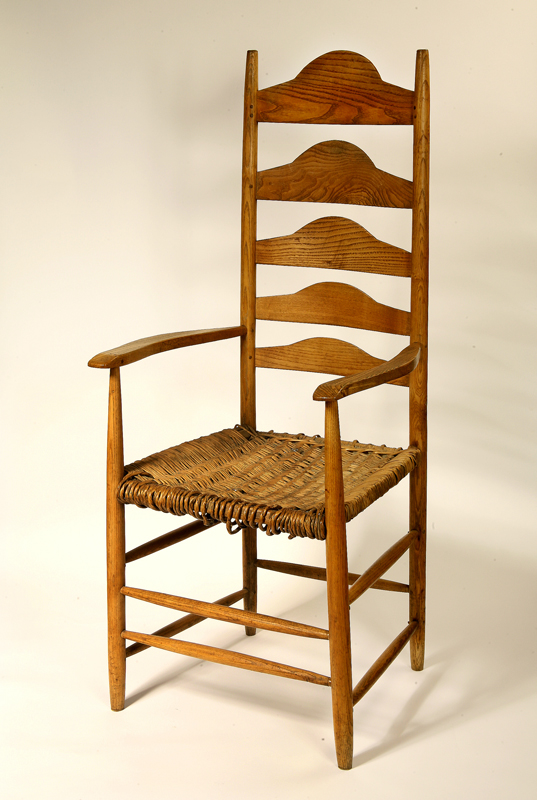
Gimson Early Chair
This is an early chair by Gimson, which he gave to Sidney Barnsley as a wedding gift. It has an unusual woven willow seat, showing Gimson was experimenting when he made this piece.
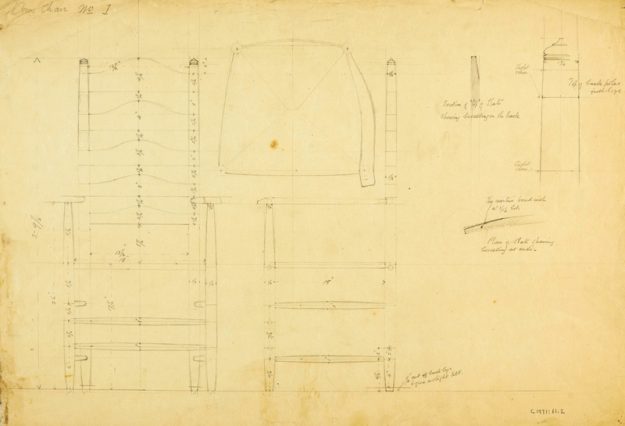
Gimson Designs
Gimson designed a number of different types of chairs for Edward Gardiner and his team to make - this is No. 1, the Clissett-style ladderback chair.
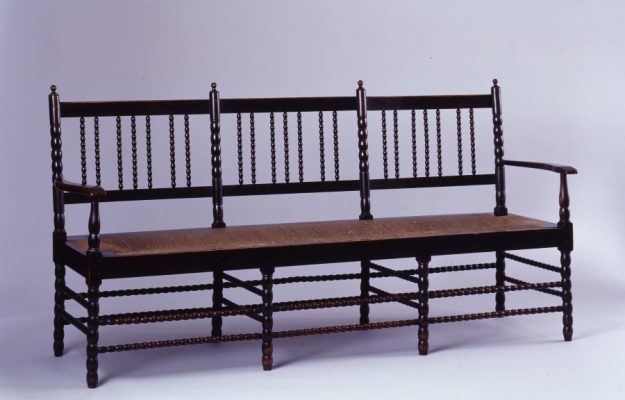
Bobbin Style
Gimson also liked designing chairs in the bobbin style. This style was first fashionable in the 17th century, but revived in the 19th. Gimson would have seen both on his travels. This settee was made by Edward Gardiner's team between 1905 and 1910.
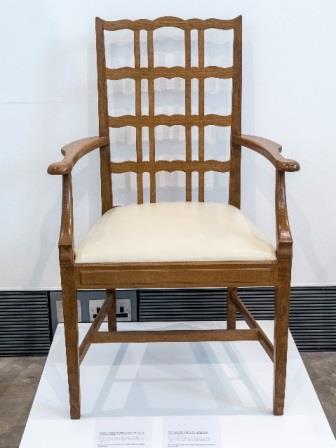
Sir George Trevelyan Chair
After Edward Gardiner had moved away, chairmaking still continued in Gloucestershire. This chair was designed by Sir George Trevelyan, who had worked under Peter Waals from 1929 to 1931, and made by one of Waals' craftsmen, Owen Scrubey.
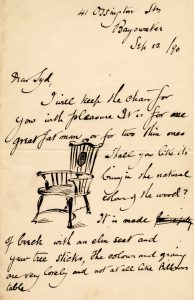
In 1886 Gimson sketched a number of chairs at an inn at Ditcheat, Somerset – ladder-backed chairs and Windsor-style chairs. In 1890 he designed a chair for his brother Sydney, saying in a letter, ‘for one great fat man or for two thin ones’. This chair was based on a Windsor chair, but was more elaborate. It was made of ‘beech with an elm seat and yew tree sticks.’ Gimson goes on to say how satisfied he was with the chair, ‘the colour and the grain are very lovely.’ This chair wasn’t made by Gimson. He used a chairmaker working in the Chilterns, J. Britnell, to make the chair. But it wasn’t long after this that he started to learn to make them himself.
2006_5_45-front-crop-194×300
Ernest’s letter to his brother Sydney, 12 September 1890, with a sketch of the chair he planned to have made.
Share this article
Follow us
A quick overview of the topics covered in this article.