
‘Not peacock-hued splendours of silk but for white thread on white linen’ W R Lethaby
Arts and crafts embroidery
Gimson wasn’t the first Arts and Crafts designer to get excited by textiles. William Morris and his wife Jane spent hours picking apart old embroideries to see how they were made, and worked together to create new pieces. As a young man travelling around Britain, Gimson would sometimes take a piece of Morris & Co. fabric with him to give him something to look at in dull lodgings. His architectural mentor John Dando Sedding also designed embroidery, and encouraged his young improvers to study all crafts. Much Arts and Crafts embroidery was made for churches or large houses.
Church embroidery design
Gimson’s only design for a church embroidery was for St Andrew’s, Roker, where he designed the woodwork. The design of grapes and vines was never made.
Inspiration from the past – Gimson’s photograph collection
Today we can access thousands of images on the internet from museums and heritage organisations across the world. For Gimson it was different. He did a lot of sketching, but he also acquired photos. Many of them were from the collections at the Victoria and Albert Museum in London. He had a large number of textile images from lots of different periods and places – from medieval textiles, to 16th and 17th clothes, to textiles from India and the Middle East.
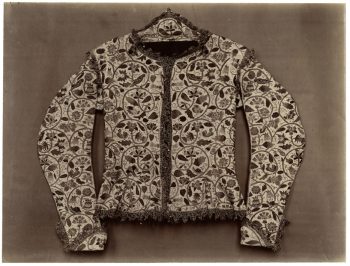
17th century waistcoat
This photograph of an early 17th century waistcoat is from the collection at the Victoria and Albert Museum. Gimson would have admired the swirling floral embroidery.
Designing in colour and whitework
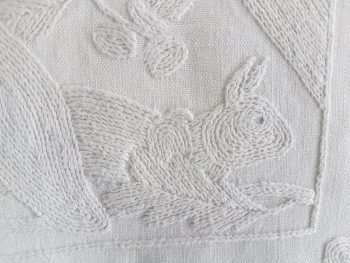
The Arts and Crafts fashion for embroidery started by Morris & Co. was for brightly coloured, complex naturalistic designs. Gimson created deceptively simple designs often with repeating patterns. He liked to design whitework – white embroidery on a white ground. This fitted with the modest cottage interiors he fashioned for his family and himself. Many are still treasured by Gimson’s family. Some were shown at the Arts and Crafts Exhibition Society, with both his and the maker’s name proudly displayed on them.
2000_152-detail-squirrel–350×263
Inspiration from nature
His embroideries celebrate nature. Squirrels, rabbits, owls – even peacocks – sit among flowing leaves, flowers and fruits. Gimson was inspired by the natural world around him, by the old embroideries he had studied and by many other things, including medieval metalwork. He didn’t design embroidery for long after his furniture business started in 1901, but these early embroidery designs inspired his work in other media such as plaster and metalwork.
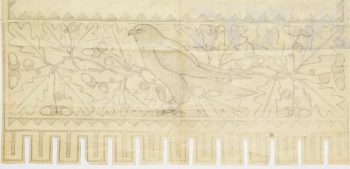
2000-156-detail-falcon-350×169
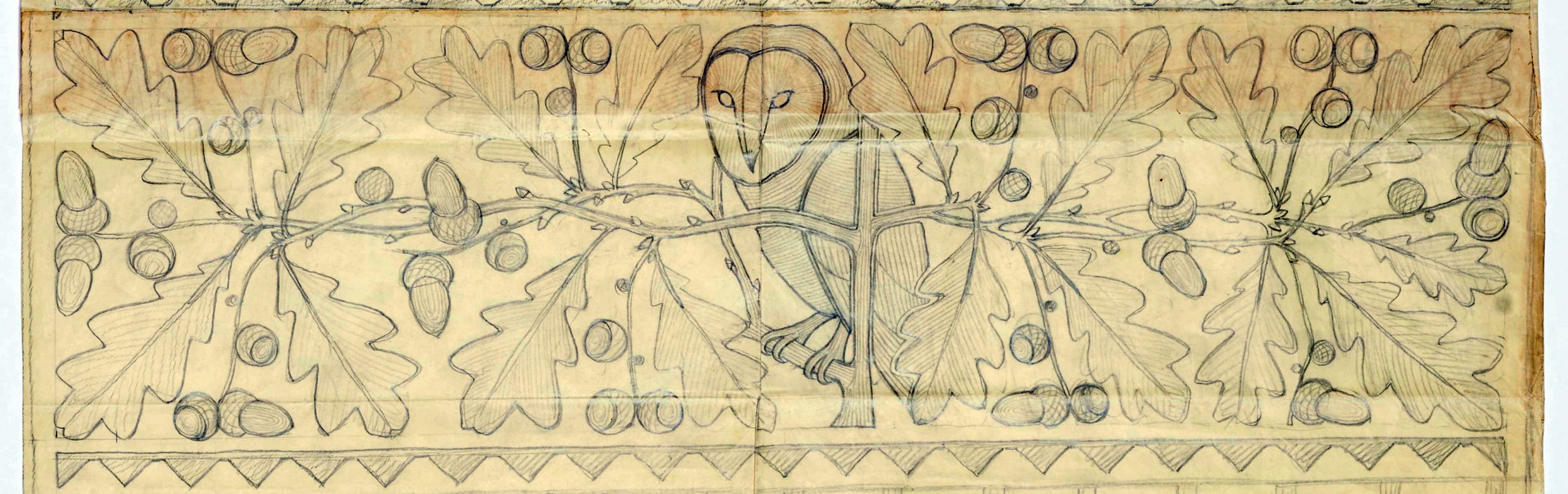
A detail of a runner designed by Gimson in the 1890s for his sister Margaret. It shows a falcon among oak leaves and acorns.
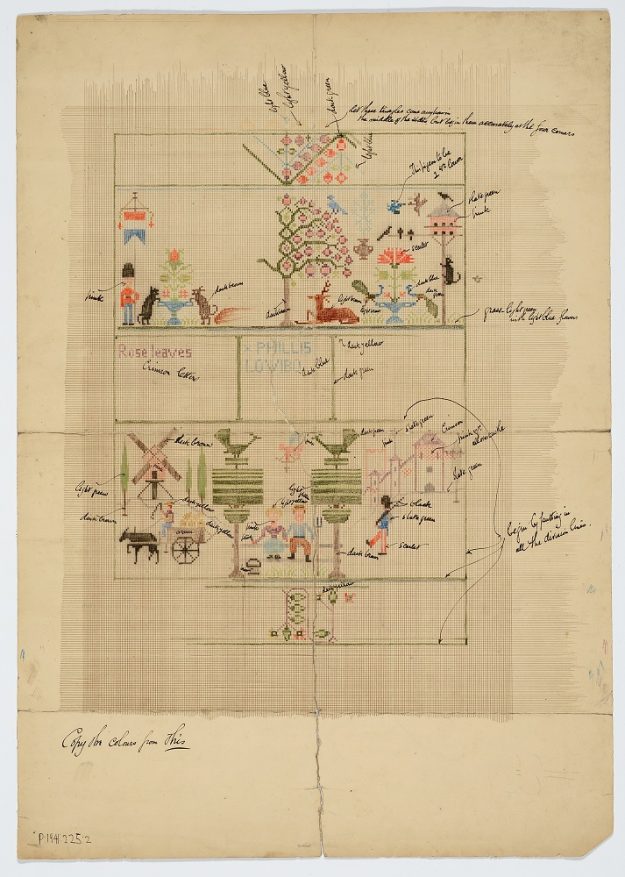
1944_225_002-625×877
Gimson designed this sampler for his sister-in-law's 13-year-old niece, Phyllis Lovibond, in about 1890. She apparently lived in terror of his visits in case he made her redo it! The finished piece was shown at the Arts and Crafts Exhibition Society show in 1890, quite an accomplishment for a teenage girl.
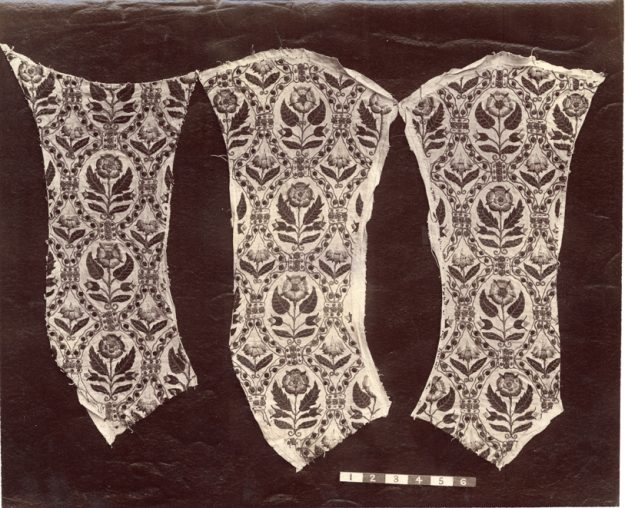
1941_226_114-625×508
Three embroidered sleeves from the early 17th century. One of Gimson’s reference photographs showing the kinds of textiles that inspired his work. These sleeves are in the collection of the Victoria and Albert Museum.
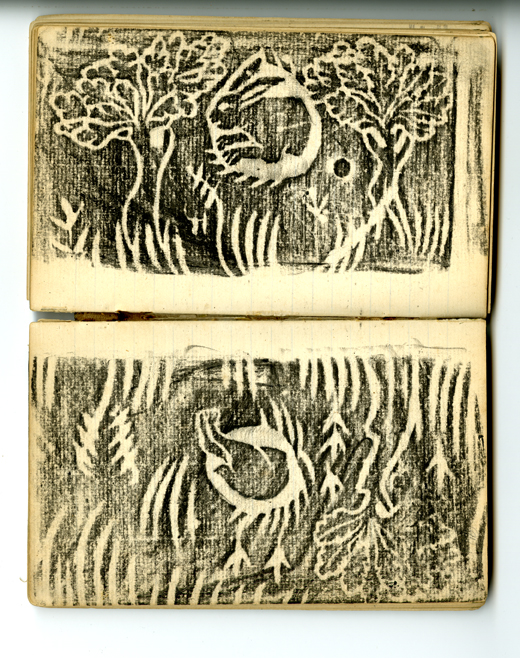
1941_225_114-Brass-rubbings-of-rabbits
Rubbings from Bishop Wyvill’s tomb in Salisbury Cathedral, from Gimson’s sketchbook, 1888. He later used these rabbits as a design for a teacosy, which was made by his sister-in-law's sister, Nellie Lovibond.
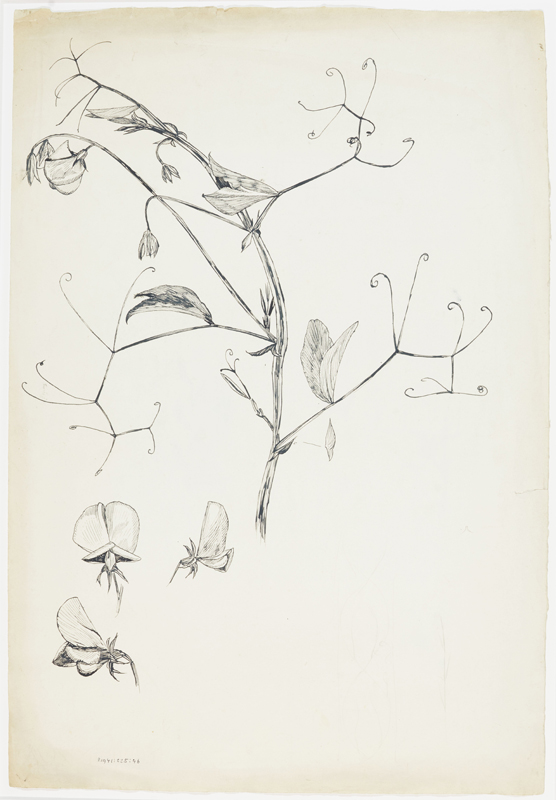
1941_225_46
This sketch shows Gimson studying nature directly. He used the pea and bean motif several times in his embroidery designs.
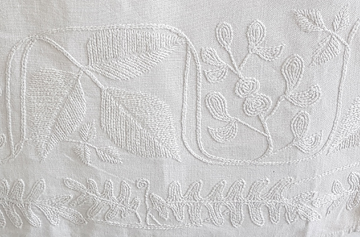
2000_155-detail-1
Gimson used the pea motif on the border of this whitework bedspread, made by his sister Margaret between 1900 and 1903.
1941_222_636-625×809
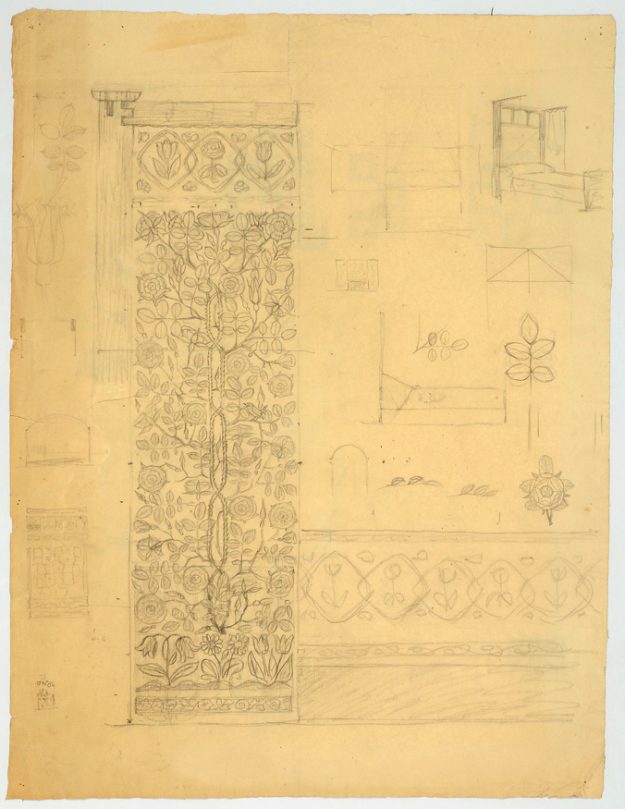
The same bedspread appears in this sketch design of bedding for a half tester bed. Margaret made the bedspread, but it's not known if the hanging was made - a much more complex design.
1941_223_346-625×265
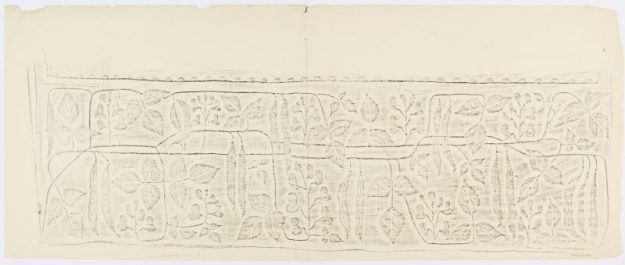
Gimson took rubbings of his embroidery designs when they had been made. This is a detail from a tablecloth with a pea and bean motif similar to that on the bedspread.
2000_152-detail-1-625×469
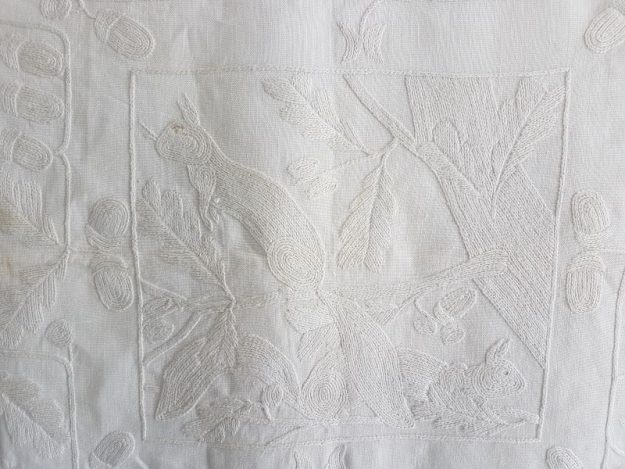
Gimson designed many embroideries for Margaret to make up. This panel, probably the Pinbury panel mentioned in letters, is decorated with squirrels, oak leaves and acorns - all of which Gimson would have seen near his home at Pinbury.
2000_154-detail–625×371
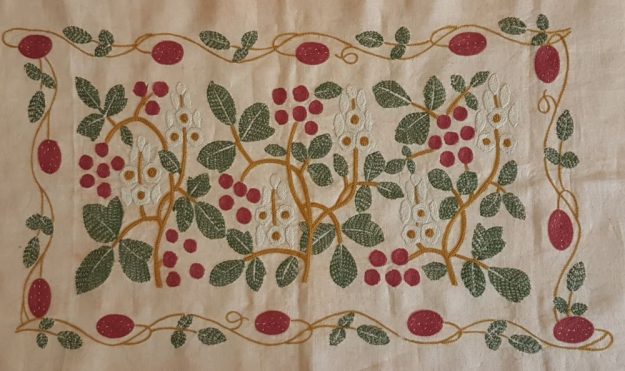
Not all of Margaret's work was whitework - this runner from about 1900 is in bright coloured wools on linen, and shows strawberries.
2000_156-1
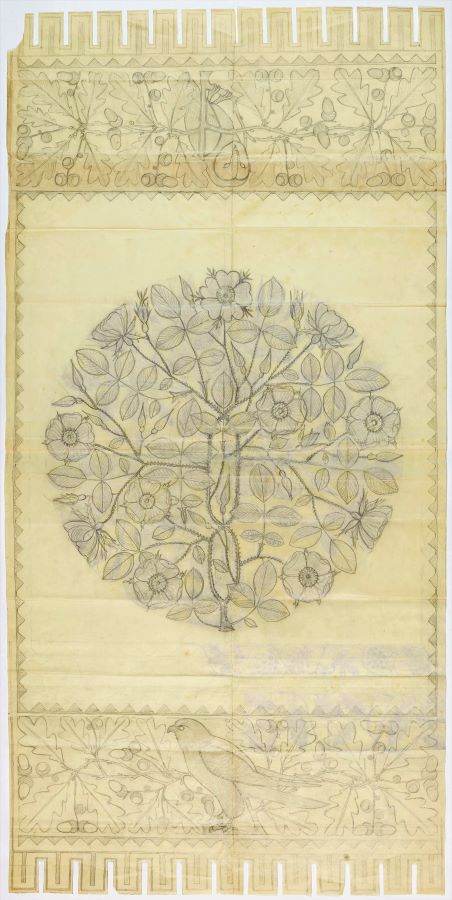
Not all of his designs were made. Sometimes they were too complex and would have taken his busy relatives many years to complete. This runner with a rose roundel and an owl and falcon was probably never made, but also belonged to Margaret Gimson.
Share this article
Follow us
A quick overview of the topics covered in this article.