
Before the advent of television and digital media, posters were a key way of getting messages out to the public. During the First World War the Government used posters and advertisements to spread political and social messages. The Wilson holds a collection of posters from 1914 to 1918 which graphically portray the points the War Department were keen to emphasise to the British people. The poster campaign has been called a ‘weapon of mass persuasion’. The poster artist Cyril Kenneth Bird, known as Fougasse, described posters as ‘anything stuck on a wall with the objective of persuading the passer-by’.

The posters fall into a number of categories, depending on the message the Government wanted to promote. The most well-known are the recruitment posters. From the first day of the war it was obvious that Britain would not have enough men in the army to supply the number required for a full scale military engagement in Europe so it was essential to seek voluntary recruits. Every tactic possible was employed to put pressure on men to sign up. Some posters referenced women, others children, and still others used the emotional tug of family to persuade single men to do their bit. Eventually in 1916 compulsory conscription was introduced and the series of recruitment posters stopped.

For the first time, and very much in tune with the suffragette movement, the Government was forced to turn to women to fill vacancies created by men signing up to fight in the war. Women were used in hospitals across Britain as Voluntary Aid Detachment (VAD) nurses. There were nine such hospitals in Cheltenham alone. Women also raised funds, knitted comforts such as socks, balaclava helmets and scarves, kept morale up through ceaseless letter writing and worked on the land and in factories. Cheltenham women worked in a munitions factory in Quedgeley, near Gloucester, and joined the workforce on farms around the town to bring in the harvests and tend to cattle and sheep.
 As the war continued into its second and third year, resources became very stretched. Even basic commodities such as bread were running short. Germany was trying to starve Britain into submission by attacking ships loaded with grain and other foodstuffs.
The Government responded with a crusade to stop waste and encourage economy. Organisations like the Women’s Institute (WI) were born in this time of need and responded by planning cookery demonstrations using cheaper and more easily available ingredients.
 War is expensive. The Government needed to raise money to fund the war, and produced a whole series of posters encouraging people to purchase war bonds or subscribe to war loans.
Many finance posters use the weapons of war or emotional appeals to underline the need for money. Some posters even suggest the purchase of war bonds would produce an earlier victory.

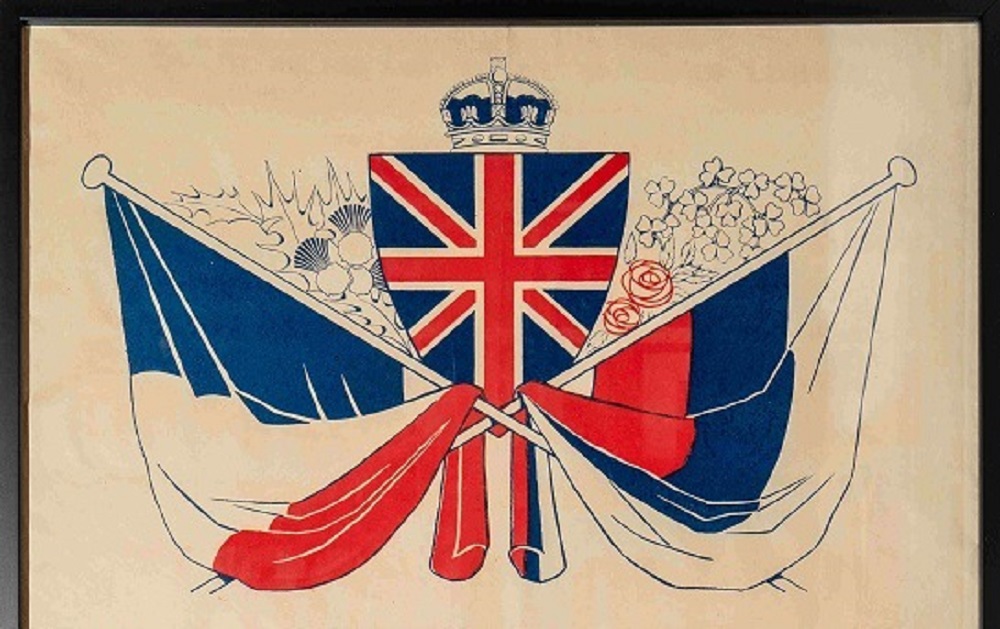
In the First World War propaganda was employed on a global scale. Unlike previous wars, this was the first conflict in which whole nations and not just professional armies were locked in combat. The British government (and other countries too) used well known national symbols to encourage and promote nationalism: St George, John Bull, lions and Britannia for example. They needed to keep the core message that people were fighting for their country and all the values it stands for. It needed to be at the forefront of people’s consciousness.

The War Office used propaganda to mobilise hatred against the enemy and to further convince the population of the justness of the military cause. It was hoped that the fear and anger engendered would also help to enlist the support of neutral countries and to strengthen the cooperation of allies.
The posters and artwork produced under this heading are quite shocking in today’s culture but at the time such images and words were considered a legitimate weapon for each side to use.
 Emotionally loaded words and images were intended to appeal to the heartstrings or give a sense of guilt or fear, putting pressure on individuals to act in the way the Government wanted. The aim was to urge action and provoke a collective response.

The posters were distributed throughout the country and pasted up on walls and hoardings wherever a space could be found. The aim was ‘to persuade the passer by’, and to keep the Government’s messages in the forefront of people’s consciousness.  Artists and cartoonists were commissioned to produce the distinctive designs; and newspaper presses were employed to print the thousands of copies required.
Women known as ‘lady billposters’ were employed to put the posters up. In 1917 the Cheltenham Echo commented on ‘Two quite prepossessing young ladies in … serviceable male attire’ pasting up posters in the Promenade.
Share this article
Follow us
A quick overview of the topics covered in this article.