
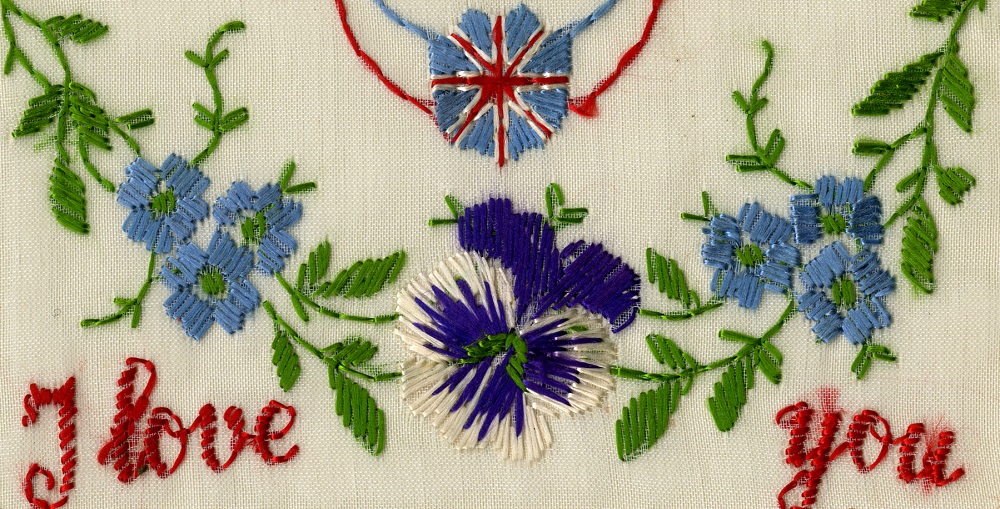
 These embroidered postcards from the First World War are often known as ‘WW1 silks’. They were mainly produced from 1914 to 1918, though a very few continued to be made until 1923. Most were hand embroidered on long strips of silk mesh with as many as 25 images on a single strip. The finished strips were sent to factories for cutting and making up into postcards. The Wilson holds a large collection of these beautiful cards, mostly sent to people in Cheltenham.
 They were mainly embroidered by French and Belgium women in need of some extra income. Some families had lost their homes, others were displaced by allied troops, and older people, sick or injured men and even children were pressed into sewing the cards. A few were made in England but sent abroad for making up.
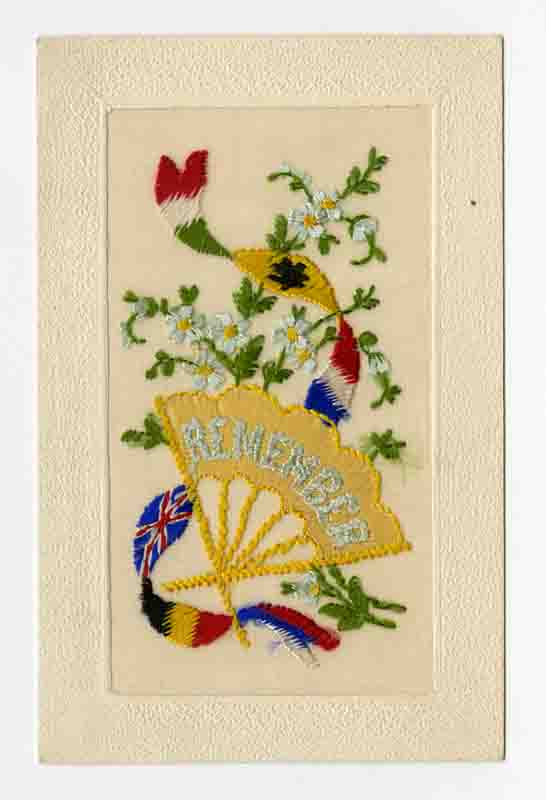
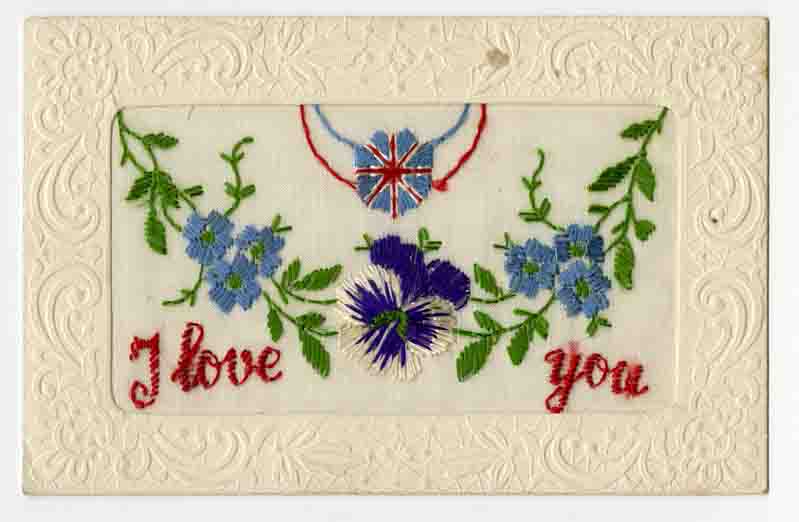
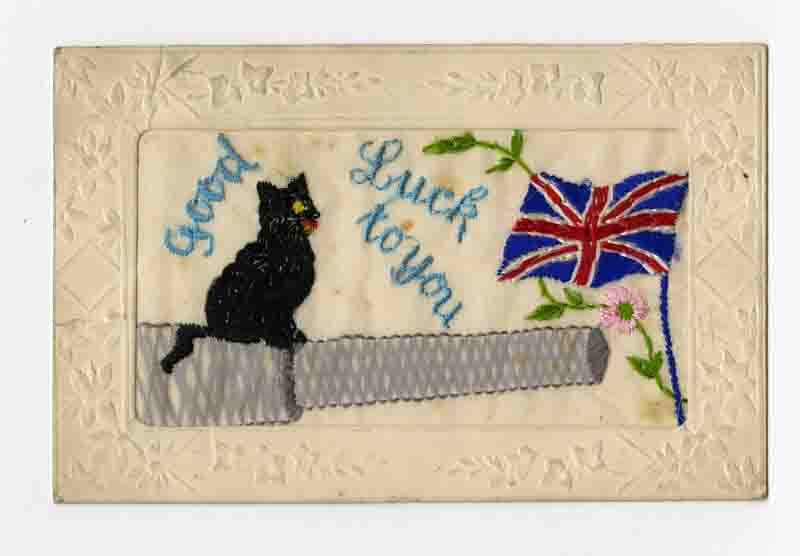
 For servicemen, the cards must have seemed beautiful and delicate compared to the brutality of life in the trenches. The themes chosen for the embroideries were to meet this market, so it is not surprising to find that many of the silks show patriotic images: British, French and American flags abound, as do symbols for good luck, and greetings. They were expensive to buy but became the fashionable item for a soldier to send to someone special.
 There are two kinds of postcard. One is a single piece of embroidery, the other is a stitched pocket like an envelope made to contain a message. Both are mounted into a card frame. The message is written on a tiny rectangular piece of paper, usually pre-printed with images of love and words of appreciation.
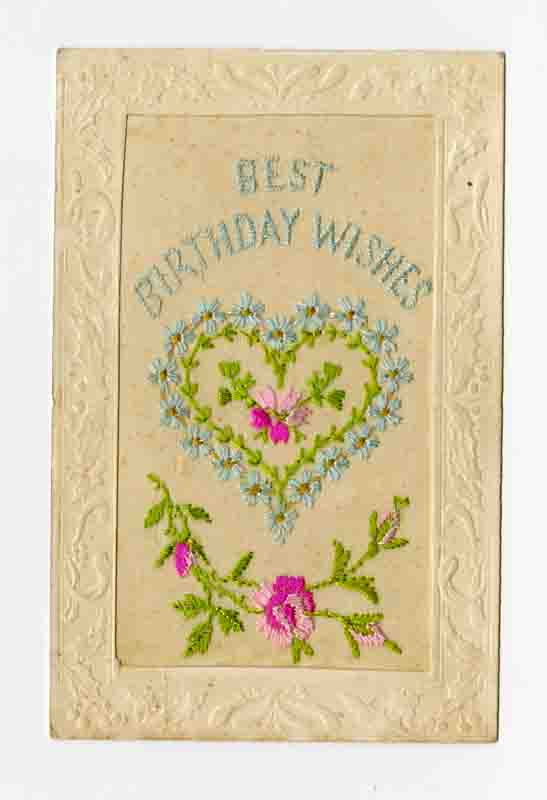
Themes range from the patriotic flags and emblems to special occasions such as birthdays, Christmas and Easter. There are many to ‘my valentine’ or ‘my love’. There were selections for mothers, wives and children, even some to brothers and uncles. The messages are simple, as words were restricted by the censor; but none the less meaningful. Some offer ‘good luck’, others ‘best wishes’. Symbols were chosen to augment the words, so, for example, the good luck cards are embroidered with pictures of black cats, white heather and horseshoes. Forget-me-not flowers and pansies were favourites, and roses and lilies of the valley. Each flower conveys a hidden message, a language of flowers much loved by the Victorians and still in use in the First World War. Military imagery includes regimental badges and colours, such as the ‘Glosters’, naval vessels, and even some rare designs of the new tanks.
 The cards were sewn at home, or in places of refuge. The light was undoubtedly poor, and conditions less than ideal for sewing, yet the cards are little gems of colour and beauty. They are mostly sewn in stem and satin stitch, with some shadow embroidery and French knots. Despite the repetitive process no two are exactly the same. As demand for the cards boomed some makers bought small machines to speed up the process.
 Most cards do not have postage stamps as they were put in envelopes and sent home at no charge to the sender in military mail bags. So they were safely protected to make the journey to the recipient. And judging by the good condition of the cards they have been treasured.
1989_297a
2000_026_002a
2000_026_008a
Good_luck_to_youa
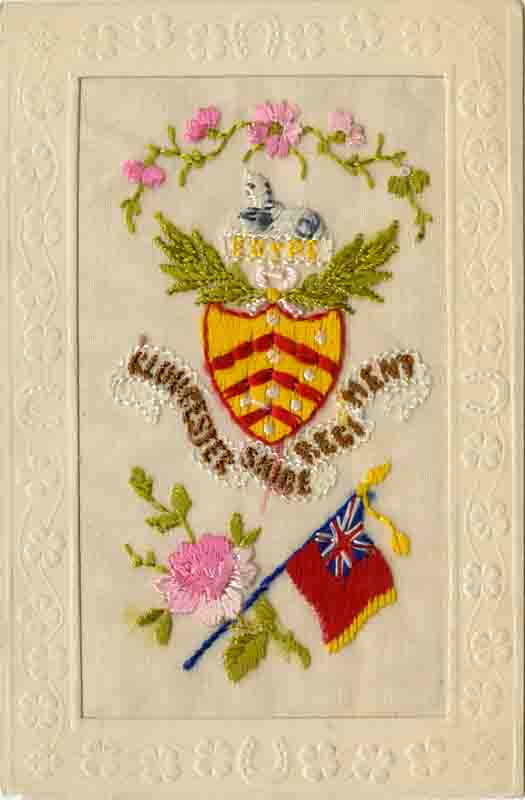
1989_292a

1989_296_001a
Share this article
Follow us
A quick overview of the topics covered in this article.