
Frederick James Archer, one of the most celebrated jockeys of all time, was born at Cheltenham on 11 January 1857, in a small cottage at the end of a narrow passageway leading off the west side of St George’s Place; originally called St George’s Cottage, it is now known as 43 St George’s Place.

Fred’s father, William, was a successful steeplechase rider, who won the Grand National in 1858. By then, he had moved with his wife and five children to Prestbury, a village on the north side of Cheltenham, where his father-in-law was landlord of the ‘Kings Arms’ public house. In 1861,following the latter’s death, he took over the pub and ran it until c.1873. It was there that Fred Archer spent his formative years, during which his father taught him to ride – on a donkey, then a pony, and eventually a horse.
A plaque was affixed to 41 St George’s Place in 1919, in the mistaken belief that it was his birthplace, rather than No 43, the small cottage at the rear. Exactly when this plaque was removed is uncertain, but in 1971 a new plaque was affixed to the correct house; it is still there, though it cannot be seen from the lane. A plaque outside the ‘Kings Arms’ at Prestbury commemorates Archer’s early years there.

The young Archer showed a particular talent as a rider, and in 1868 his father apprenticed him to Mathew Dawson of Newmarket, one of the leading trainers of the day. The following year, he ran (and lost!) his first public race, but from 1870 onwards the number of his wins increased steadily, culminating, in 1874, with no less than 147 wins, which made him England’s champion jockey, a position that he was to retain for the rest of his short life.
Archer’s reign as champion jockey – which included, in 1885, no less than 246 wins, a record that was not equalled until 1933 – brought him worldwide fame. It also brought him the need to keep his weight under control. At over 5 foot 8 inches, he was unusually tall for a jockey, and he spent much of his life on a near-starvation diet, endless ‘purges’, and Turkish baths, all of which were eventually to have a disastrous effect on his health.

Although Archer regularly visited his family in Gloucestershire, he made Newmarket his home, and in 1882 he built himself a house there, which he named Falmouth House after Lord Falmouth, his principal patron. The house was completed shortly before his marriage, in January 1883, to Dawson’s niece, Helen Rose, by whom he had two children – a son, who died a few hours after his birth, and a daughter, following whose birth his wife died, aged only 23, an event that sent Archer into a deep depression, from which he never fully recovered.

Even before his wife’s death, Archer experienced many problems. He was gambling – and often losing – heavily, and was also accused of ‘race fixing’, although that was never proved. He also began to lose more often, and, for a time, dropped to second in the jockeys’ list. Even so, he continued to put himself through a punishing regime of races, until, in early November 1886, his health gave way and he took to his bed with what began as a chill but was later diagnosed as typhoid fever.
From soon after his marriage, a spate of burglaries at Newmarket had caused Fred to keep a loaded revolver by his bedside, in order to protect himself and his family. At around 2.25pm on the afternoon of 8 November 1886, the depressed and delirious jockey took the revolver and shot himself through the mouth, dying instantly.
1965_35
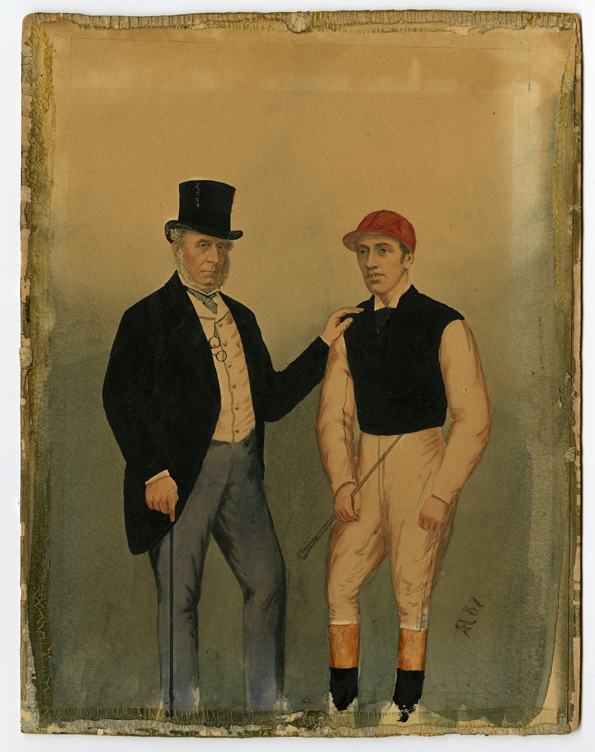
Watercolour depicting a double portrait of Lord Falmouth and the Cheltenham jockey Fred Archer, by an anonymous artist, 19th century.
1994__988
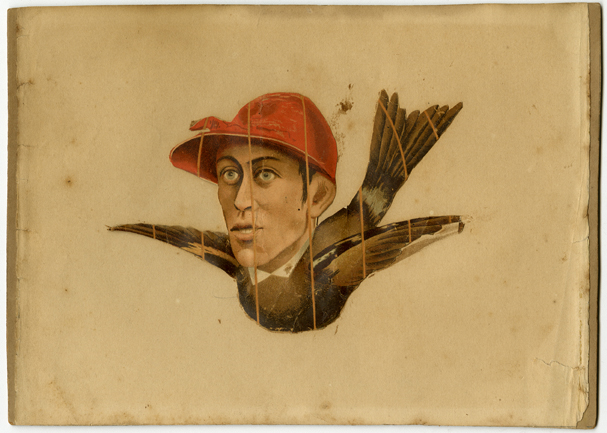
Print of Fred Archer, showing him as a bird, with jockey’s cap, in flight. 19th century
1998_183-Fred-Archer-detail-resized
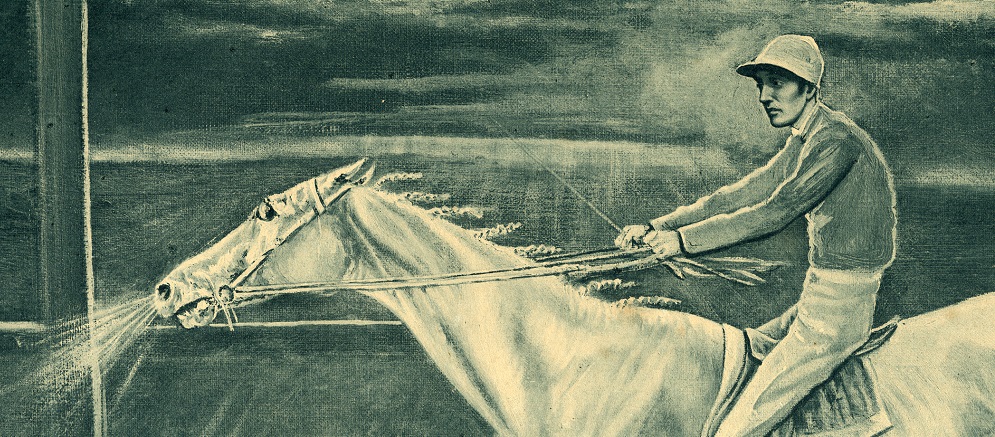
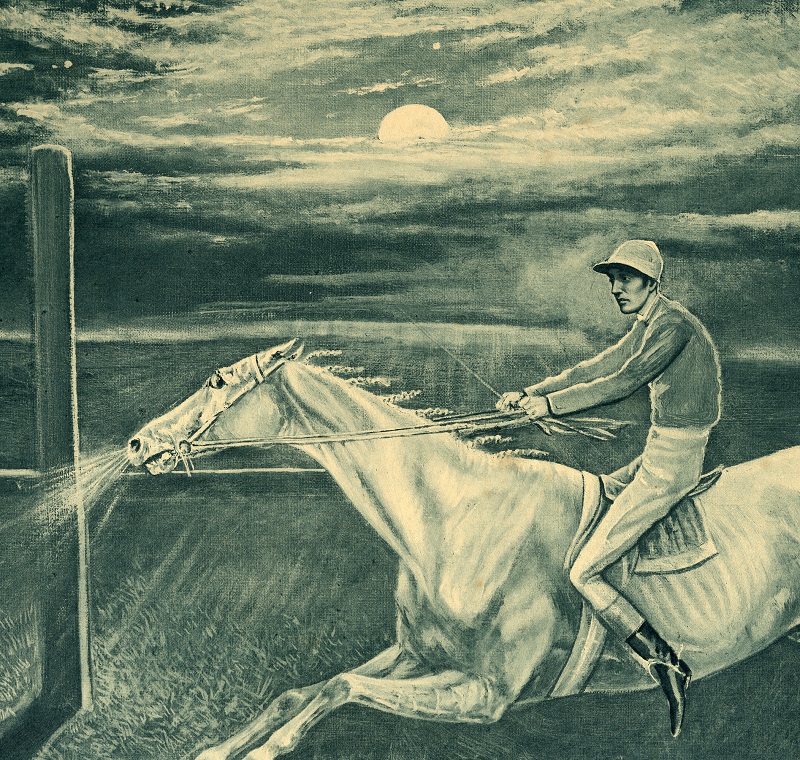
A print or photogravure, after a painting by Archibald Tilt published in 1887 and showing Fred Archer’s ghost riding across Newmarket Heath on a spectral horse.
1943.15-1250×810
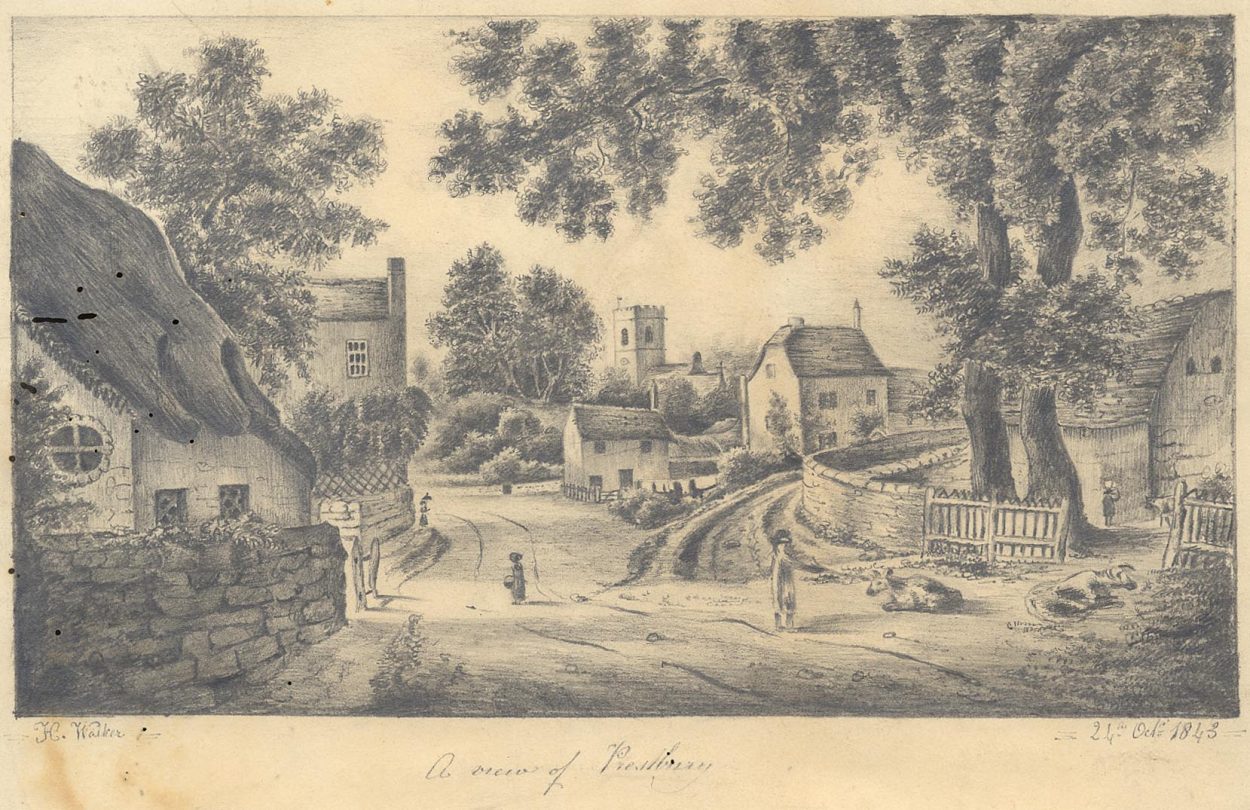
Pencil drawing depicting a view of Prestbury, Cheltenham, by H. Walker, 1843
Share this article
Follow us
A quick overview of the topics covered in this article.