
History of the Collection
Geological specimens have formed part of the displays since the Museum opened in 1907. The origins of the collection can be traced back to 1888 when Charles Pierson presented the town with a ‘large collection of fossils’.
After the opening of the Museum the collection grew rapidly, with many generous donations from well-known local geologists including S S Buckman, J W Gray, L Richardson, R P Wild and C R Mapp. Other important gifts included New Zealand and Antarctic specimens collected by Raymond Priestley. They were given by Dr E T Wilson, father of Dr E A Wilson, the Antarctic explorer. Specimens were also purchased, including minerals from the collection of the famous engineer Robert Stephenson.
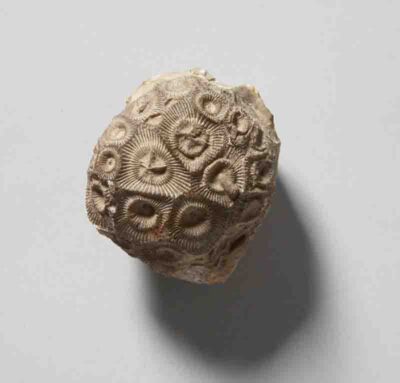
Acervularia-annas
An example of an extinct Silurian ‘pineapple’ coral, Acervularia annas.
The Fossils
Over 60% of the geology collections are fossils and they represent most parts of the stratigraphical column from the Cambrian to Quaternary. Nearly all are from British sites but amongst the few foreign specimens are Eocene molluscs from the Paris Basin and Carboniferous sea lilies from North America.
The fossils are mainly invertebrates (animals without backbones) and they provide excellent examples of most groups. The major interest lies in the Jurassic fossils, particularly brachiopods, bivalves, ammonites, belemnites, bryozoans, insects and serpulid worms from the Vale of the Severn and the Cotswolds. One of the most important personal collections is that of Linsdall Richardson; his large collection of brachiopods also contains excellent comparative material from other British sites.
Amongst the vertebrate fossils are sharks’ teeth, ichthyosaur and pterosaur remains, whale bones and mammoth teeth. Although few in numbers, they are the most spectacular specimens in the collection. The Museum also has a plaster cast of an ichthyosaur, one of the few remaining casts of an original destroyed in an air-raid on Bristol City Museum in 1940.
Also included in the fossil collection are a few plant fossils, mainly Upper Carboniferous horsetails, seed ferns and clubmosses.
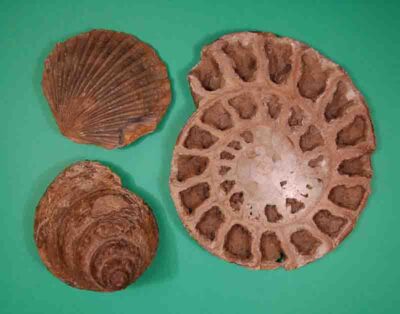
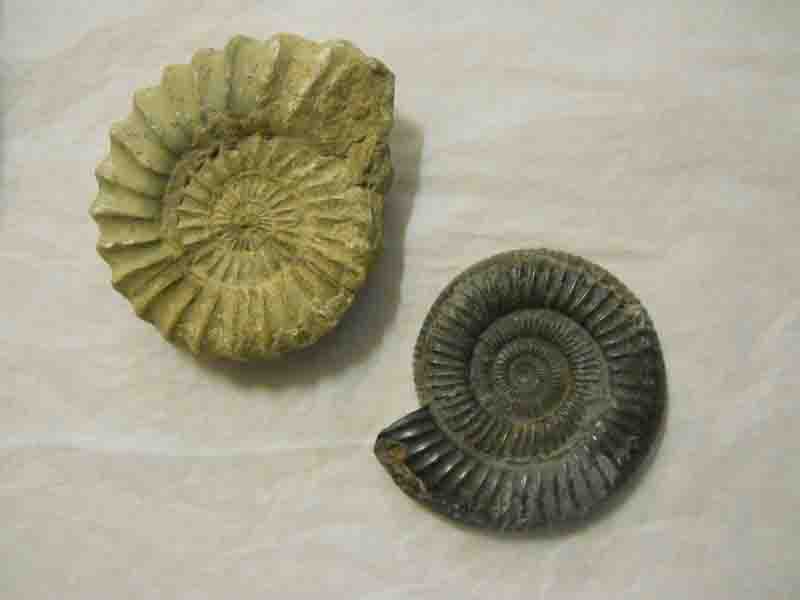
Ammonites
Jurassic fossils including an ammonite, sea snail and bivalve.
The Minerals and Rocks
This section has over 3,000 specimens which provide good examples of the huge variety of rocks and minerals that form the surface of our planet – crystals, gemstones, precious metals, mineral ores, gemstones, volcanic rocks, granites, limestones, coals, gravels and soils.
The specimens have been collected from all over the world – from mines in Africa, mountains in South America, lava flows in Italy, to the polar icefield of Antarctica. The majority of British rocks are from the Cheltenham area. They include important borehole samples donated by Linsdall Richardson and a large collection of Quaternary sands and gravels from the Cotswolds and Malvern area made by J W Gray.
The small mineral collection has a reasonable range of common minerals. Most of the minerals appear to have been collected in the 19th century but there is little site or donor information.

Minerals
A selection of colourful and beautiful minerals from the collections.
Inspiration from nature
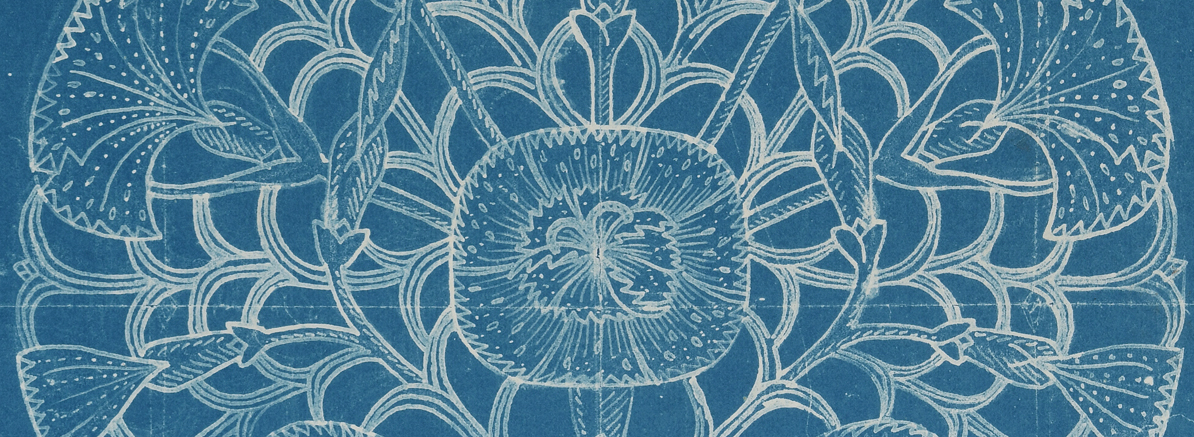
His embroideries celebrate nature. Squirrels, rabbits, owls – even peacocks – sit among flowing leaves, flowers and fruits. Gimson was inspired by the natural world around him, by the old embroideries he had studied and by many other things, including medieval metalwork. He didn’t design embroidery for long after his furniture business started in 1901, but these early embroidery designs inspired his work in other media such as plaster and metalwork.
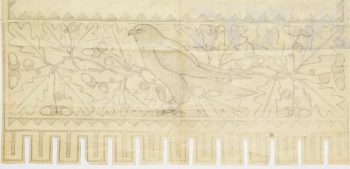
2000-156-detail-falcon-350×169
A detail of a runner designed by Gimson in the 1890s for his sister Margaret. It shows a falcon among oak leaves and acorns.
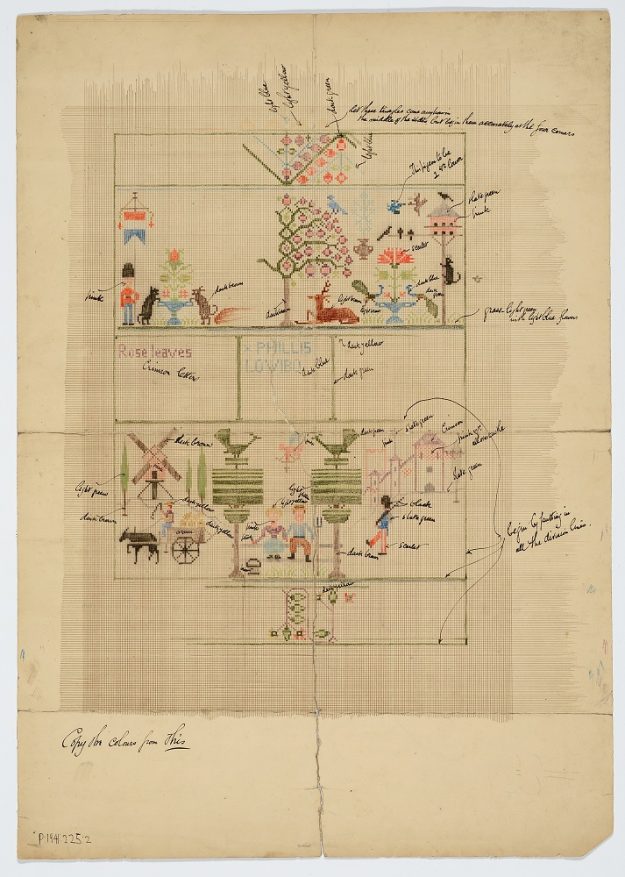
1944_225_002-625×877
Gimson designed this sampler for his sister-in-law's 13-year-old niece, Phyllis Lovibond, in about 1890. She apparently lived in terror of his visits in case he made her redo it! The finished piece was shown at the Arts and Crafts Exhibition Society show in 1890, quite an accomplishment for a teenage girl.
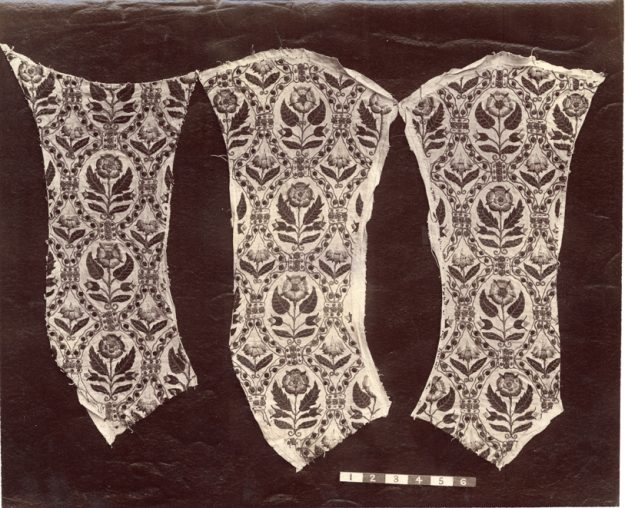
1941_226_114-625×508
Three embroidered sleeves from the early 17th century. One of Gimson’s reference photographs showing the kinds of textiles that inspired his work. These sleeves are in the collection of the Victoria and Albert Museum.
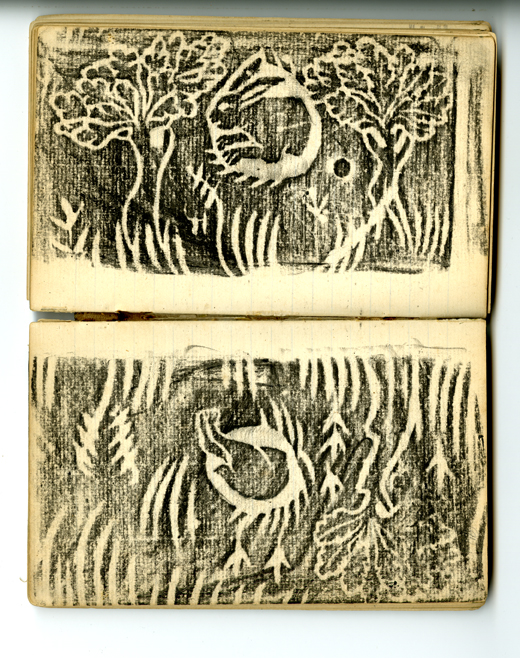
1941_225_114-Brass-rubbings-of-rabbits
Rubbings from Bishop Wyvill’s tomb in Salisbury Cathedral, from Gimson’s sketchbook, 1888. He later used these rabbits as a design for a teacosy, which was made by his sister-in-law's sister, Nellie Lovibond.
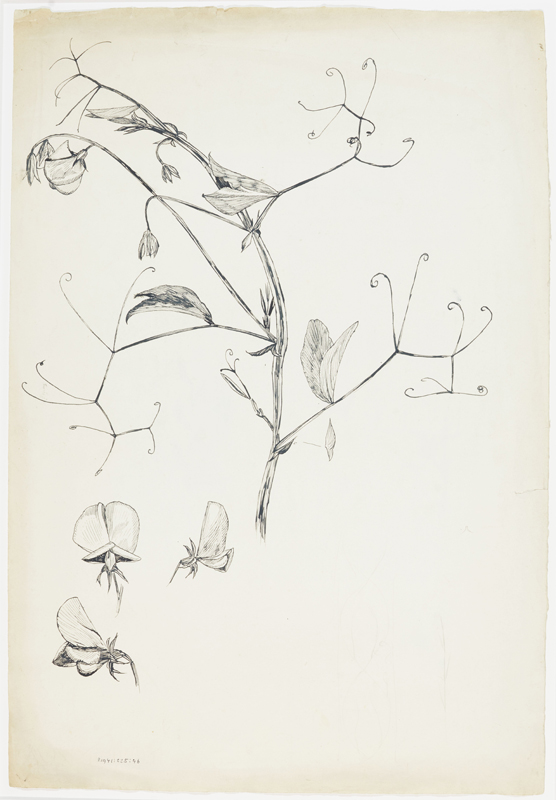
1941_225_46
This sketch shows Gimson studying nature directly. He used the pea and bean motif several times in his embroidery designs.
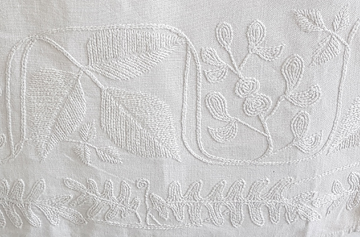
2000_155-detail-1
Gimson used the pea motif on the border of this whitework bedspread, made by his sister Margaret between 1900 and 1903.
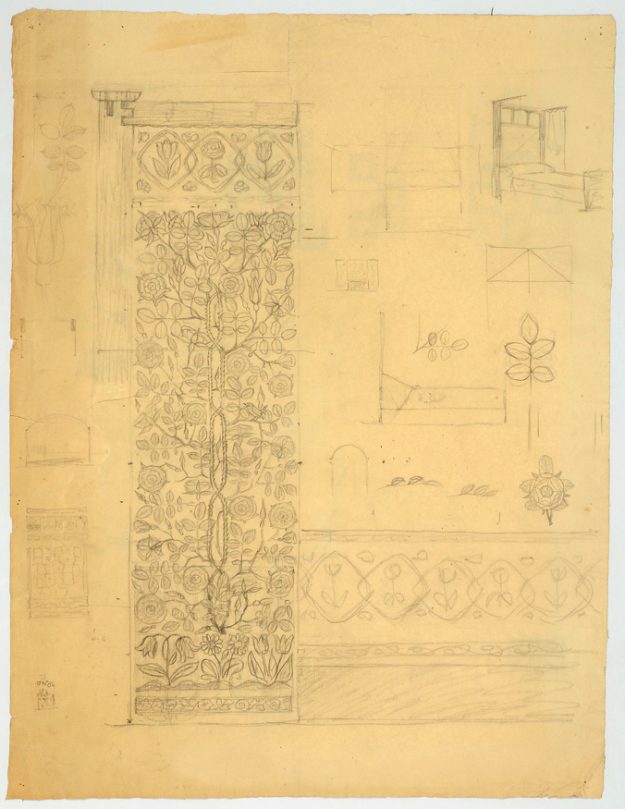
1941_222_636-625×809
The same bedspread appears in this sketch design of bedding for a half tester bed. Margaret made the bedspread, but it's not known if the hanging was made - a much more complex design.
1941_223_346-625×265
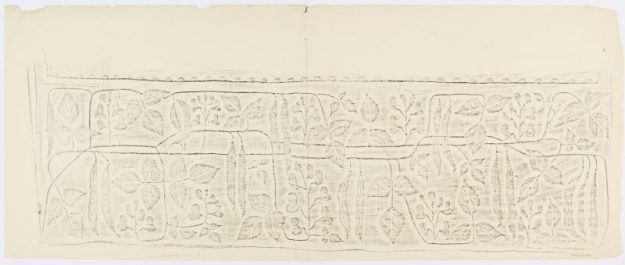
Gimson took rubbings of his embroidery designs when they had been made. This is a detail from a tablecloth with a pea and bean motif similar to that on the bedspread.
2000_152-detail-1-625×469
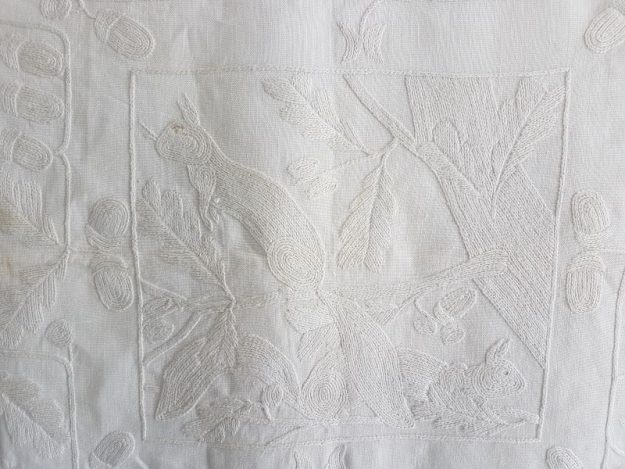
Gimson designed many embroideries for Margaret to make up. This panel, probably the Pinbury panel mentioned in letters, is decorated with squirrels, oak leaves and acorns - all of which Gimson would have seen near his home at Pinbury.
2000_154-detail–625×371
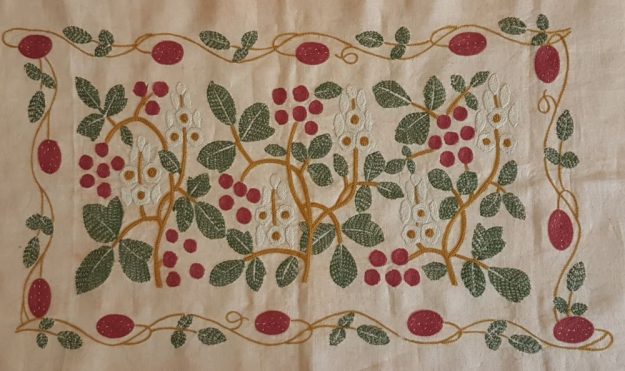
Not all of Margaret's work was whitework - this runner from about 1900 is in bright coloured wools on linen, and shows strawberries.
2000_156-1
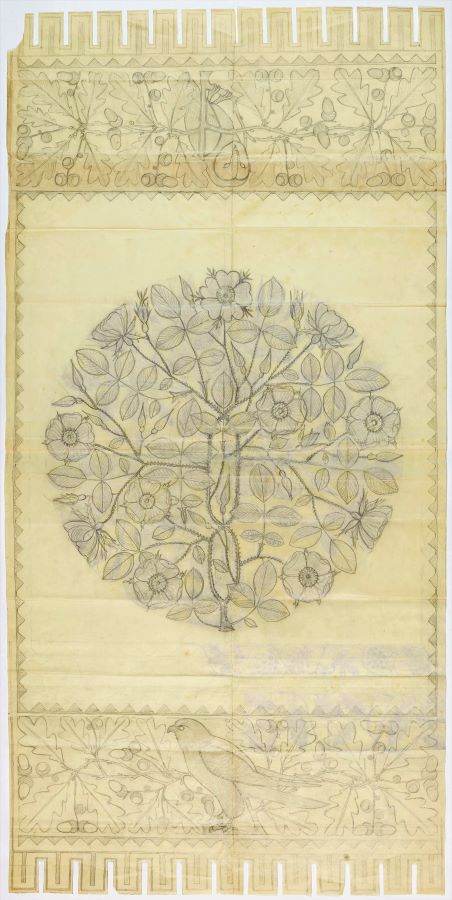
Not all of his designs were made. Sometimes they were too complex and would have taken his busy relatives many years to complete. This runner with a rose roundel and an owl and falcon was probably never made, but also belonged to Margaret Gimson.
Share this article
Follow us
A quick overview of the topics covered in this article.