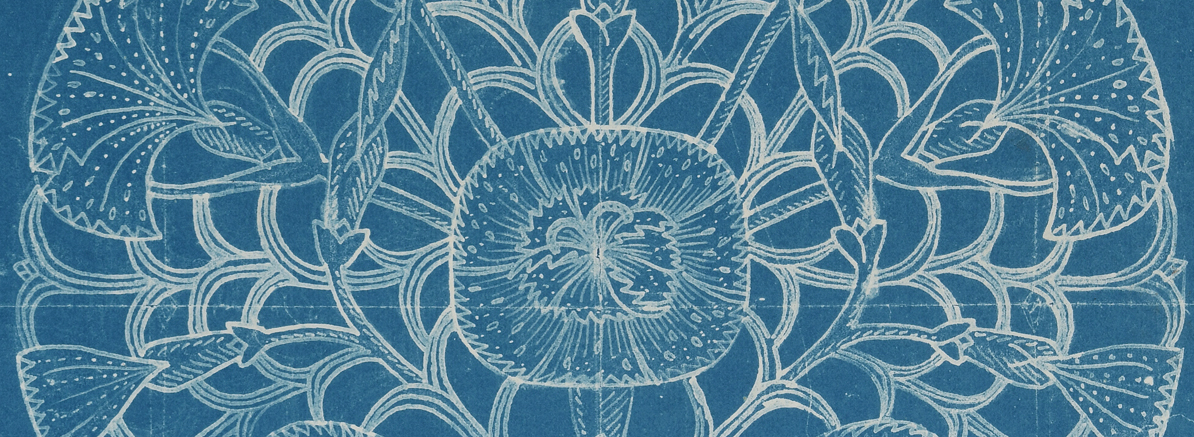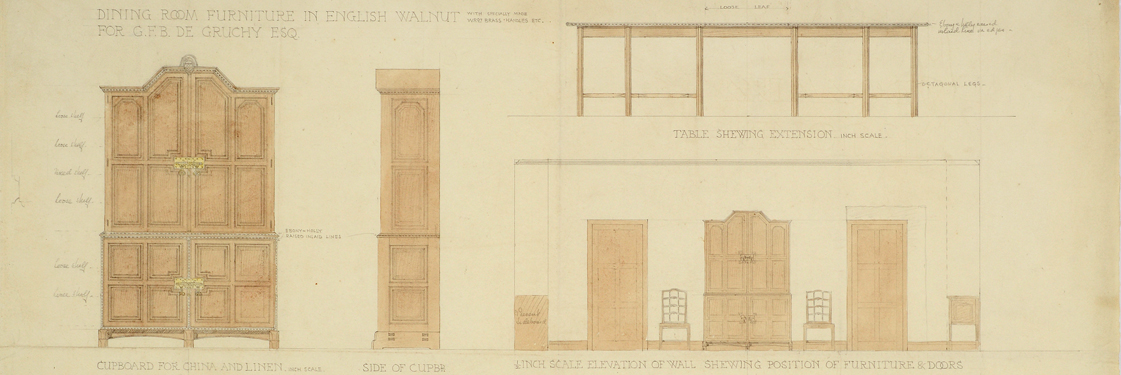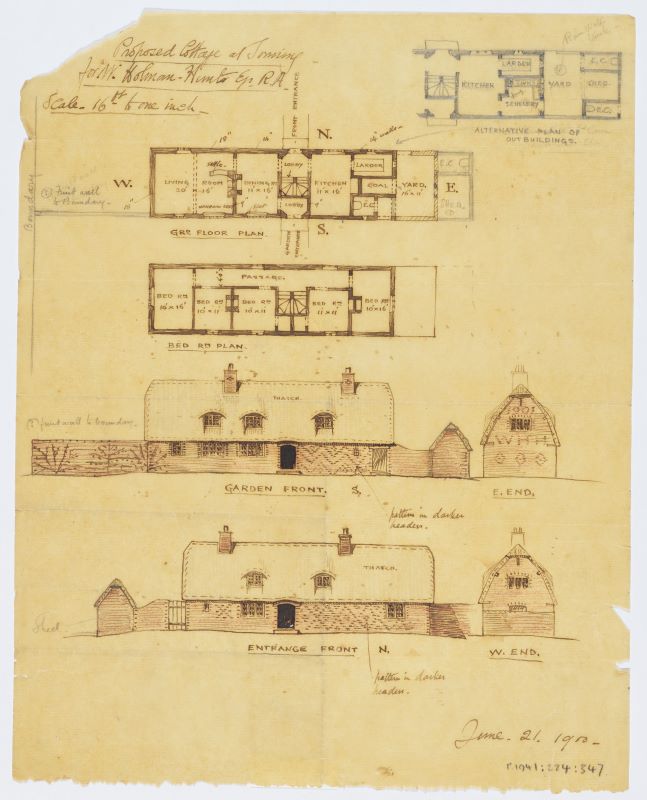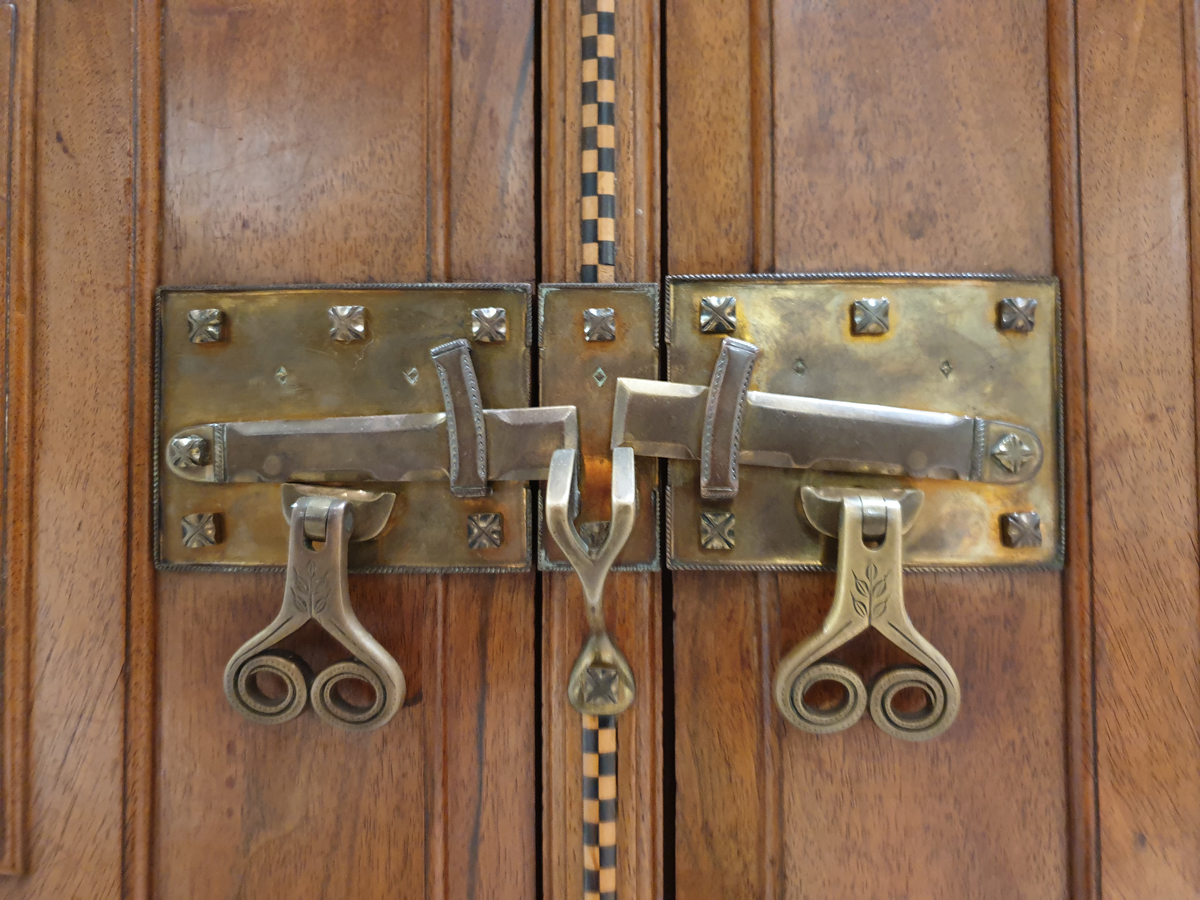

Gimson loved textiles. As a young man he carried around a piece of Morris & Co. fabric so that he might have ‘something to look at’ in dull hotel rooms and lodgings. He collected lots of images of 15th- to 17th-century British embroidery, as well as Iranian and Indian examples. He used these designs as inspiration for all kinds of crafts. In the 1880s and 1890s Gimson created a range of embroidery designs – but he didn’t embroider them himself. Embroidery was still considered a female craft, and it was his sisters and cousins who made the pieces, for their own pleasure.
Rowe’s early career
Born at Exeter in 1796, and showing his artistic talent from an early age, Rowe earned his living as a drawing master, and was first recorded as such at Hastings in 1823. It was there that he produced his first known set of topographical prints, Twenty-six Views of Picturesque Scenery of Hastings and its Vicinity, which were published, as lithographs, by a Hastings librarian in 1823.
Rowe produced many more views of Sussex and Kent before returning to Exeter, probably in 1826. At Exeter, he continued his teaching and produced many prints of Devon, notably of Exeter and Plymouth, and of the county’s seaside resorts, including Sidmouth, Torquay and Lynton, where he is said to have met his future wife, Philippa Curtis.
1999-20-210×300
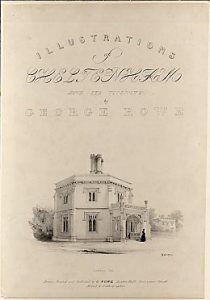
Frontispiece print from Rowe’s ‘Illustrations’, 1840, showing Cambray Spa.
Life in Cheltenham
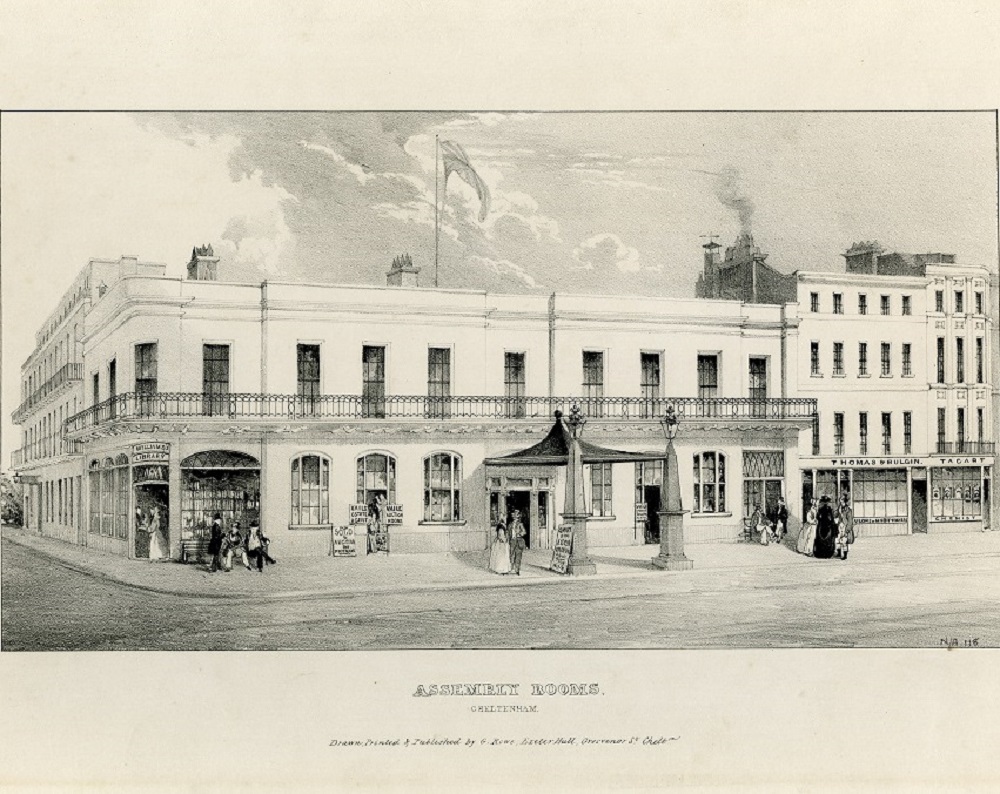
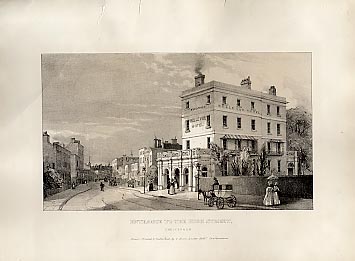
In 1832, Rowe, his wife and two young children moved to Cheltenham, perhaps to escape a cholera outbreak at Exeter, and certainly to take advantage of the potential custom offered by the rapidly expanding spa town, where he was to live for the next 20 years. At Cheltenham, Rowe continued to give drawing lessons, and also established a ‘Repository of Arts’, at which he sold artists’ materials and undertook general printing work. He also began to produce prints of the town, which were initially published by a local librarian, although by 1834 Rowe had acquired his own lithographic printing press and was able to publish his own work. Over the next 16 years, Rowe produced dozens of views of Cheltenham, showing its spas, streets, villas, terraces and public buildings. From 1837 onwards, he also published prints showing important events in the life of the town, from balloon ascents to a political banquet, and in 1845 he published one of the 19th-century town’s most useful guide books, The Illustrated Cheltenham Guide, which included over 200 small ‘vignette’ views of the town’s buildings.
sm1987-488
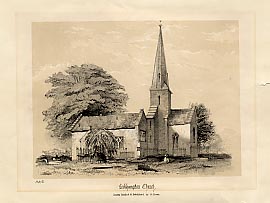
Leckhampton Church, near Cheltenham, by George Rowe, 1840.
Rowe also published views of many other parts of Gloucestershire, including Gloucester, Tewkesbury and the village churches around Cheltenham, plus others of places further afield, including Derbyshire, Somerset, Warwickshire, Worcestershire and the Isle of Wight.
During his 20 years in Cheltenham, Rowe became involved in many aspects of the town’s life, serving on local Committees and eventually acting as High Bailiff of the Manor of Cheltenham. He was a founder member of the Cheltenham Liberal Association, and was the co-proprietor and publisher of the Liberal Cheltenham Examiner newspaper between 1839 and 1851.
Designing in colour and whitework
Two important involvements for Rowe during the second half of his stay in the Cheltenham were a directorship of the Bayshill Estate Building Company and co-ownership of the town’s oldest spa, the Royal Well, which he purchased and rebuilt in partnership with an architect named Samuel Onley junior in 1849. Unfortunately, both of these concerns ran into difficulties and by 1852, Rowe had serious financial problems, which resulted in his sudden departure for the Australian goldfields in June 1852.
Rowe spent about seven years in Australia, initially as a prospector, but then as a storekeeper and, eventually, as an artist, making a living from painting portraits and landscapes for other settlers to send home to their families. On his return to England, probably in 1859, he settled at Exeter and began work on a series of panoramic views of the goldfields and Tasmania that were to win him a gold medal at the 1862 London international Exhibition.
Rowe died, in Exeter, on 2 September 1864.
sm1987-210
The entrance to the High Street, Cheltenham, 1840, by George Rowe.
Share this article
Follow us
A quick overview of the topics covered in this article.