
The Wilson holds a collection of pewter from what’s often known as the ‘golden age’ of British pewter – the 17th and early 18th centuries. The majority of The Wilson’s pewter collection was given by one man – local antiques dealer, pewter expert and restorer Albert Tavender Isher.

A T Isher – known as Bertie – ran an antiques business in Bennington Street. He was born in Cheltenham in 1904, and lived in the town all his life. His father, Harry, started the business in the 1890s. Harry Isher began collecting pewter at a time when it was unfashionable. By the early 20th century it was becoming fashionable again. Arts and Crafts Movement designers such as Archibald Knox revived the use of the material, and created renewed interest grew in antique pewter. Harry Isher was one of the first craftsmen to undertake pewter restoration, described as having ‘an unrivalled knowledge and love for metal’.
It was a knowledge and love that Bertie inherited. Â He became a leading expert in pewter, and continued collecting. Many of the best pieces he kept at home in his flat on Rodney Road. The antiques expert Arthur Negus remembered pewter flagons on mantelpieces and balanced on the backs of chairs.

When Bertie Isher died in 1975, he gave the art gallery and museum the opportunity to collect pieces from his Bennington Street workshop – but only a month was allowed for this. What with Christmas and other issues, the museum’s curators had the unenviable task of selecting over 70 pieces out of Isher’s large collection over 600 in just a week!
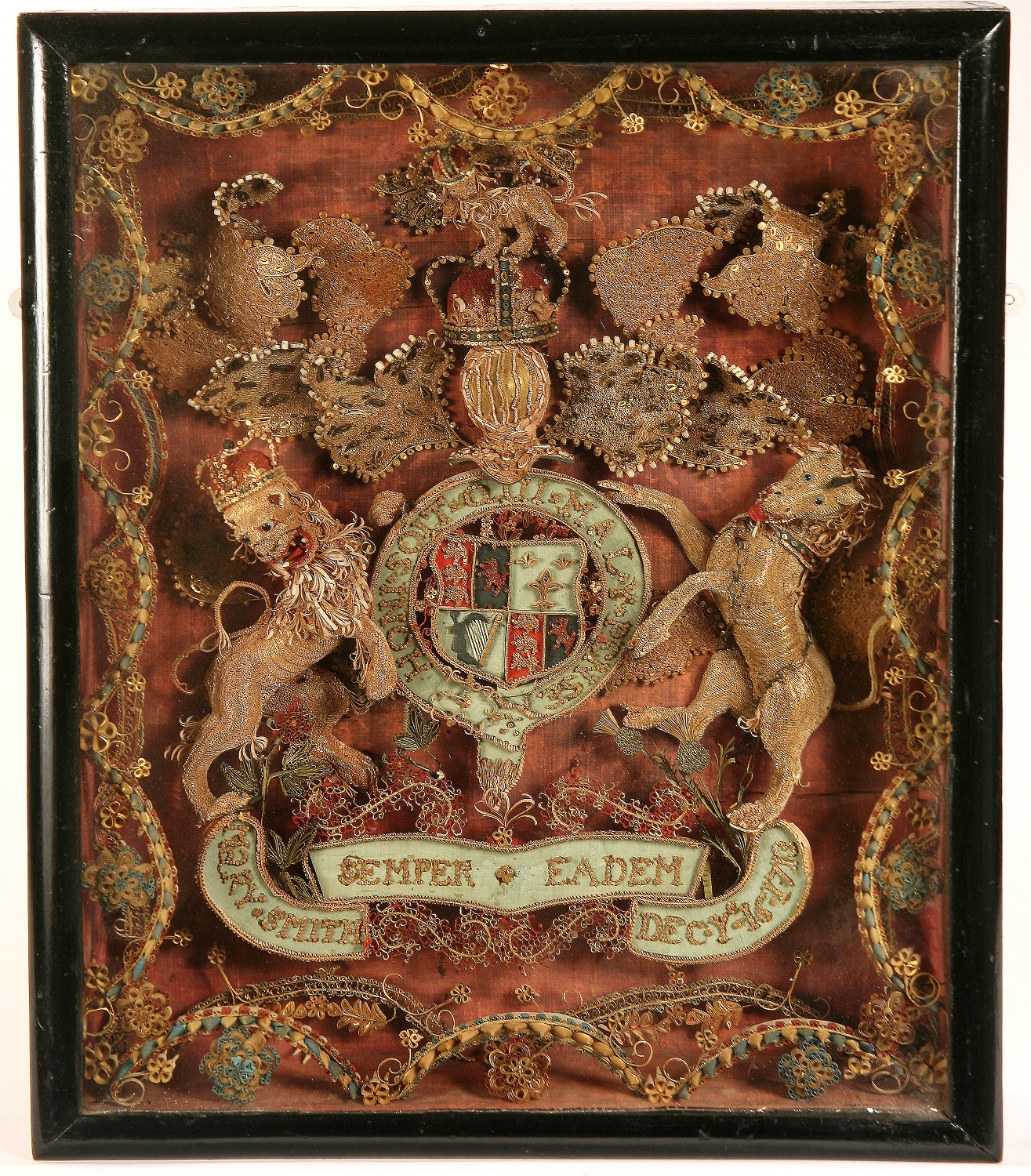
The collection comprises 77 items, and reference material collected by Isher over his long career. There are 33 pieces of pewter, and almost as many of treen, including a giant wassail bowl from the 1640s, along with furniture, brass and glass – and three rolled paper pictures, including this one by Mary Smith from 1713.

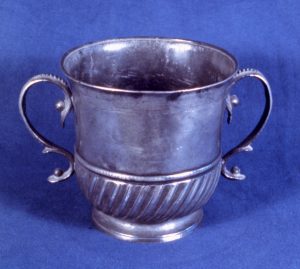
Adam Banks of Wigan, about 1690.
The pewter is mainly from the 17th century, and reflects the expertise of the Isher family as collectors. Pewter is an alloy of tin with a variety of different metals. In the 17th century, it was mostly made with lead and antimony, which hardened the metal. Pewter had been made in Britain since Roman times, but became popular from the 16th century onwards for tableware as well as the more traditional church vessels. The pewter industry grew in the 17th century, particularly in London. However, not all the pieces are from London. This loving cup, a double handled cup once used for sharing at weddings, was made in Wigan in the late 17th century by Adam Banks, one of a line of pewterers stretching back to the mid-16th century.

of Charles II, 1660. It may be a 1920s ‘fake’.
Pewter was used for many different types of vessels, and became increasingly decorative over the 17th century. A form of decoration called ‘wriggle work’ was developed using a chisel-like tool wriggled across the surface to create patterns and words. One of the most dramatic pieces in the collection is a charger that appears to commemorate the restoration of King Charles II to the throne in 1660. It has oak leaf decoration on the rim, a coat of arms in the centre and the words ‘Feare God and Honer the King’. The oak leaves symbolise English strength and resilience – and recollect the oak tree in which Charles II was said to have hidden on his flight from England in 1650. The coat of arms is said to belong to the Company of Vintners. However, this object may not be all it seems. Many pieces like this were produced – as fakes – for the rich collectors of the 1920s. Opinion is divided as to whether it is 17th century or not!
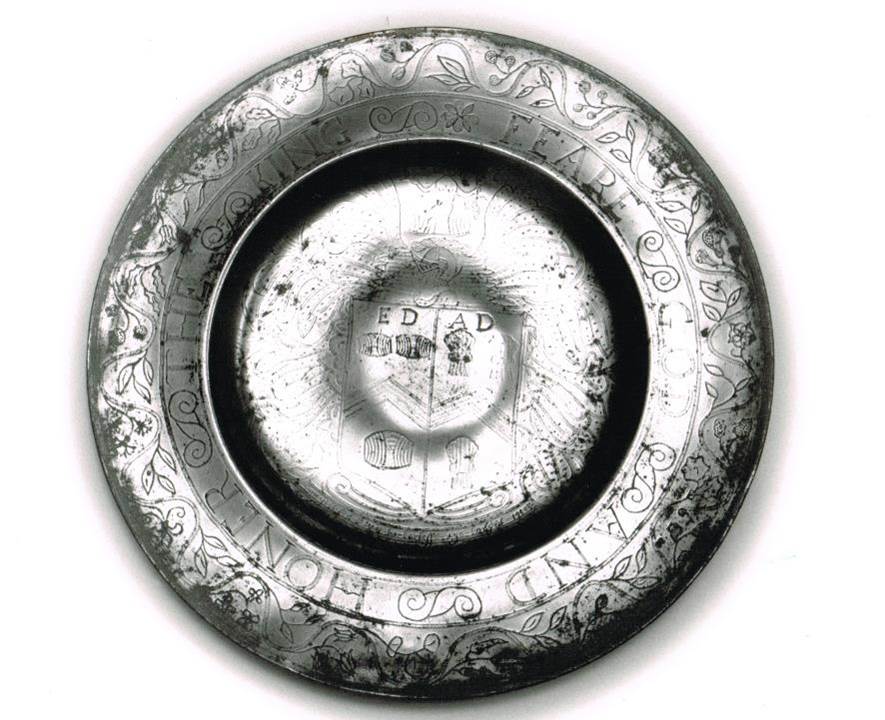
1660-charger
Charger possibly made to commemorate the restoration of Charles II, 1660. It may be a 1920s ‘fake’.
1976_014
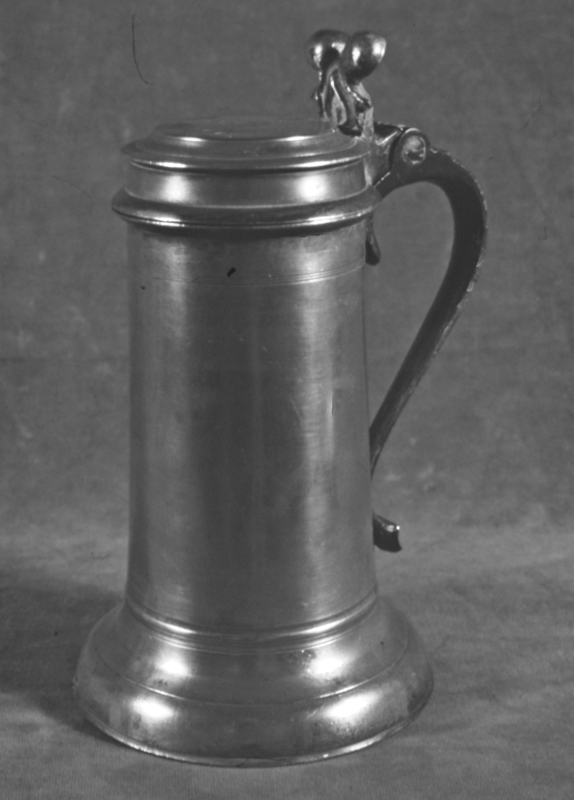
Pewter flagon, about 1660.
1976_025-for-Echo-300×269
Pewter loving cup made by Adam Banks of Wigan, about 1690.
1976_47-for-Echo
Rolled paper picture by Mary Smith, 1713, showing the royal coat of arms.
Share this article
Follow us
A quick overview of the topics covered in this article.