
Roman Religion
Roman religion was polytheistic, meaning that the Romans worshiped a wide variety of gods and spirits at the same time. 12 major gods made up the Roman pantheon and included well-known gods such as Jupiter, Juno, Minerva, Apollo, Mars, and Mercury. These gods were worshipped across the Roman Empire, their personalities and pitfalls were written about by poets, and their stories shared across the provinces. Beyond these figures, however, were a range of localised spirits that inhabited and patrolled the rivers, hills, and forests of the countryside. Alongside these the average Roman would also venerate their own household gods and the spirits of their ancestors. Placating the gods was important, and a Roman would worship a mixture of gods from across this broad spectrum according to what was appropriate to their life and current circumstances.

temple-plan
Plan of the temple discovered during the excavations at Wycomb
Inspiration from the past – Gimson’s photograph collection
Today we can access thousands of images on the internet from museums and heritage organisations across the world. For Gimson it was different. He did a lot of sketching, but he also acquired photos. Many of them were from the collections at the Victoria and Albert Museum in London. He had a large number of textile images from lots of different periods and places – from medieval textiles, to 16th and 17th clothes, to textiles from India and the Middle East.
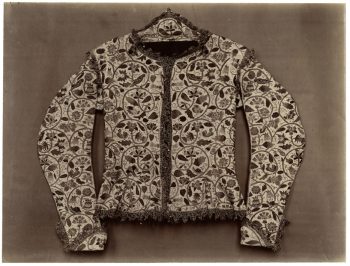
17th century waistcoat
This photograph of an early 17th century waistcoat is from the collection at the Victoria and Albert Museum. Gimson would have admired the swirling floral embroidery.
Genii Cucullati
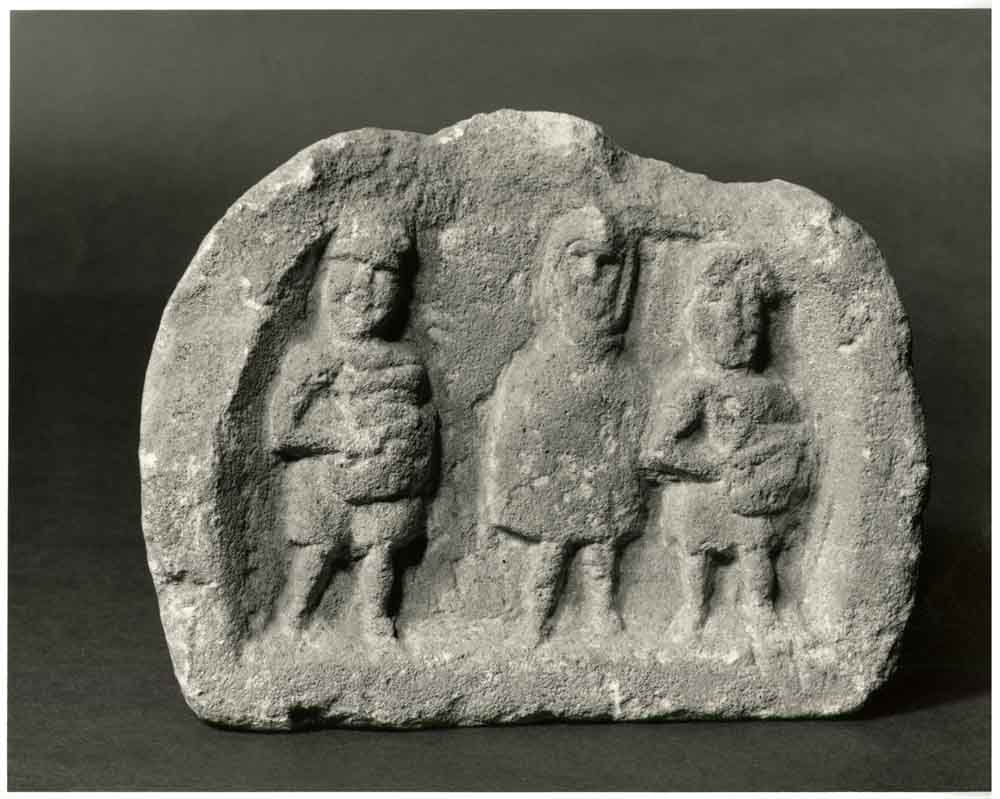
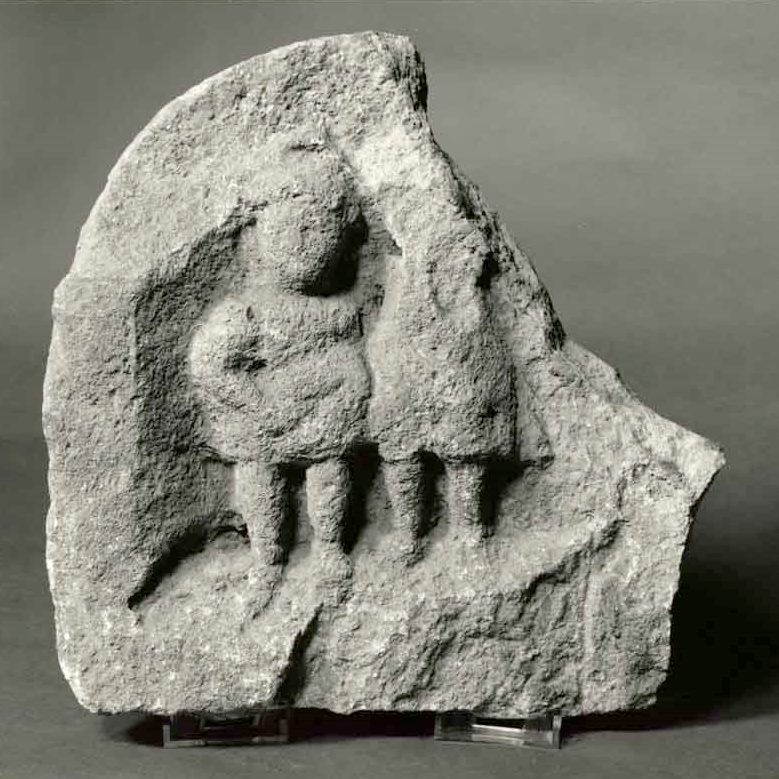
Two of the most impressive sculptures from Wycomb portray figures called ‘Genii Cucullati’, which translates into English as ‘Hooded Spirits’. These figures were carved from limestone sometime between the 1st and 4th centuries AD. They are sculpted in relief and show three figures. The central figure wears the hood (cucullus) and is flanked by two figures holding a large object on their left hand side, with their right hand either supporting or reaching into it.
Although the carvings are in a fair condition, what the depicted figures are doing isn’t perfectly clear. In 1864 they were described as ‘crude sculptures’ and as ‘laughing immoderately’, whilst it was claimed that the two attendants were playing musical instruments. Since then opinion has moved towards the view that they are holding bags or buckets. More recently it was thought they were presenting offerings to the hooded spirit in the centre. The second largest sculpture shows a similar scene, but only two of the figures are visible: a spirit and an accompanying figure. Another recent interpretation is that the supporting figures in these two scenes are sowing seed and encouraging a fruitful harvest, therefore acting as fertility gods.
Sculpture-B
The largest of the Wycomb sculptures, showing Genii Cucullati in a triplet
Hooded spirits in the Cotswolds
Carvings of hooded spirits were fairly common across the north-western provinces of the Roman Empire, however, within Gloucestershire they appear to have been particularly popular. Across the Cotswolds the hooded spirits were portrayed in groups of three. Examples of such triplicate sculptures have been recovered on at least eight occasions in the Cotswolds including Cirencester, Kingscote, and, of course, Wycomb. These are generally absent elsewhere in Britain, except for a small cluster found near on Hadrian’s wall. The motif of three has had ritual significance for millennia and has a strong presence in pre Roman Iron Age art and mythology as well as the Roman period and later cultures. These triplicate sculptures may demonstrate the persistence of a local cult in Gloucestershire in which the use of triplets gave them a greater significance.
Sculpture-A-square-image
The second sculpture of Genii Cucullati, featuring a break along the top and right hand edge
Genii Cucullati and Mother Goddesses
Hooded spirits have also been found in other sculptures in the county, often combined with a seated mother goddesses like figure. This type of sculpture is unique to Gloucestershire and is further evidence of localised cult activity involving hooded spirits in the county.
Wycomb did not reveal any sculptures of this combination, however examples are known from Lower Slaughter, Cirencester and Daglingworth. The latter is perhaps the most important as it is accompanied by a Latin inscription which begins CVDAE. This means ‘To Cuda’ and provides us with a name for the local mother goddess associated with the hooded sprit cult.
The name Cuda may also have a deeper importance for the region today as it may be the predecessor of the word Cotswolds itself. This may have changed over the years from Cuda to Coda, then to Cotta, and lastly to Cots. Wold may come from the Saxon for wald for forest effectively naming the area Cuda’s Forest, after the area where the goddess Cuda presiding, although this is just one of many theories.
Whether the region was named after this cult or not, these sculptures are a testament to a strong local religious society in Romano-British Gloucestershire.
Sculpture-C
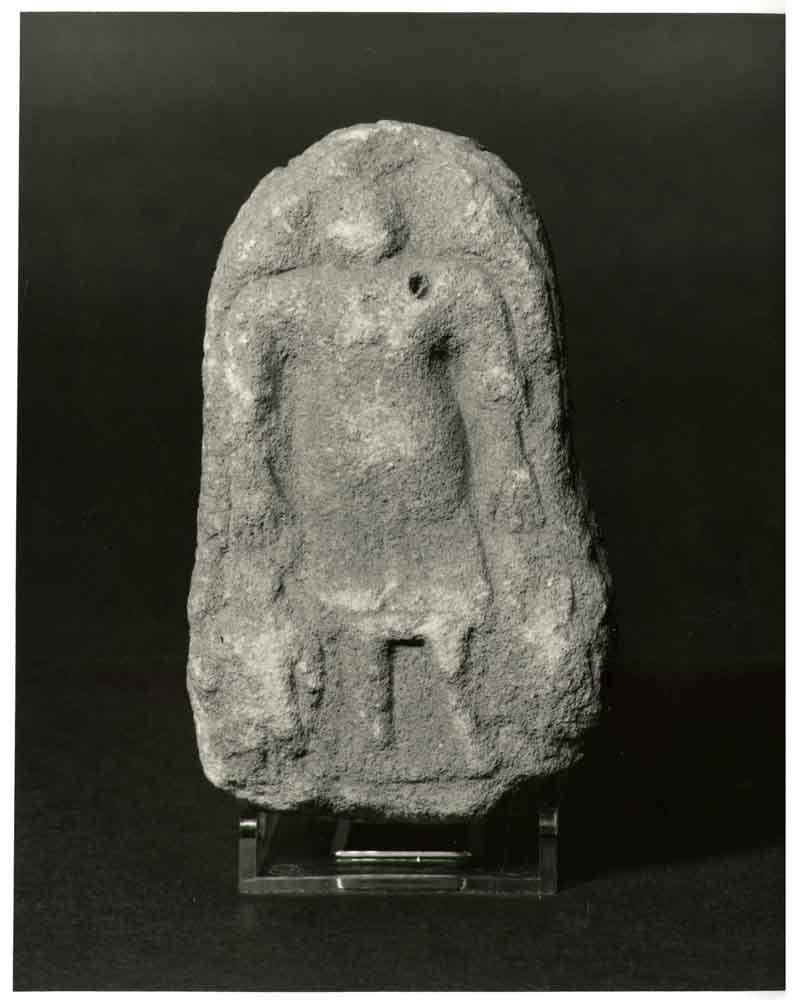
A Mother goddess or Genius Loci from Wycomb, featuring a larger figure resting their hands on two children or small statues
Share this article
Follow us
A quick overview of the topics covered in this article.