
The Wilson holds a rich and varied decorative art collection ranging through furniture, metalwork, ceramics, glass, woodwork and jewellery from the 17th to 21st centuries. Significant collections include an important collection of Chinese ceramics collected in India in the late 19th and early 20th centuries, a collection of studio pottery, which focuses on important local potteries such as the Winchcombe Pottery, and a collection of 17th and early 18th pewter and treen.

Further information about our decorative art collections will be coming soon.

Ernest Gimson moved to Gloucestershire in 1893 and stayed there for the rest of his life. A Leicester man, he trained as an architect in Leicester in his teens and then in London in his twenties. In London he made many friends among his fellow Arts and Crafts Movement designers and makers. He and his friends Sidney and Ernest Barnsley wanted a simple life in the countryside where they could enjoy their work as architects and makers. They searched England and eventually settled in the Cotswolds. They made Sapperton near Cirencester their home.

Find out more about Gimson’s life.

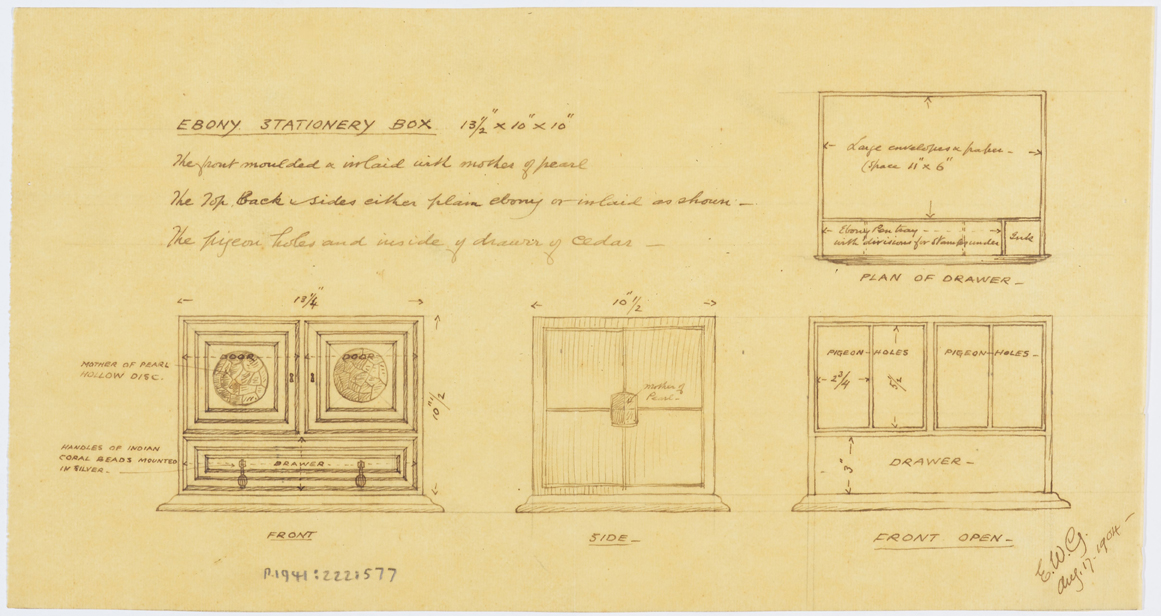
Gimson designed for many different materials and crafts. He considered himself first and foremost an architect. He set up furniture and metalworking workshops in Sapperton to execute his designs. He designed embroidery that was made by members of his family. He made chairs and plasterwork himself. He sought to be true to the materials he used and to go back to nature and the past for inspiration. The art critic Nikolas Pevsner described him as the ‘greatest of the English artist-craftsmen’.

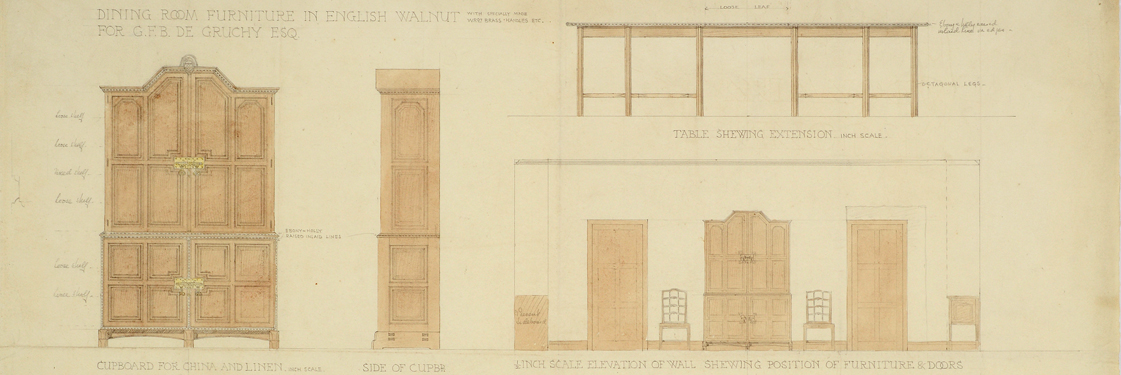
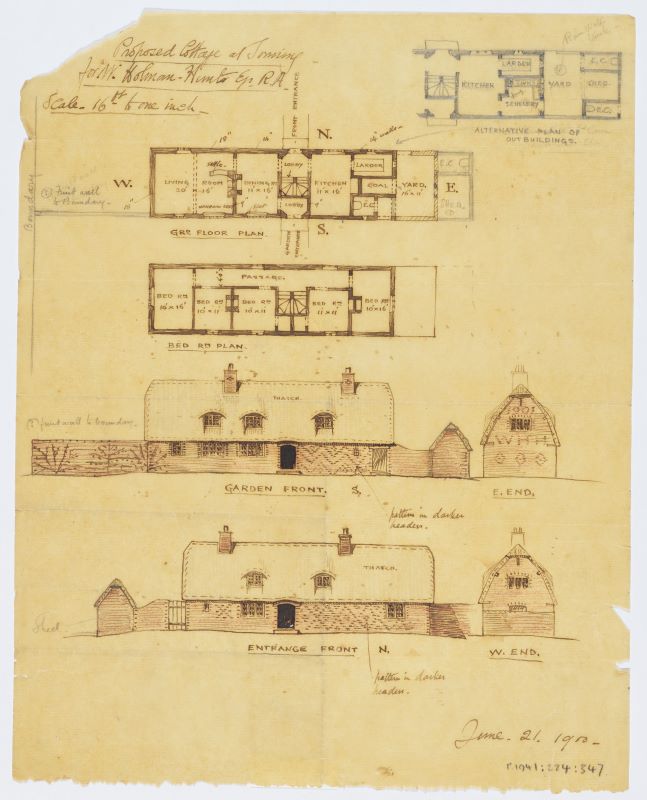
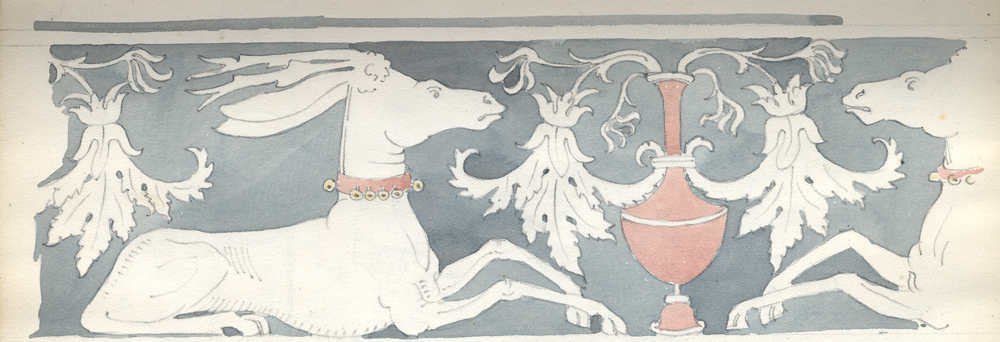
The Wilson holds over 2000 designs and drawings of furniture and metalwork by Ernest Gimson, which, alongside letters, sketchbooks and his personal photograph collection were acquired by the Librarian Curator Daniel Herdman at the time of the death of Gimson’s widow, Emily, in 1941. Herdman attended the sale at their house, the Leasowes in Sapperton and spotted in Gimson’s old office the heap of plans and drawings. When he asked about it, he was told it was going on the bonfire! Herdman was able to act fast and secured the archive for the nation. On his way back to Cheltenham he stopped off at friends at the Whiteway colony and wept at their kitchen table as he thought what might have happened. The archive has been part of Cheltenham’s collection ever since, one of our most important archive collections.

Share this article