
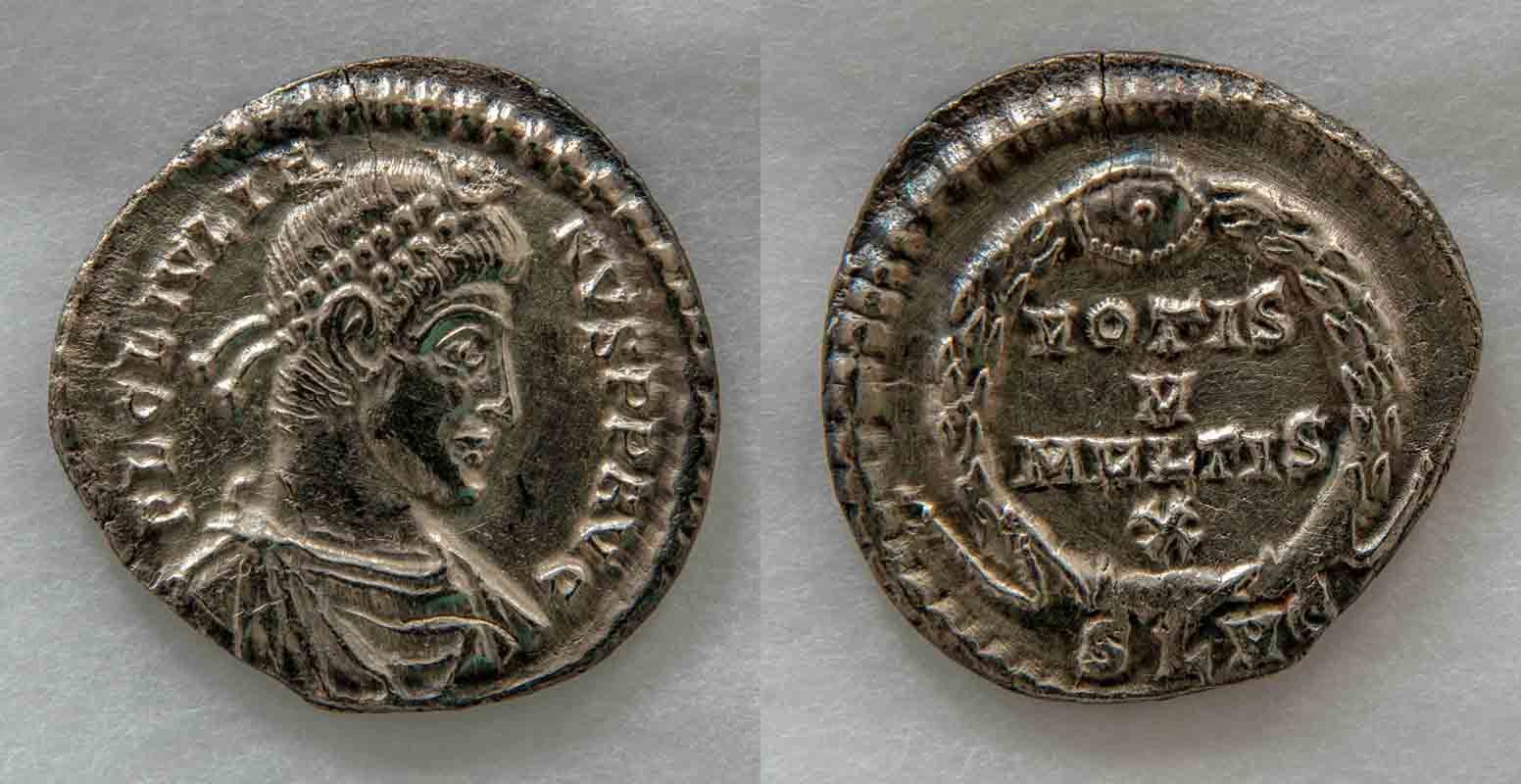
In 1968 a hoard of 56 silver Roman coins and a silver ring were discovered in the village of Willersey in north Gloucestershire. They were unearthed when builders were digging foundation trenches for a new building. They were later declared treasure under the Treasure Trove act and sent to the British Museum for cataloguing. Once a valuation was agreed, the Art Gallery and Museum agreed to purchase the hoard. This purchase did not include the silver ring, or two of the coins, which were retained by the British Museum.

from the reign of emperor
Julian II AD 361-363
The hoard of coins date to the mid-4th century AD and is mainly comprised of siliquae, a late Roman silver denominations. 21 of the coins belonged to the reign of Constantius II, while the remaining 35 coins belonged to the reign of Julian II. Overall the coins date to around AD 350–363. As the coins were discovered during building work it was too late for proper archaeological investigation to be carried out, so some details about their burial have been lost. As the coins survived in the ground in good condition, it is likely that they were initially buried in some sort of container that helped preserve them. If they were buried in organic material, such as a leather bag or cloth purse, little of the container would have survived.
It is difficult to put a value on how much these coins would have been worth, as we only have records of the cost of living in the Roman Empire as specific moments in time. The Roman economy was also prone to inflation and experienced much monetary reform. The best guide of prices for the later Roman Empire date from the Price edict of Diocletian in 301 AD, but this was 60 years prior to the Willersey hoard being deposited. Trying to compare prices over this time period is difficult; just think of the change in the cost of living from the 1960s to now! Nevertheless, the hoard would have amounted to a considerable sum of money in later Roman Britain, and probably came from someone who was comfortable financially.

shown above AD 361-363
Hoarding wealth and burying it in the ground may seem odd by today’s standards but in pre-banking societies it appears to have been fairly commonplace. The reasons why people would have hoarded their money could vary. Perhaps the most dramatic reason is to hide one’s wealth was in the event of an emergency such as during an invasion or revolt. While this reason is often a tempting explanation there are many other more mundane reasons such as simply storing and hiding the accumulation of wealth from casual theft, or because the owner needed to travel and either could not, or did not, want to carry all their money with them. Traveling in the ancient world would have been a much slower and riskier endeavour so to make a small hoard prior to travel may have been a common effort to thwart thieves stealing their money from their empty homes or being targeted by bandits on the road. Some hoards may have been created to counter debasement in the value of coins. The Beau Street Hoard in Bath is an example of this. The hoarder there appears to have sifted through their coins saving those with good silver content and getting rid of those with poor silver content. Finally, coins and jewellery were often given as votive offerings to the gods, therefore it is possible that some hoards may have been given for this purpose too. The Willersey hoard does not fit the pattern of a debasement hoard, nor are there any obvious religious associations, so it’s likely to represent some sort of savings or anti-theft hoard, however the specific reason why it was being saved is uncertain and we will never know for sure!

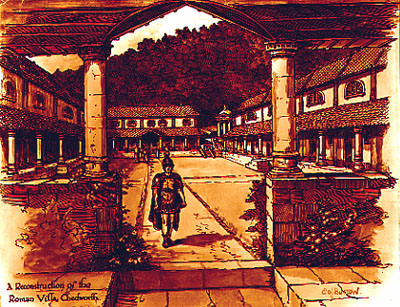
by Edward Burrows, showing how some
people lived in 4th century Gloucestershire
The latest coins in the hoard date from the reign of Emperor Julian (361–363 AD), so it is very likely that the hoard was buried in 363 AD or shortly after. Britain at this time was an established Roman province. It had formally been part of the Roman Empire for over 300 years and a complex Romano-British culture had evolved on the island, combining elements of classical Roman and native British traditions. Gloucestershire had become a wealthy area of Britain, as demonstrated by the wealth of lavish Roman villas in the country, featuring intricate mosaics and elaborate decorations. There was also a vast amount of money circulating in the 4th century because using money had become such a common part of the Roman economy. In many ways, the mid-4th century was a high-tide mark of Roman culture and wealth in Britain so the discovery of hoards such as this, or even larger ones, should not be a surprise in Gloucestershire.
1923-4-14
A reconstruction of Chedworth Roman Villa by Edward Burrows, showing how some people lived in 4th century Gloucestershire
1969_31_44-Obverse
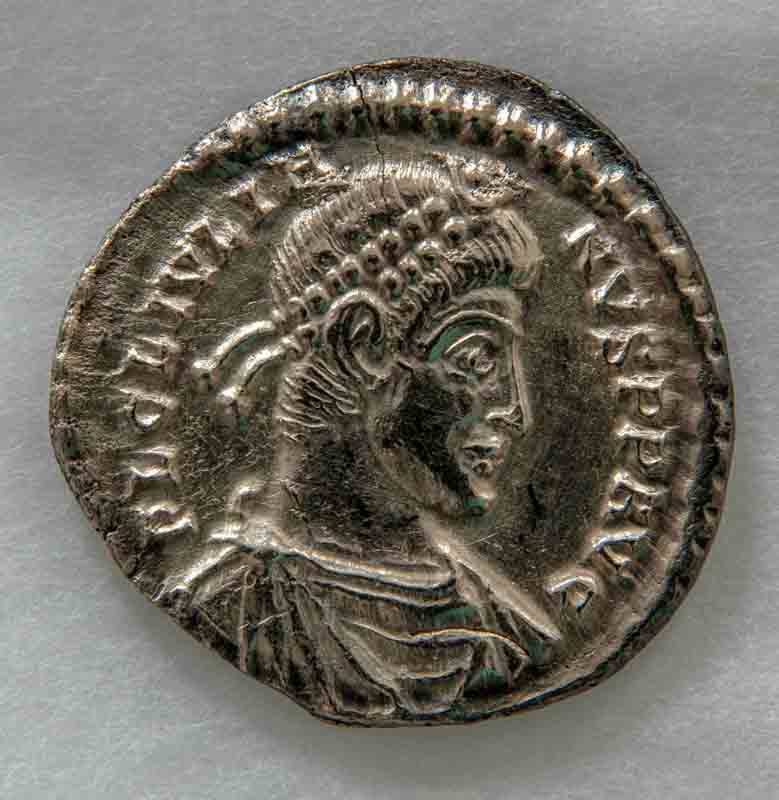
The obverse or 'heads 'side of a siliqua from the reign of emperor Julian II AD 361-363

1969_31_44-Reverse
The reverse or tails side of the same coin shown above AD 361-363
Share this article
Follow us
A quick overview of the topics covered in this article.