

Edward James Wilson (Jim) was born in Cheltenham in 1881, the third son of Edward Thomas and Mary Agnes Wilson. From his early days Jim enjoyed being with people appreciating time spent with the servants, farm labourers and his friends. He was educated at Cheltenham College and at Caius College Cambridge, before entering the Church of England.

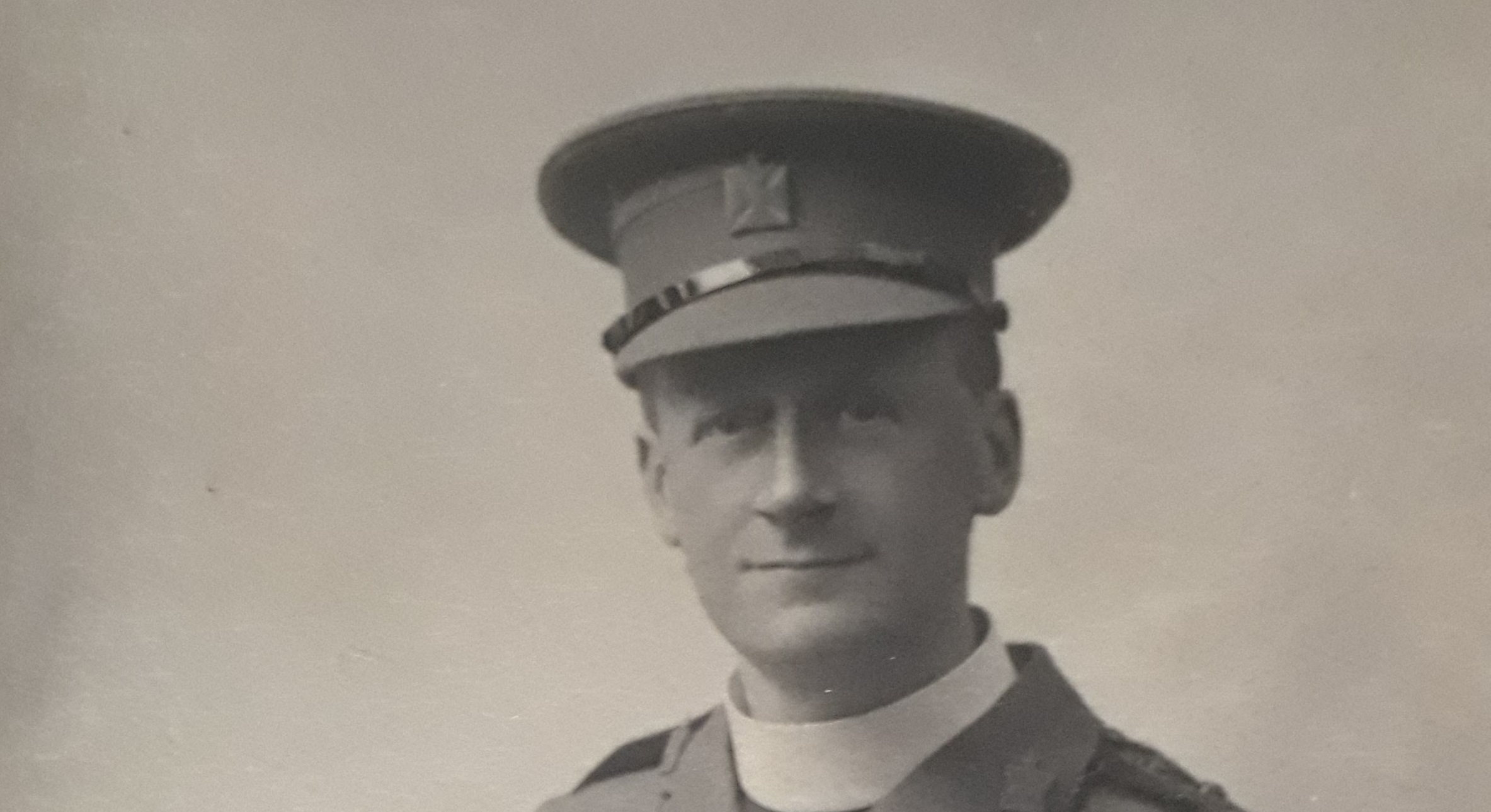
Jim was ordained in 1904 in Lichfield Cathedral and served as a curate in Stoke. Whilst there he met and married a musician, Norah Crump, the daughter of the former Stoke rector. In 1916, whilst at St Andrew’s Wolverhampton, he accompanied a group of men from South Staffordshire to serve on the Western Front. He shared hot chocolate and cigarettes with the men in the trenches, prayed with the sick and dying and wrote letters to relatives of the dead. He saw and shared all the horrific effects of war. In 1917 he wrote ‘There must be more give and take, there must be brotherhood, we must at all costs not fight our fellow brothers again.’

Jim Wilson was a fairly traditional Anglo Catholic, but the First World War changed him. On his return he experienced a vision which transformed the rest of his life. When he was praying in the church one evening he saw a man standing near one of the pillars dressed in working clothes. He believed it to be Christ himself, calling him to work with the poor. He begged the Bishop for a living in a poor area and was transferred to Sneyd in Burslem, home of Royal Doulton.
At Burslem his eyes were opened to the terrible poverty of the people, and he set himself to fight for their cause. He was a friend of left wing vicar Conrad Noel of Thaxted, who had also attended Cheltenham College, and together in their different parishes they worked to reform the political system. Within six months most of Wilson’s middle class congregation had left, as his outspoken views upset them. Wilson spoke out publically in Sneyd market place, he joined in marches with the unemployed and he aligned himself with the socialists, joining figures such as Josiah Wedgwood to preach justice for the oppressed. The Bishop of Lichfield became concerned that he had a rebel priest on his hands.
Jim Wilson was also resourceful. He placed a bowl in the church inviting people to give if they could and to take money if they were in need. The bowl never ran out of money whilst he was in the parish.
Eventually Wilson’s radical standpoint caught up with him. In 1932 The Morning Post published photographs of the Red Flag in his church and Lenin’s picture on the vestry wall. He was denounced in Parliament. Under mounting pressure, he suffered a breakdown and later that year left Burslem, struggling with depression that at times brought him close to suicide.
In 1935 he began work again, firstly as a chaplain in Napsbury Hosptial, St Albans, and then as a vicar in North London. Here he managed to inspire a new group of people with his radical views but the social scene and times were different, politics had changed, and he himself had matured, so the effect was less controversial. When he was 66 he became Chaplain of The Guild of Health at Edward Wilson House (a memorial house to his brother), a role in which he worked for reconciliation and healing until he died.
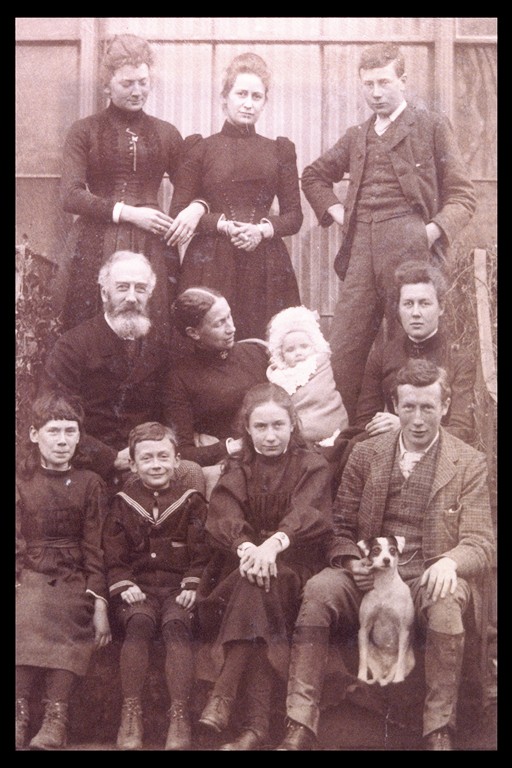
The-Wilson-Family-photo-1890-FC-high
The Wilson family in Cheltenham

1995_550_202-1916-detail-Jim-205×300
Jim in in his chaplain's uniform

Jim-Wilsons-photo-album-Burslem-family-evicted-300×214
A family evicted from their home in Burslem, 1931. From Jim's photograph album.
Share this article
Follow us
A quick overview of the topics covered in this article.